What Is a Power-Split Hybrid Transmission?
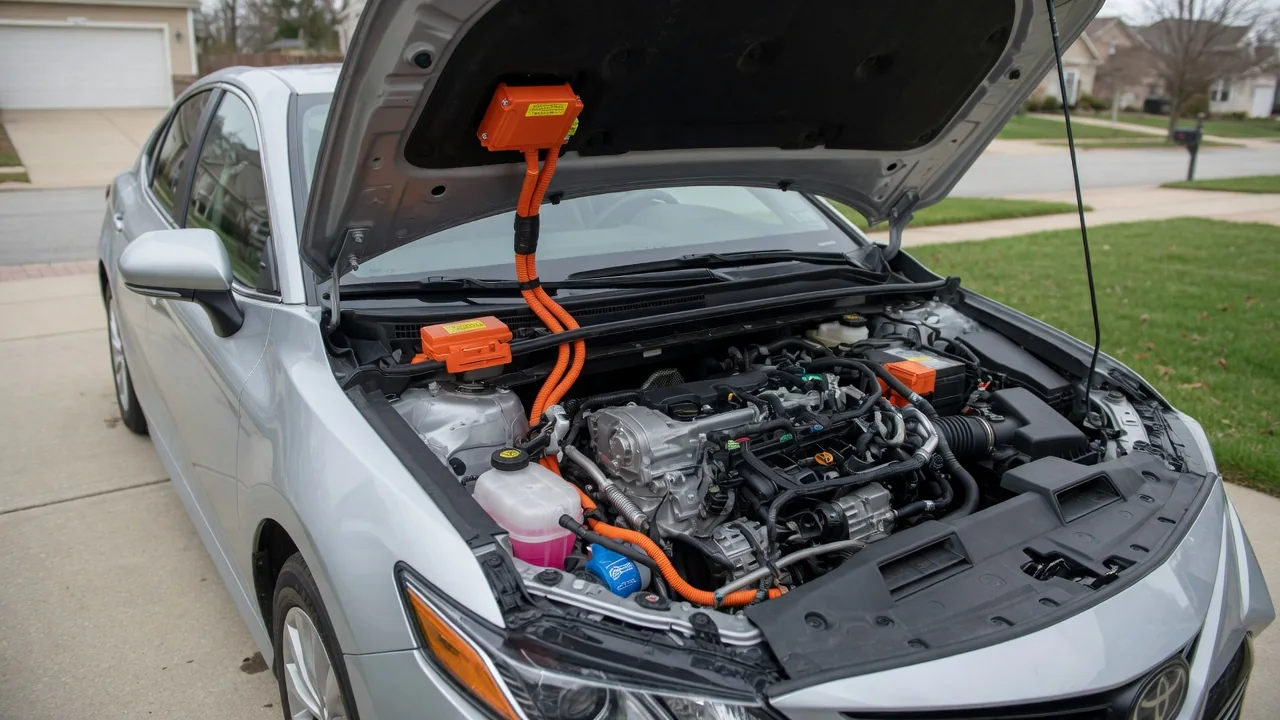
Anyone asking what is a power split hybrid transmission is really asking how one vehicle can blend a gasoline engine and electric motors without the stepped gears of a conventional automatic. The short answer is a gearset that divides engine output between a mechanical route to the wheels and an electrical route through motor-generators, with control software constantly adjusting the balance between them.
Planetary gear idea
At the center of most power-split designs sits a planetary gearset, a compact arrangement with a central sun gear, a ring gear around the outside, and small planet gears held in a carrier between them. Each of these three members can connect to a different machine. In a common arrangement, the engine drives one member, a motor-generator connects to another, and the third leads toward the wheels, usually alongside a second electric motor. Which member receives which component differs among manufacturers.
The useful property of this gearset is that the speeds of its three members are tied together by a fixed relationship. If the wheel-side member turns at a given road speed, changing the speed of the motor-generator changes the engine speed that goes with it. That lets the control system pick an efficient engine speed almost independently of how fast the car is moving. No clutches need to slip and no belts shift, which is why this layout is often described as an electronically controlled continuously variable transmission.
Energy paths
Engine torque entering the gearset divides into two streams. One portion travels mechanically through the gears to the final drive and the wheels. The other portion spins a motor-generator, which converts it into electricity. That electricity can feed the traction motor immediately, adding torque back at the wheels, or it can go into the high-voltage battery for later use. The proportion flowing down each route shifts continuously with speed, load, and battery state, managed by power electronics rather than by the driver.
Other paths appear in different situations. At low speeds and light loads, the battery alone may power the traction motor while the engine stays off. During hard acceleration, engine and battery power combine. When the driver lifts off or brakes, the traction motor works as a generator, recovering energy that friction brakes would otherwise shed as heat. The electrical route carries conversion losses, so the software generally favors the mechanical path during steady cruising. Exact strategies, and any additional gearsets or clutches, depend on the vehicle.
Driving feel
Because nothing shifts between fixed ratios, acceleration arrives as one uninterrupted surge rather than a series of steps. Press the pedal firmly and engine speed may rise quickly and hold while road speed catches up, a sensation some drivers compare to a slipping clutch even though nothing is slipping. The engine is simply being held where it produces the requested power efficiently. Some manufacturers program simulated shift points or tune the sound to make this behavior feel more familiar.
Around town the character is different. Pulling away is often silent and smooth because the traction motor delivers torque from a standstill, and the engine joins in with only a faint shudder or hum once more power is needed. Braking usually begins with regeneration before the friction brakes take over, and the handoff can give the pedal a slightly different feel than a conventional car. How noticeable these transitions are depends on calibration, sound insulation, and engine size.
Everyday Use and Observations
In daily driving, the most obvious sign of a power-split system is the engine starting and stopping on its own schedule. It may shut off at a red light, restart partway through a parking lot, or run while stationary to warm itself, heat the cabin, or recharge the battery. A dashboard energy display, where fitted, shows arrows moving between engine, battery, and wheels, which makes the changing power flow easier to follow than listening alone.
Fuel economy patterns also differ from those of a conventional car. Stop-and-go traffic often suits the system well, because regenerative braking recovers energy and the engine can rest during low-speed creeping. Cold weather, short trips, heavy climate control use, and sustained high speeds tend to keep the engine running more often. Engine speed may also climb on long grades once battery assistance tapers off. These are normal traits of the design, though their extent varies with battery capacity and the manufacturer's tuning.
Limits and Next Steps
The design has trade-offs. Because part of the engine's output always depends on the motor-generators, their size and the capability of the power electronics limit how much torque the system can handle, which matters for towing or sustained heavy loads. Routing energy through the electrical path costs efficiency at certain speeds, so some manufacturers add extra gearsets, clutches, or operating modes. Others use entirely different hybrid layouts, such as a motor sandwiched within a conventional stepped automatic, that behave quite differently.
Since layouts differ, the owner's manual and the manufacturer's service information remain the best guides to how a particular vehicle operates and what maintenance its transmission fluid and cooling systems require. A warning light or stored fault code points toward an area to investigate, not to a confirmed failed component, and many hybrid codes are manufacturer-specific. High-voltage components carry serious shock risk, so diagnosis and repair beyond routine checks belong with technicians trained and equipped for hybrid systems.