What Is a Polymer Car Sealant? Film, Application, and Care
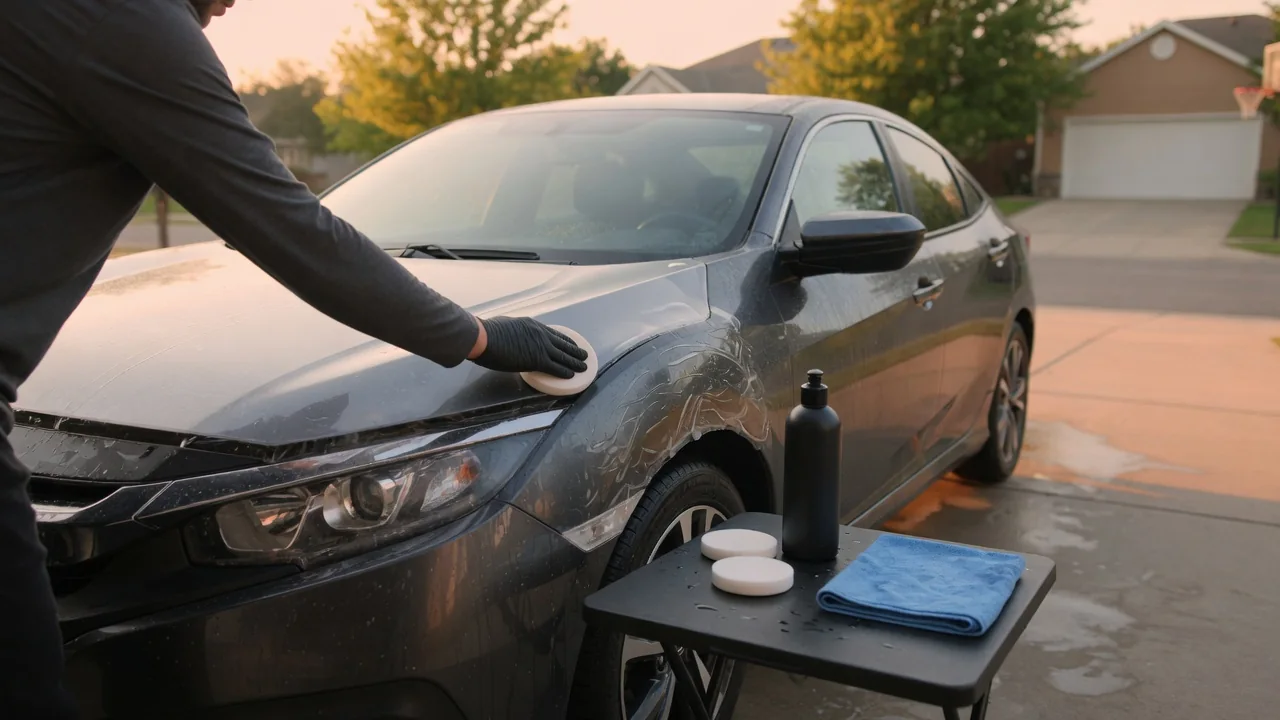
A polymer car sealant is a synthetic paint protection product that leaves a thin, slick film on top of a vehicle's clear coat. Natural waxes are built from plant or animal waxes. A polymer paint sealant instead uses engineered synthetic molecules designed to adhere closely to the finish. This guide explains what that film does, how sealants are typically applied, and how to keep the protection working once it is on the car.
Protective Film: What a Polymer Sealant Leaves Behind
Most polymer sealants combine synthetic polymers or resins with a carrier that lets the product spread evenly across the paint. Depending on the formula, these may include acrylic polymers, silicone-based compounds such as polysiloxanes, or other synthetic resins. After application, the carrier evaporates or is wiped away, and the remaining polymers settle into a thin, tightly organized layer on the clear coat. Some formulas are described as cross-linking, meaning the molecules link to one another as the product cures, which helps the layer hold together. Exact compositions are usually proprietary and vary widely between products, so ingredient names on a label describe that specific product rather than a standardized category.
The film's main job is to act as a sacrificial barrier between the paint and the environment. Because the cured surface is smooth and hydrophobic, water tends to bead or sheet off instead of spreading out, and road film, dust, and grime have a harder time bonding to the finish. That makes routine washing easier and reduces how long contaminants such as bird droppings, tree sap, and insect residue sit directly on the clear coat. Many sealants also include ingredients intended to reduce UV exposure of the paint underneath. The film can add gloss and a slick feel, but it is extremely thin and does not meaningfully resist scratches, swirl marks, or stone chips.
In general terms, polymer sealants sit between traditional wax and ceramic coatings. Their synthetic structure typically tolerates heat and repeated washing better than many natural carnauba waxes, while silica-based ceramic coatings cure into a harder, more chemically resistant layer that usually requires more careful preparation and application. These are broad tendencies across product categories, not guarantees for any individual product.
Application: Preparing the Paint and Laying Down the Film
A sealant can only adhere well to clean, bare paint, so preparation matters as much as the product itself. A typical sequence starts with a thorough wash, followed by decontamination to remove bonded particles. That can include an iron fallout remover for embedded metal particles and a clay bar or clay mitt for other surface contamination. If the paint has swirls or light oxidation, polishing comes next, because a sealant locks in whatever condition the paint is in rather than correcting it. Many detailers finish preparation with a panel wipe or a dedicated prep spray to remove polishing oils and old wax that could interfere with bonding.
Application methods vary, so the product label is the primary guide. Liquid and paste sealants are usually spread in a thin, even layer using a foam or microfiber applicator, or with a machine polisher at low speed when the manufacturer allows it. Working on a cool panel out of direct sunlight helps prevent the product from drying too quickly and streaking. After the recommended flash or haze time, the residue is buffed off with a clean microfiber towel. Using too much product is a common mistake: it does not add protection, and it makes removal harder. Spray sealants simplify the process by being misted onto a panel and wiped to a clear finish, though they generally form a lighter layer.
Many sealants need time to cure before the car is exposed to rain, dew, or washing, and cure times differ by formula, temperature, and humidity. Some products allow a second coat after the first has cured to help ensure even coverage. Owners should also check whether a product is safe on unpainted plastic trim, rubber, and glass, since some formulas can leave white residue or streaks on textured surfaces.
Maintenance: Keeping the Sealant Working
How a sealed car is washed has a large effect on how long the film lasts. A pH-neutral car shampoo, clean wash media, and a method that limits grit being dragged across the paint, such as the two-bucket approach, help preserve both the sealant and the clear coat. Strong alkaline cleaners, concentrated all-purpose cleaners, degreasers, and some aggressive pre-wash products can break down the polymer layer faster. Automated washes that rely on harsh chemicals may have the same effect, so it is worth paying attention to what products are used if the car goes through them regularly.
The surface itself gives the clearest signs of wear. As the film degrades, water beading becomes less uniform, sheeting slows, the paint feels less slick to the touch, and dirt starts clinging more readily after rain. Between full applications, many owners use a spray sealant or sealant-based quick detailer as a topper to refresh slickness and water behavior. When performance drops noticeably, a full reapplication is the better option. That means washing and, where needed, decontaminating the paint again so the new layer bonds to a clean surface rather than to a worn, contaminated one.
Practical Implications and Limits
There is no single durability figure that applies to every car. Real-world lifespan depends on climate, sun exposure, whether the vehicle is garaged or parked outdoors, how often it is washed, exposure to road salt or industrial fallout, and the specific formula used. Durability claims printed on packaging reflect the manufacturer's own conditions and should be treated as a rough reference, not a promise. Watching how the paint behaves is a more reliable guide to reapplication timing than a calendar date.
A sealant also has clear limits. It will not repair oxidation, failing clear coat, etched water spots, or existing scratches, and it does not stop rock chips. It is also easy to confuse with paint protection film, which is a physical urethane layer applied to the body and is a different product entirely. Vehicle-specific factors matter too: matte and satin paints, vinyl wraps, existing ceramic coatings, and paint protection film may each require products designed for them. The owner's manual and the guidance from the original installer or manufacturer of any existing finish should take priority over general advice.
For owners who want easier washing, a clean appearance, and a protective layer that typically outlasts many natural waxes without the preparation demands of a ceramic coating, a polymer sealant is a practical middle option. The result depends heavily on preparation and ongoing wash habits, so the effort put into cleaning the paint before and after application largely determines how much value the sealant delivers.