What Is a Plastic Engine Cover For? Appearance, Noise, and Access
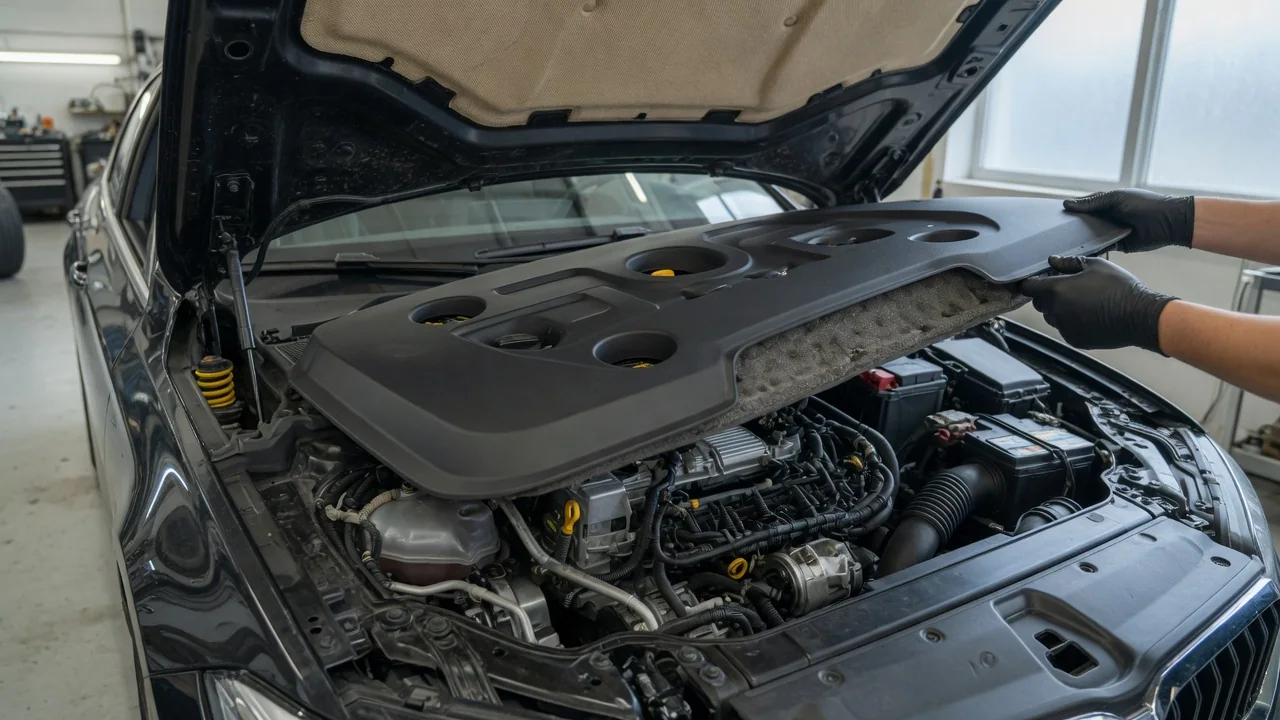
Open the hood of many modern cars and the first thing you see is not the engine itself but a molded plastic shell sitting on top of it. If you have wondered what a plastic engine cover is for, the short answer is that it mostly shapes how the engine bay looks and sounds, while staying removable for maintenance. The exact function of a car plastic engine cover varies by vehicle, but the general purposes are consistent enough to explain without tying them to any one model.
Appearance: Why Engines Wear a Plastic Shell
Underneath the cover, the top of a typical engine is a busy place. Depending on the design, you may find ignition coils and their connectors, fuel injectors and a fuel rail, vacuum and breather hoses, wiring harnesses held in plastic clips, sensors, and the valve cover with its bolts and gaskets. None of this is attractive, and much of it looks cluttered even on a brand-new car. A single molded cover turns that collection of parts into one clean surface, which is the most visible reason the part exists. Automakers treat the engine bay as part of the product a buyer sees in the showroom, so the cover often carries a logo, an engine designation, or styling lines that echo the rest of the vehicle.
Most covers are made from engineering plastics chosen to tolerate heat near the engine while staying light and inexpensive to mold into complex shapes. Glass-filled nylon and polypropylene blends are common choices, often with a textured or painted finish. Because the cover sits above some of the hottest and dirtiest parts of the engine, it also keeps the top surface easier to wipe clean and shields some components from dust, road grime, and loose debris that falls in through the gaps around the hood. That shielding is a side benefit rather than a sealed barrier, since the cover is open around its edges.
Noise: How a Cover Dampens Engine Sound
An engine produces sound from many sources, and some of the most noticeable ones sit right at the top. Fuel injectors click as they open and close, valvetrain components create a ticking or clattering sound, and on direct-injection engines a high-pressure fuel pump can add a distinct mechanical tick. These sounds tend to be higher in frequency, which makes them easier to block or absorb than the deep rumble of combustion and exhaust.
A plastic engine cover reduces this noise in a few general ways. The plastic shell itself acts as a barrier, interrupting the direct path between the noisy parts and the hood or the open air. Many covers also have a layer of foam or fibrous material bonded to the underside, which absorbs part of the sound energy instead of reflecting it. Rubber grommets at the mounting points help keep the cover from vibrating against the engine and becoming a noise source of its own.
The size of the effect depends on the vehicle and the cover design, and it is usually most noticeable while standing in front of the car with the hood open, especially at idle. Inside the cabin, hood insulation, firewall padding, door seals, and engine mounts typically matter more. A cover helps smooth out the sound character of the engine bay, but it is one component of a larger noise-control strategy, not the main one.
Service Access: Getting Past the Cover
Because the cover hides parts that need routine attention, it is designed to come off without much effort. On many engines, reaching spark plugs, ignition coils, injectors, or the valve cover means removing it first, and service procedures often begin with exactly that step. The cover is meant to be a removable layer, not a permanent fixture, so its fastening system matters as much as its shape.
Common mounting methods include rubber grommets that press onto ball studs, plastic clips, and small bolts or nuts. Grommet-style covers are usually removed by lifting firmly and evenly near each mounting point rather than prying from one corner, which can crack the plastic or leave a grommet stuck on its stud. Bolted covers need the right tool and some care not to overtighten when reinstalling. Working on a cool engine is sensible for any style, since the cover and the parts beneath it can stay hot well after the engine is shut off.
On some vehicles the cover does more than sit on top. It may be integrated with intake ducting, the air filter housing, or brackets that route wiring and hoses. In those cases, removal can involve loosening clamps, disconnecting a sensor, or unclipping a hose, and the cover becomes part of the intake system rather than a purely decorative piece. Checking the service information for the specific vehicle before pulling on anything helps avoid broken connectors or mounting tabs.
Practical Implications and Limits
Whether a car can be driven without its engine cover depends on what that cover actually does on that vehicle. A purely decorative shell can usually be left off temporarily without affecting how the engine runs, although the engine bay may sound louder and collect more grime. A cover that forms part of the air intake path or holds wiring in place is different: leaving it off or installing it incorrectly could let unfiltered air in or leave components unsupported. The vehicle's documentation is the reliable guide here, not general assumptions.
The cover also affects what an owner can see during a quick under-hood check. It can hide early signs of trouble such as oil seeping from a valve cover gasket, a cracked vacuum hose, chafed wiring, or debris like leaves and nesting material collecting around the top of the engine. Lifting the cover occasionally during routine maintenance gives a clearer view than looking at the plastic surface alone.
Like other plastic parts near the engine, covers age. Repeated heat cycles can fade the finish, make the plastic more brittle, and harden the rubber grommets so the cover no longer sits firmly, which may lead to rattles. Sound-absorbing backing that becomes soaked with oil or other fluids should be cleaned or replaced rather than ignored, since it no longer absorbs sound well and keeps contaminants close to hot surfaces. When replacement is needed, matching the part to the specific engine matters, because mounting points and integrated features can differ even within the same model line.