What Is a Pedestrian Warning Sound on an Electric Car?
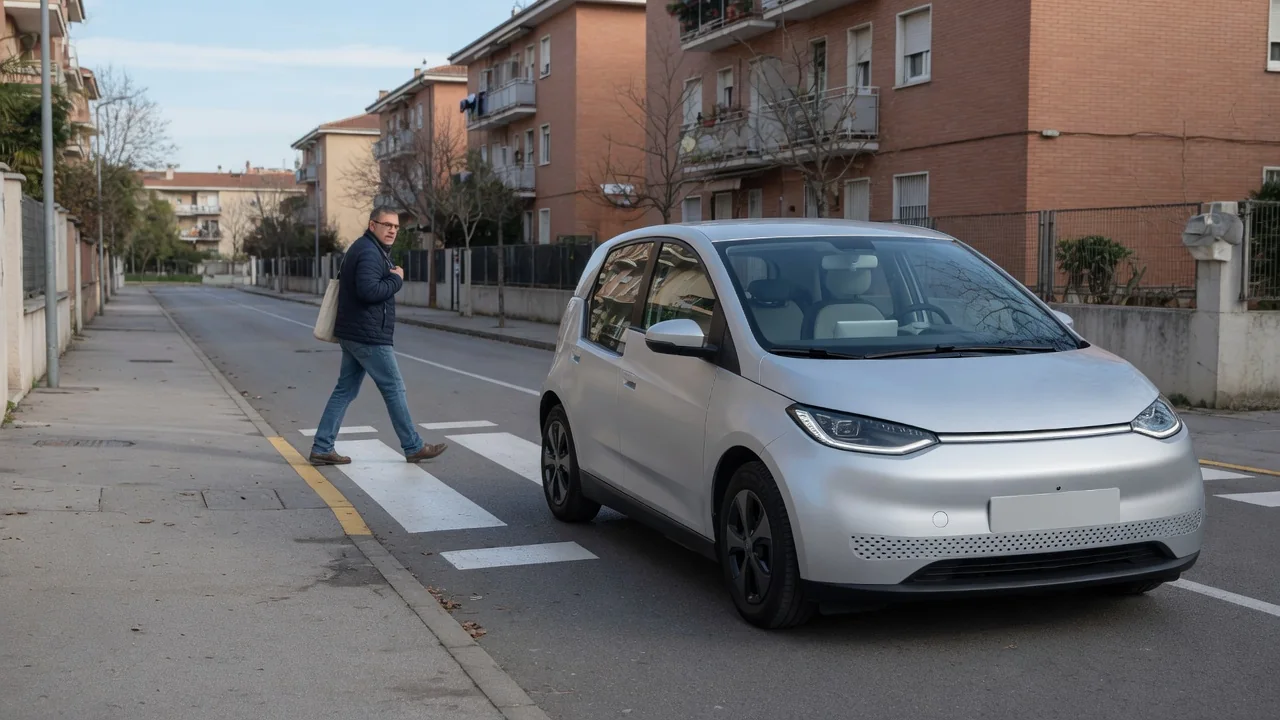
Electric cars move almost silently at parking-lot speeds because there is no engine idling or exhaust note to announce them. So what is a pedestrian warning sound on an electric car? It is an artificial tone, broadcast through an external speaker, that lets people nearby hear the vehicle approaching, pulling away, or backing up. The sections below explain when it plays, why it exists, and what to check if it goes quiet.
When it plays
The sound is tied to low-speed movement. It typically begins as soon as the car is shifted into drive or reverse and starts creeping, and it continues while the vehicle rolls through driveways, parking structures, and slow neighborhood streets. As speed rises, tire roar and wind rush become loud enough to be heard on their own, so the system fades the artificial tone out. The exact speed at which that handoff occurs depends on the manufacturer and the regulations of the market where the car was sold.
Many systems also change the tone as the car moves. Pitch or volume often rises with acceleration and falls as the car slows, giving listeners a sense of whether the vehicle is speeding up or coming to a stop. Reverse frequently has its own distinct sound, sometimes a pulsing chime or a different hum. Some cars emit a tone while stationary in gear, while others stay silent until the wheels turn. Hybrids and plug-in hybrids commonly use the same feature whenever they travel on electric power alone.
Why audible cues matter
A conventional car advertises itself constantly. Engine idle, cooling fans, and exhaust give pedestrians a background cue long before they look up. An electric motor at walking pace produces little more than a faint whine and some tire noise, which can vanish against ordinary street sounds. People who are blind or have low vision rely heavily on hearing to judge traffic, and cyclists, children, and anyone looking at a phone also benefit from knowing a vehicle is moving nearby.
The risk concentrates in exactly the places where electric cars are quietest. Think of backing out of a space between two tall vehicles, turning across a crosswalk, or easing down a shared driveway where someone may be walking behind the bumper. In those moments the driver's view is limited and the pedestrian's main warning is sound. This is why safety regulators in many regions require an acoustic vehicle alerting system on new electric and hybrid models, though the specific rules differ from one market to another.
Fault signs
Because the speaker faces outward, usually mounted behind the front bumper or underbody panels, a failure is easy to miss from the driver's seat. Signs include a car that is completely silent from outside at low speed, a tone that crackles, buzzes, or cuts in and out, or a sound that is noticeably weaker than it used to be. Some vehicles display a dashboard message or warning light when the system detects a problem, but the wording and behavior vary by make.
Possible contributors include water or road debris reaching the speaker, a damaged connector or wiring after a minor front-end impact, a blown fuse, or a fault in the control module or its software. A stored diagnostic code can point toward the affected circuit, yet it is a clue to interpret rather than proof that a particular part has failed. Code meanings for these systems are often manufacturer-specific, so they should be confirmed against information for the exact vehicle before any component is replaced.
Everyday Use and Observations
Most owners notice the sound best with a window down in a quiet garage, or when a reflective wall bounces it back toward the cabin. It is often described as a soft hum, a whir, or a futuristic tone, and automakers tune it differently, so two electric cars parked side by side may sound nothing alike. Inside with the windows up and the audio system on, it may be barely audible, which is normal because the sound is aimed at people outside.
A simple check is to have someone stand safely to the side, well clear of the car's path, while it creeps forward and then backward in an empty lot. They should hear the tone begin with movement and change character in reverse if the car is designed that way. Some older models included a button to pause the sound, while many newer ones offer no way to switch it off. The owner's manual explains what a particular vehicle does and whether any volume or tone choices exist.
Limits and Next Steps
The warning sound is an aid, not a guarantee. It is deliberately modest in volume, so heavy traffic, construction noise, wind, or headphones can mask it. It also does nothing to detect people; it only makes the car easier to hear. Drivers still need to check mirrors and cameras, move slowly near walkways, and assume that someone nearby may not have noticed the car. Pedestrian detection and automatic braking, where fitted, are separate systems with their own limits.
If the sound seems absent or distorted, start with the owner's manual to learn how the system should behave and whether a setting or warning message applies. A dealership or qualified electric vehicle technician can scan the car, inspect the speaker and wiring, and check for software updates or open recalls. Disabling or unplugging the system is a poor idea, since it may be legally required and removes a cue others depend on. Until it is repaired, extra caution in parking areas and around crosswalks is sensible.