What Is a PCV Valve?
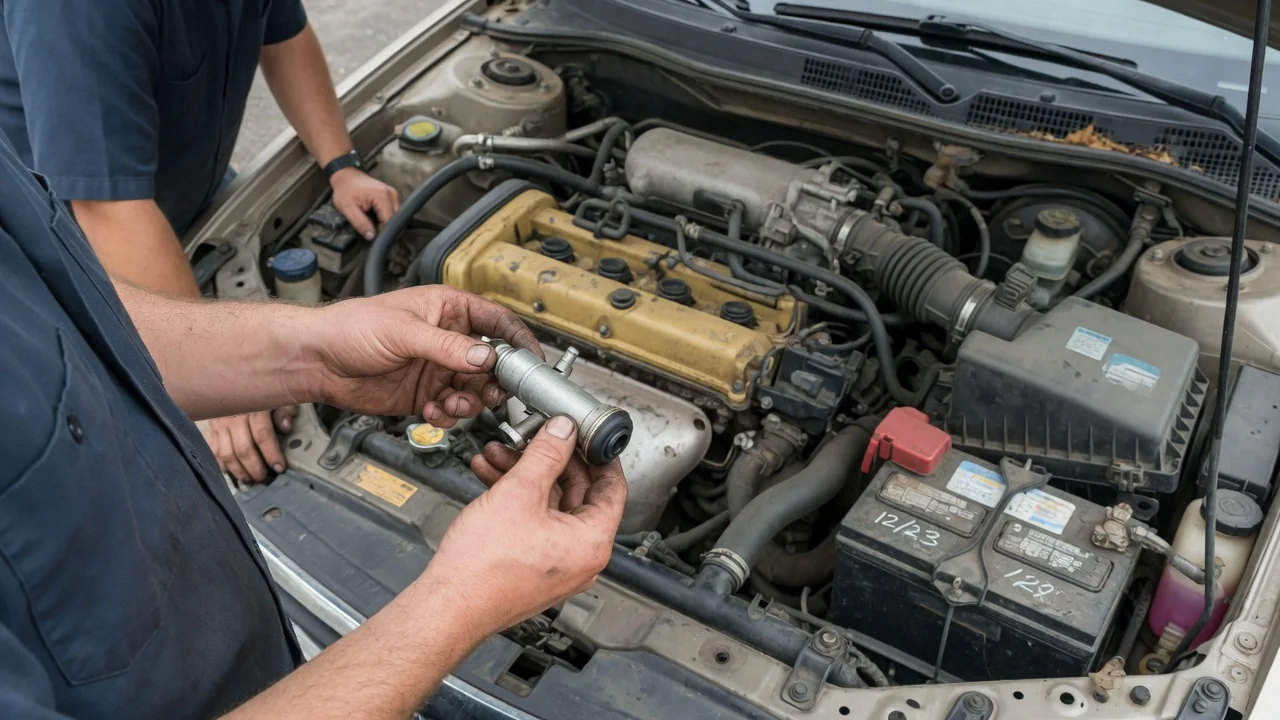
What is a PCV valve? It is a small metering valve in the positive crankcase ventilation system, which routes combustion gases that slip past the piston rings back into the intake to be burned rather than vented to the air. This guide explains the path those vapors take, how the valve responds to engine load, and what owners can reasonably observe.
Gas path
During combustion, a small share of the burning mixture squeezes past the piston rings and into the crankcase. This blow-by carries unburned fuel, water vapor, and acidic byproducts that would contaminate the oil and raise internal pressure if left trapped. The ventilation system gives those gases an exit. Typically they rise through passages to the valve cover, pass through the PCV valve, and travel along a hose into the intake manifold, where they join the incoming air and are burned.
A second connection completes the loop. A breather hose, usually running from the air intake duct to the opposite valve cover or another crankcase port, supplies filtered fresh air to sweep vapors toward the valve. Under the hood, readers can often trace these hoses by hand. Layouts vary widely, though: some engines mount the valve in a rubber grommet on the valve cover, while others build it into the cover itself or an oil separator housing, and turbocharged engines may use additional check valves and routes.
Engine operation
The valve itself is usually a spring-loaded plunger that reacts to intake manifold vacuum. At idle, vacuum is strong but blow-by volume is low, so the plunger is pulled toward a restricted position to limit flow and keep the fuel mixture from being upset. As the throttle opens and load increases, vacuum drops, the spring moves the plunger to a more open position, and the larger volume of crankcase gas produced under load can pass through.
The valve also acts as a one-way check. If the intake backfires, or if a turbocharger pressurizes the manifold, the plunger seats and blocks flow from reaching the crankcase. Under heavy load, when blow-by may exceed what the valve can pass, excess vapor commonly travels backward through the breather hose into the air intake duct. Because this flow affects the air-fuel mixture the engine computer manages, some newer designs replace the plunger with a fixed orifice, a diaphragm, or an electronically controlled valve.
Maintenance context
Because the valve handles oily, moisture-laden vapor, deposits can accumulate over time. Sludge or varnish may cause the plunger to stick, and rubber hoses and grommets can harden, crack, or collapse with heat and age. Engines that see mostly short trips tend to produce more condensation and fuel dilution, which makes the ventilation system work harder. Regular oil changes with the correct oil help, since clean oil generates fewer deposits to clog the valve and passages.
Whether the valve is a scheduled maintenance item depends on the manufacturer. Some maintenance schedules list inspection or replacement, some say nothing, and designs integrated into a valve cover or separator may be serviced only as an assembly. The owner's manual or factory service information is the right reference for a particular vehicle. During routine service, a technician may check hose condition and confirm that the valve moves freely, though test methods differ by design and a simple check does not suit every type.
Everyday Use and Observations
In daily driving a healthy system is invisible. Trouble tends to show up indirectly. A valve or hose stuck open or leaking can behave like a vacuum leak, with possible rough or high idle, a whistling or hissing noise, lean running, or increased oil consumption as oil mist is drawn into the intake. A restricted system lets pressure build in the crankcase, which may push oil past seals and gaskets, leave oil in the air filter housing, or encourage sludge.
Some observations are easier to misread. Milky residue beneath the oil filler cap can come from condensation on short-trip vehicles in cold weather, and frozen moisture in ventilation hoses can block flow in winter on certain designs. A check engine light may accompany PCV faults, often through mixture or idle-related codes. Any such code is evidence to interpret, not proof that the valve has failed, and manufacturer-specific codes need to be confirmed against information for that exact vehicle.
Limits and Next Steps
The symptoms linked to crankcase ventilation overlap with many other faults. Oil leaks can stem from aged gaskets alone, rough idle from ignition or intake leaks elsewhere, and oil consumption from worn rings or valve seals. Heavy blow-by from internal wear can overwhelm a perfectly good valve, so replacing it will not cure that underlying condition. For that reason, a PCV part should be treated as one possibility to verify rather than an automatic answer.
A sensible next step is a visual look, with the engine off and cool, at the hoses and connections for cracks, looseness, or oily residue, then noting when symptoms occur and under what conditions. From there, a qualified technician can use methods such as smoke testing, crankcase pressure measurement, or scan data to confirm the cause. If replacement is warranted, the part should match the vehicle's specification, because valves are calibrated for particular engines and a similar-looking one may flow differently.