What Is a Parking Brake Hold Function?
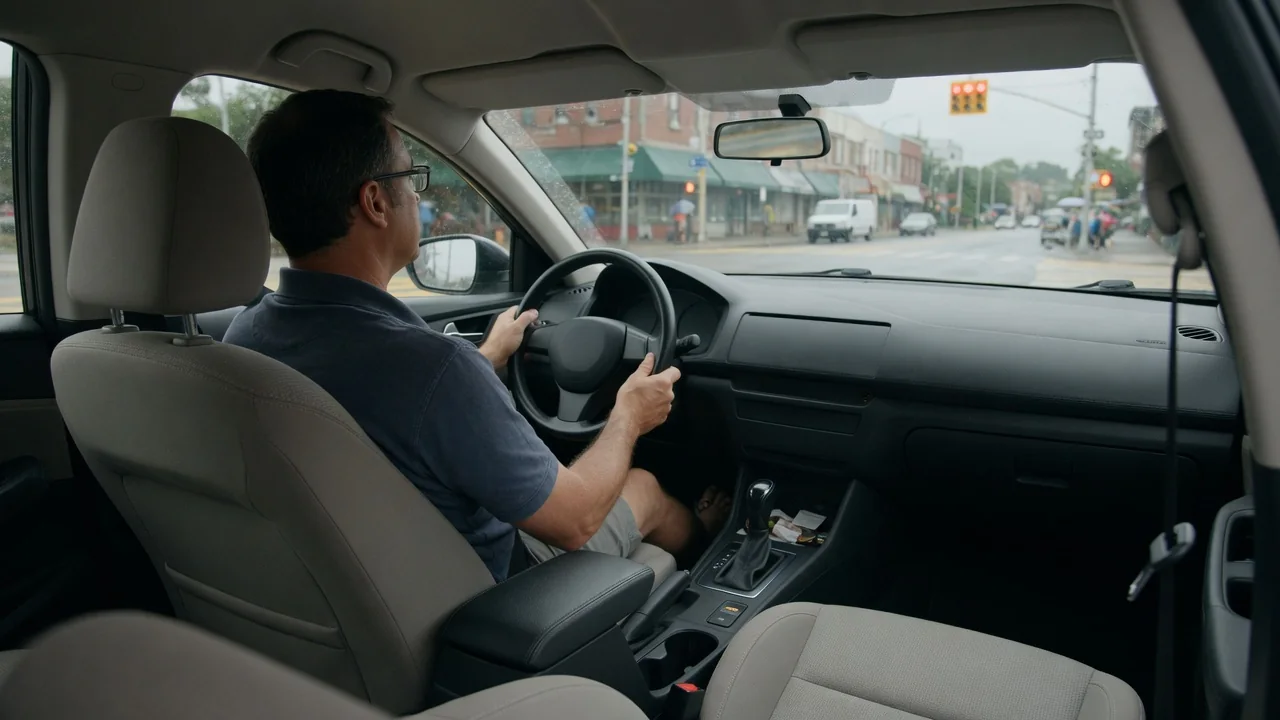
Drivers who ask what is a parking brake hold function are usually looking at a button marked hold, auto hold, or brake hold near the electronic parking brake switch. The feature keeps a stopped vehicle stationary without constant pressure on the brake pedal, which eases fatigue in stop-and-go traffic. How it engages, releases, and differs from the parking brake itself depends on the vehicle.
Activation
On most vehicles equipped with it, the hold function must first be switched on with a dedicated button, and it then waits in standby. Once armed, it acts when the driver brakes to a complete stop: the system retains hydraulic pressure at the wheels, so the foot can come off the pedal while the car stays put. At a red light or in a crawling highway queue, that means the vehicle remains still in drive without creeping forward against an automatic transmission's idle pull.
Activation usually depends on conditions the vehicle checks in the background. Many designs require the driver's seat belt to be fastened, the driver's door closed, and the engine or drive system running before hold will arm. A light in the instrument cluster typically shows two states, one indicating the feature is ready and another indicating it is actively holding. Some vehicles remember the setting between drives while others need the button pressed after every start, so the owner's manual is the reliable reference for a particular model.
Release
Release is designed to be seamless. When the driver presses the accelerator, the system senses the request for torque and lets brake pressure go as the vehicle begins to pull away, so there is no separate switch to operate when the light turns green. On a manual transmission, the release is commonly tied to clutch engagement and throttle together. A well-calibrated system lets the car move off smoothly, though some drivers notice a slight tug or delay until they learn how much pedal input it expects.
Hold can also end in ways that have nothing to do with driving off. Pressing the button again while the brake pedal is applied normally cancels it, and many vehicles hand over to the electronic parking brake automatically if the driver unbuckles, opens the door, switches off the ignition, or stays stopped for an extended period. That handover can be heard as a brief motor whir from the rear wheels. The exact triggers and timing are set by the manufacturer and differ between models.
Difference from parking brake
Although the two features often share a switch panel, they work differently. The hold function typically uses the service brakes, with the stability control hydraulic unit maintaining pressure at all four wheels for a short time. An electronic parking brake instead uses electric motors, usually at the rear calipers, to clamp the brakes mechanically, and it stays applied without any power or hydraulic pressure. One is a temporary convenience during a drive; the other is meant to secure a vehicle that is being left.
The practical difference shows in how each is used. Stopped at a railroad crossing with the engine running and a driver ready to move, hold is the appropriate tool. Parking on a driveway and walking away calls for the parking brake and the transmission's park position, or a gear on a manual. The warning lights differ as well: the parking brake indicator is commonly red, while hold indicators are often green or white, though colors and symbols vary by make.
Everyday Use and Observations
In daily driving, the feature earns its keep in congestion. A commuter inching through a long merge can rest the right foot at each stop instead of holding the pedal for minutes at a time, and the car will not roll back on an uphill off-ramp when moving to the accelerator. Drive-through lanes, toll plazas, and long signals are similar cases. Many vehicles keep the brake lights illuminated while holding, so following traffic still sees a stopped car, but that behavior is worth confirming for a specific model.
Several normal behaviors are worth recognizing. A faint click or hum as pressure is held or released is common, as is a mild sensation in the pedal when the system takes over. Hold may decline to engage during a very gentle stop on some vehicles, requiring a firmer press at the end of braking. It can also interact with engine stop-start, keeping the engine off while the car is held. During low-speed parking maneuvers, some drivers switch it off because repeated holding makes fine creeping awkward.
Limits and Next Steps
The function has limits. It is not a substitute for securing a parked vehicle, and it should not be relied on when anyone exits the car. On steep grades, slick surfaces, or when towing, the available holding force may be reduced or the system may request more pedal pressure through a message or chime. Because it depends on sensors, the brake hydraulic unit, and stable electrical supply, a weak battery or a fault elsewhere in the braking system can make hold unavailable.
If the hold light will not come on, flashes, or appears alongside a brake or stability control warning, start with the simple conditions: belt fastened, door fully closed, and button pressed. A persistent message deserves a proper scan, and any stored fault code should be treated as a clue pointing to a circuit or system rather than proof that a specific part has failed. Code meanings can be manufacturer-specific, so confirmation against vehicle-specific service information by a qualified technician is the sensible next step.