What Is a Magnetic Parts Tray Useful For? Uses and Limits
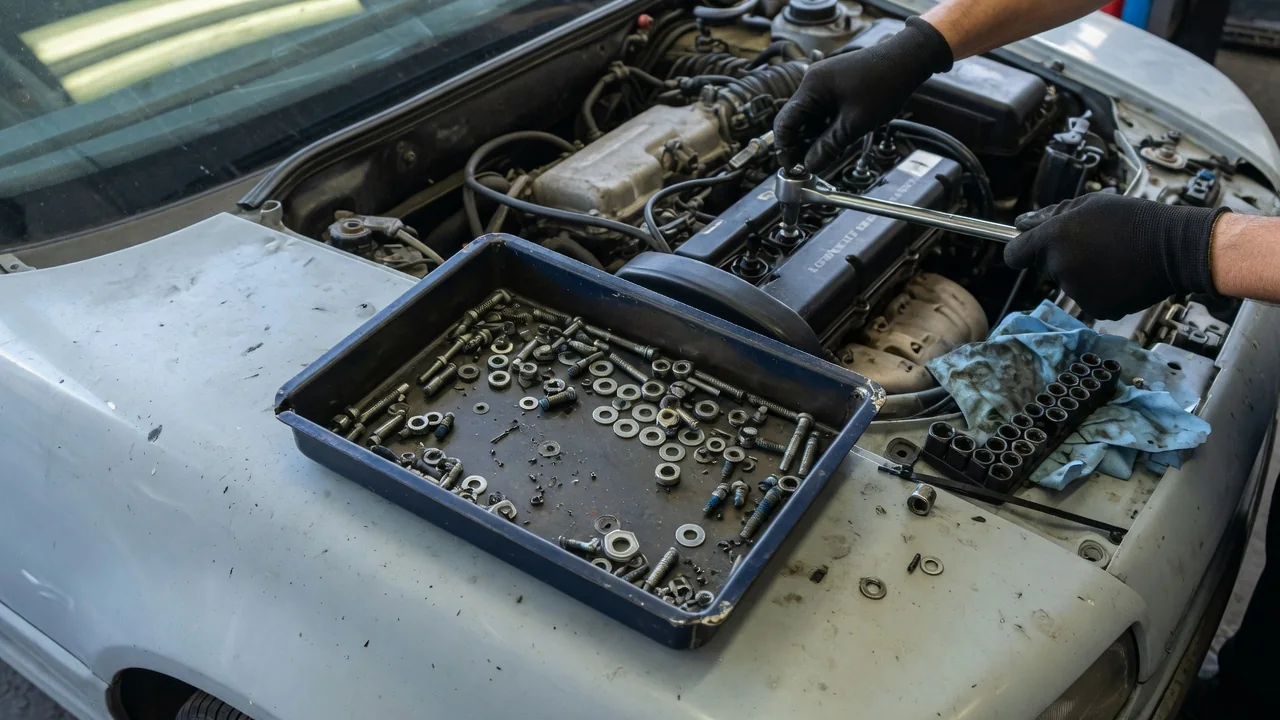
A magnetic parts tray is a shallow metal dish with a magnet fixed to its underside. It addresses a common problem in a home garage: losing small steel parts during a repair. In car repair, its main use is holding bolts, nuts, washers and similar hardware while a job is in progress. Where you place it also determines how much time it saves.
Fastener Retention: Holding Steel Hardware in Place
The tray's main job is retention. The magnet under the dish pulls ferrous items, meaning parts made of iron or most ordinary steels, toward the bottom of the bowl. A bolt dropped into the tray is held against the metal surface rather than simply resting there. This matters when the tray is bumped, tilted or moved around the vehicle. Loose parts in a cup or on a shop rag tend to roll away at the first jolt. Magnetically held fasteners usually stay put unless the tray is turned over or struck hard.
Retention helps most with the small, easily lost pieces that come off on almost every car job: flange bolts from splash shields, nuts from heat shields, washers, spacer sleeves, small brackets and steel spring clips. These parts are usually easy to replace, but a missing one can stall a repair until you find the correct match. Keeping them in one spot makes it less likely that a fastener ends up in a drain pan, under a workbench, or inside the engine bay where it can cause trouble later.
A tray is not limited to fasteners. Because it holds anything steel, it can also keep sockets, extensions, bits and small hand tools from rolling off a fender or a creeper. Some people use one tray for parts removed from the car and another for tools in use, so the two do not mix. That separation is a habit, not a feature of the tray, but the magnetic hold is what makes either use practical.
Placement: Putting the Tray Where You Work
Many magnetic trays also stick to steel surfaces from below, because the magnet that grips parts in the bowl also attracts the surface underneath. You can set the tray on a steel toolbox lid, a jack stand base, a steel workbench, a lift arm or another ferrous surface near the work area. On a sloped or vertical steel surface, the tray may cling in place instead of sliding off. How well it holds depends on the magnet, the surface, the angle and the weight of the contents. A tray stuck to a vertical surface is convenient, not secure.
The real benefit of placement is keeping parts close to the job. When parts land within arm's reach, you climb out from under the car less often and reach across hot or sharp components less. You are also less tempted to set bolts on the nearest flat ledge, such as a radiator support or the top of a transmission, where they can fall into hard-to-reach places. Under the vehicle, a tray on the floor beside the creeper keeps removed hardware off the concrete and away from fluid spills.
Be careful where you set the tray on the car itself. Body panels may be steel, aluminum or plastic depending on the vehicle and the specific panel, so a tray may or may not stick to a fender. Where it does stick, the magnet can press grit against the paint and leave scratches. A fender cover or clean towel underneath reduces that risk, though it also weakens the hold. Keep the tray off hot surfaces such as exhaust components. If the engine will run during the work, keep it clear of belts, fans and other moving parts.
Limits: What the Magnet Will Not Hold
A magnetic tray only grips ferromagnetic materials. Aluminum fasteners and brackets, brass fittings, copper crush washers, plastic push clips, nylon washers, rubber O-rings and grommets are not attracted at all. Many stainless steel fasteners, especially the common austenitic grades, are only weakly magnetic or not magnetic, so they may sit loose in the bowl. Zinc-plated or coated steel parts are usually still held, because the steel underneath responds to the magnet. If a job involves mixed materials, the non-magnetic pieces need a separate container or careful handling.
The tray also does not record where anything came from. It holds parts but does not organize them. If bolts of similar diameter but different lengths go into one bowl, a long bolt can end up in a short hole, where it may bottom out, damage threads or contact a component behind it. The magnet also tends to clump parts together, which makes sorting a little harder. Small steel items can become slightly magnetized after sitting in the tray and may then pick up fine debris.
There are physical limits as well. The tray can still be knocked off a bench, and a hard impact or full inversion can scatter its contents. Magnet strength varies between products, and heavy items in a small tray are more likely to slide. Some magnet types can lose strength if exposed to high temperatures, which is another reason to keep the tray off hot engine and exhaust parts. Strong magnets may also affect magnetic stripe cards, so keep wallets and similar items away from the tray.
Practical Implications for Home Repairs
In practice, a magnetic parts tray works best as part of a simple routine rather than as a complete organizing system. Using several trays, one per assembly or removal step, keeps parts in order: for example, one for a wheel-well liner and another for a component bracket. When lengths and thread types differ, label each tray with masking tape or take a quick photo of the parts and their locations before removal. For reassembly, follow the vehicle's service information on which fasteners go where and whether any must be replaced rather than reused, since some designs use one-time-use bolts or nuts.
The tray itself needs a little upkeep. Metal filings, brake dust and grit collect in the bowl over time and can end up on threads during reassembly, so wipe it out between jobs. Fluid pooled in the dish can hide small parts and make them slippery, which is another reason to clean it before reuse. The value of a magnetic parts tray in car repair is simple: it reduces lost hardware and wasted time. It only holds steel, it does not sort anything for you, and it is only as secure as the spot where you put it.