What Is a Kammback Car Design? Truncated Tails, Airflow and Space
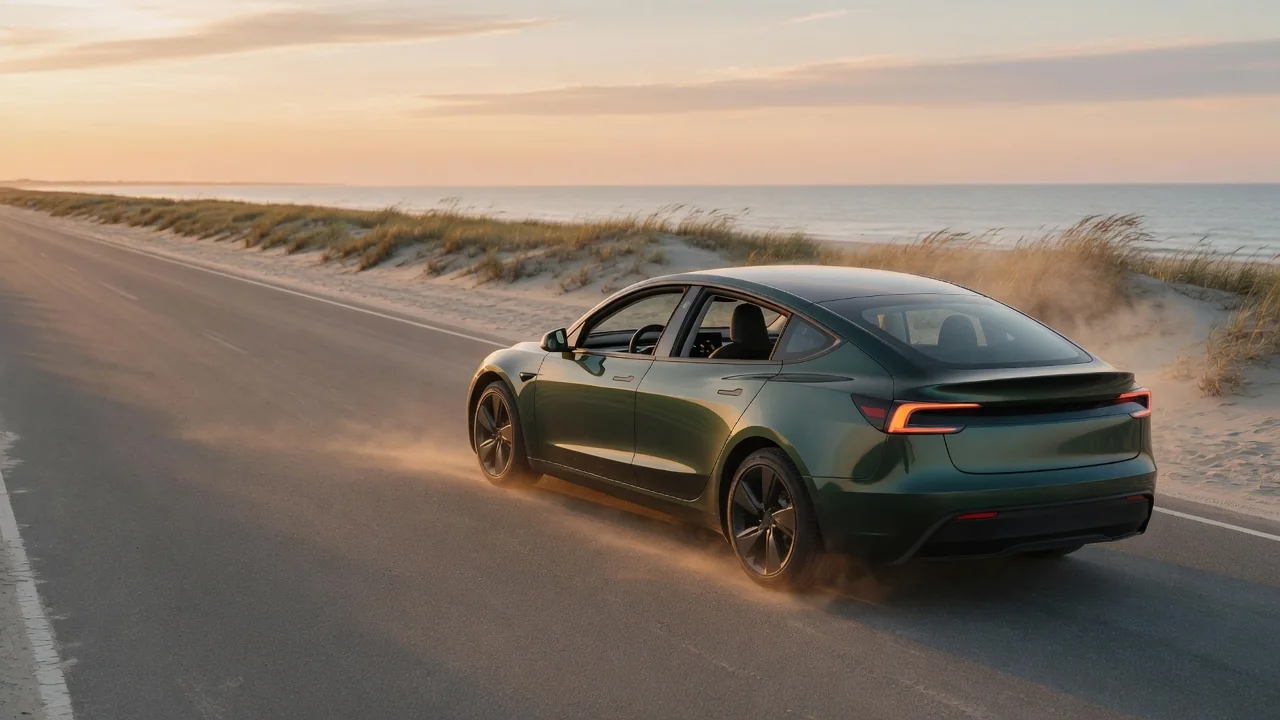
A Kammback is a car body shape in which the roofline and sides taper toward the rear and then end abruptly in a flat or nearly flat vertical surface. The aim is to keep much of the aerodynamic benefit of a long, pointed tail without the length that tail would demand. Answering the question "what is a Kammback car design" means looking at three connected ideas: how the rear is cut off, how air behaves behind it, and what the shape does for usable space.
The Truncated Rear: Defining the Kammback Car Shape
The name comes from Wunibald Kamm, a German engineer whose aerodynamic research in the 1930s helped establish the idea. Engineers already understood that a teardrop form with a long, gently tapering tail produces very little drag. The problem was practical: a true teardrop tail would make a road car absurdly long. The key observation behind the Kammback was that the tail could be cut off once its cross-section had already shrunk to a fraction of the body's maximum, while a large share of the aerodynamic benefit would remain. The shape is also commonly called a Kamm tail or K-tail.
In visual terms, a Kammback car shape has a roof that descends gradually toward the back, sides that may draw inward, and then a deliberate, crisp edge where the body simply stops. The defining feature is not the flat rear panel by itself but the combination of a controlled taper followed by a sharp cutoff. A tall, boxy wagon with a vertical tailgate is not automatically a Kammback, and neither is every hatchback. Because the term has been used loosely in marketing and among enthusiasts to describe almost any car with a chopped-off tail, its meaning in casual conversation is often broader than the engineering concept.
Airflow Behind a Cut-Off Tail
At highway speeds, a significant part of a car's aerodynamic drag is pressure drag. As air flows over the body and leaves it, a low-pressure region called the wake forms behind the vehicle. That low pressure effectively pulls backward on the car, and a larger, more turbulent wake generally means more drag. A gradual taper helps the airflow stay attached to the body surface longer and allows pressure to recover before the air leaves, which shrinks the wake. The difficulty is that the taper must be gentle; if it is too steep, the flow separates early and the benefit is largely lost, which is why an ideal tail becomes so long.
The Kammback approach accepts that the last portion of an ideal tail contributes relatively little once the cross-section has already narrowed. Cutting the body off at that point, with a well-defined edge, makes the airflow separate cleanly along a fixed line instead of at shifting, unpredictable points. Behind the cut, a pocket of slower, recirculating air forms. The outer flow tends to pass around this region somewhat as if a tail were still there, which is why it is sometimes described as a virtual tail. The resulting wake is typically smaller than that of a blunt body without taper, though not as small as that of a full teardrop.
Edge sharpness matters because rounded rear corners allow the flow to wander and separate inconsistently. In practice, the overall effect depends on many interacting details: the taper angle, the size of the truncated area, the underbody, the rear window slope, and any spoilers or diffusers. These are general principles of how the shape works, not a guarantee that any particular vehicle achieves a specific result.
Packaging Advantages of a Kammback
Much of the appeal of the Kammback is about packaging rather than pure aerodynamics. Ending the body early keeps overall length down, which helps with parking, maneuverability, material use, and weight. Because the roof does not have to slope all the way down to a point, the rear of the cabin can stay taller than it would under a long fastback line. That leaves more headroom for rear-seat passengers and avoids the cramped feeling that a sharply falling roof can create.
The vertical or near-vertical rear face also suits practical openings. It allows a relatively tall, squared-off hatch or tailgate, which makes loading bulky items easier and gives more usable cargo volume than a tapered point would. The flat panel also provides a natural location for lights and a license plate. There are trade-offs: the taper of the roof and sides still removes some interior volume compared with a full box shape, and the angle and size of the rear glass influence how much the driver can see through the rear window.
Practical Implications and Limits
For drivers, the aerodynamic side of a Kammback matters most at sustained higher speeds, because aerodynamic drag grows roughly with the square of speed. In slow city traffic, factors such as vehicle weight, rolling resistance, and drivetrain efficiency tend to dominate energy use. It is also unwise to assume that any car with a chopped-off rear is efficient. Drag depends on the entire shape, from the nose and mirrors to the wheels and underbody, so the manufacturer's published specifications are the reliable reference for a given vehicle rather than its silhouette.
The low-pressure, recirculating zone behind a flat rear face can draw in road spray and dust, so the rear glass and tailgate on blunt-tailed vehicles may get dirty faster in wet or dusty conditions, which is one reason rear wipers are common on such bodies. Anything that changes the airflow at the back, such as roof boxes, bike racks, aftermarket spoilers, or a hitch-mounted carrier, alters the conditions the shape was designed around and can reduce or change its intended effect.
Finally, the Kammback is best understood as a compromise rather than an aerodynamic optimum. Designers balance it against styling goals, crash structures, lighting and visibility requirements, cargo needs, and production costs. The concept explains why many vehicles end in a crisp, upright tail, but the exact proportions on any car reflect that wider set of priorities, not aerodynamics alone.