What Is a Hybrid Car Battery and How Does It Work?
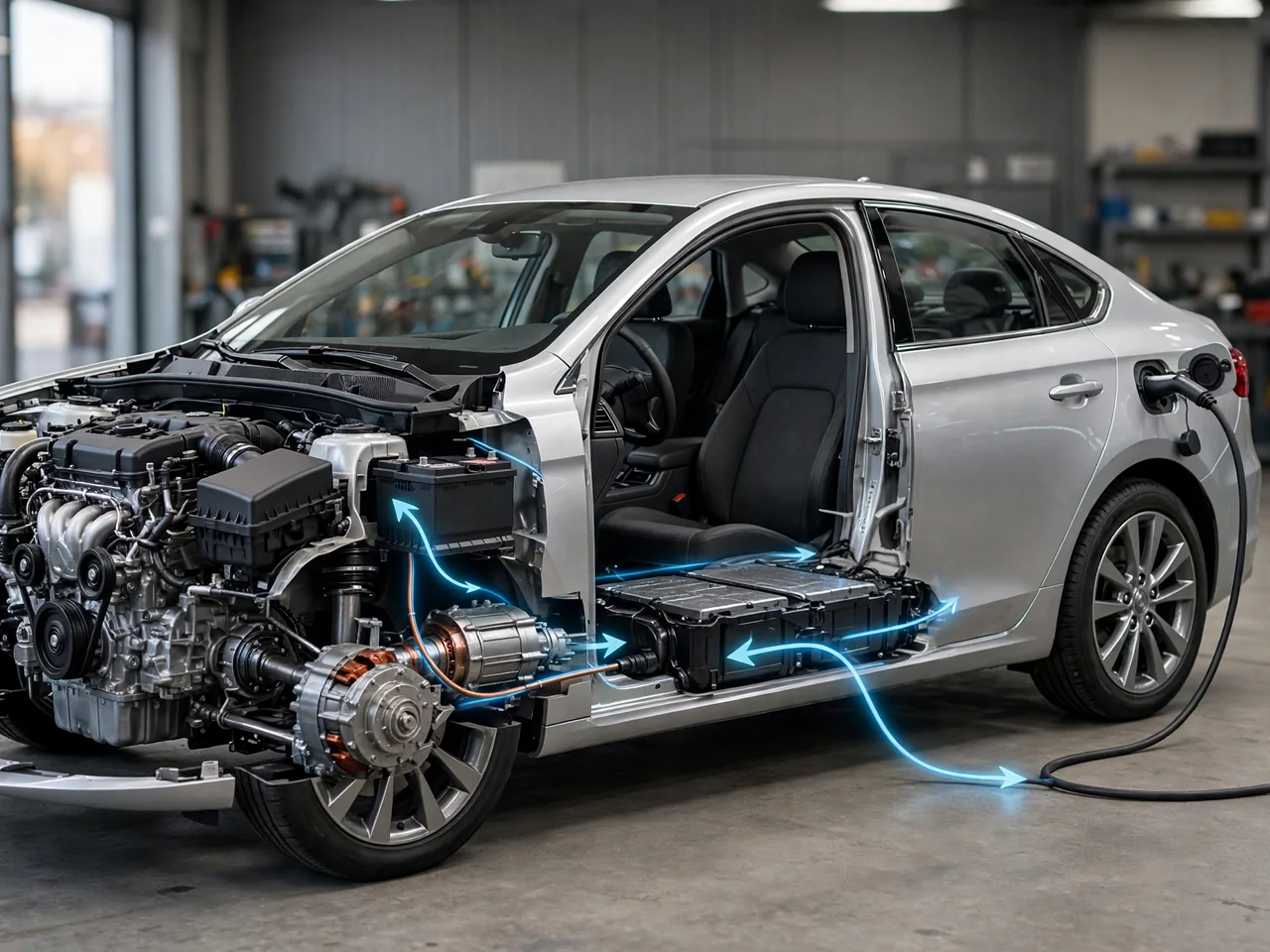
Every hybrid car carries more than one battery, and the one that makes it a hybrid is the high-voltage traction pack. This battery stores the electricity that drives the electric motor, captures energy during braking, and works alongside the gasoline engine to reduce fuel use. Understanding its chemistry, construction, voltage, and relationship to the ordinary 12-volt battery clarifies how the whole system behaves.
What a Hybrid Traction Battery Does
A hybrid battery, more precisely called a traction battery, is a rechargeable energy store that supplies electricity to the vehicle's electric drive system. It is separate from the small battery most people picture when they hear the words car battery, which is why the question of whether a hybrid has a battery often causes confusion. The answer is yes, and usually two: a low-voltage battery for accessories and controls, plus the high-voltage pack that actually helps move the car.
The traction pack does not produce motion by itself. It holds energy in chemical form and releases it as electrical current when the hybrid control system calls for it. An inverter converts that current into the form the electric motor needs, and the motor turns electrical energy into torque at the wheels. In a gasoline-electric hybrid, this arrangement lets the car draw on stored electricity for part of its propulsion, so the engine does not have to meet every demand alone.
How the Battery Works With the Motor and Engine
When the driver accelerates, the hybrid system can draw on the pack so the electric motor adds torque, either assisting the engine or, in many full hybrids, moving the car briefly on electricity alone at low speeds. Whether the engine runs, and how much electric help is available, depends on the specific hybrid design, the battery's state of charge, its temperature, and how hard the driver is asking the car to work. A cold pack or a low charge can keep the engine running more often.
Much of the energy in the pack comes back from the car itself. During regenerative braking, the motor acts as a generator, converting some of the vehicle's motion into electricity that flows back into the battery instead of being lost entirely as brake heat. The engine can also drive a generator to replenish charge when needed. A conventional hybrid manages all of this internally and cannot be plugged in; external charging is possible only on plug-in hybrids built with a charging port and onboard charger.
Cells, Modules, and Chemistry Inside the Pack
A traction battery begins with individual cells, each producing a relatively low voltage. Manufacturers connect many cells together, and in many designs they first group cells into modules, intermediate assemblies that simplify construction and wiring. Two chemistries are common in hybrids. Nickel-metal hydride has a long history in hybrid vehicles, while lithium-ion can store more energy in a smaller, lighter package. Neither is universal, and a given model may use either chemistry depending on its design and generation.
Around the cells sits a protective enclosure, along with busbars and cabling that carry current, temperature and voltage sensors, and a battery management system that interprets those readings. Cooling matters because cells perform and age best within a limited temperature range, and different vehicles use air or liquid cooling with ducts, fans, or coolant passages arranged to suit the car. Because cell format, module layout, and electronics vary so widely, parts from one pack should never be assumed to fit or function in another.
What Hybrid Battery Voltage Means
The voltage quoted for a hybrid battery is usually its nominal voltage, a reference figure set largely by how many cells are connected in series. Voltage is not the same as energy capacity, which describes how much energy the pack can store, nor state of charge, which describes how full it is at a given moment. As a broad orientation, many full-hybrid traction packs operate somewhere from roughly 100 volts to several hundred volts, but the exact figure belongs to each specific vehicle.
Even for one car, several voltage numbers can appear. The pack's nominal rating, the voltage it actually shows while charging or delivering power, and the higher voltage some designs create elsewhere in the drive circuit are separate specifications. For a model such as the Toyota Aqua, the correct value depends on model year, generation, and market, so owners should consult the manufacturer's documentation for their exact vehicle. The high-voltage pack is hazardous, and any measurement belongs to trained technicians with proper equipment.
The Traction Pack and the 12V Battery Have Separate Jobs
Hybrids commonly keep a conventional low-voltage battery, often 12 volts, alongside the traction pack. The two serve different purposes. The high-voltage pack feeds the electric drive system, while the low-voltage battery powers control modules, lighting, locks, infotainment, and the startup electronics that must wake up before the high-voltage system can be connected. In many hybrids the 12-volt battery does not crank the engine the way it does in a conventional car, so its job and sizing can differ from what owners expect.
Once the system is active, many hybrids use a DC-DC converter to step down energy from the high-voltage side, supplying low-voltage loads and recharging the 12-volt battery in place of a conventional alternator. This relationship explains a common misunderstanding. If a hybrid will not enter its ready-to-drive state, the traction pack is not automatically to blame. A weak 12-volt battery, a control fault, or another system issue can produce the same symptom, and proper diagnosis should determine the actual cause.
How the Vehicle Manages Battery Charge and Temperature
The battery management system continuously tracks cell voltages, current flow, and temperature, then limits charging and discharging to keep the pack within protective boundaries. Most hybrids avoid running the pack completely full or completely empty, so the charge display on the dashboard typically shows a managed operating window rather than the chemistry's absolute range. That gauge indicates how much usable charge the system is allowing at the moment, not the long-term health or remaining capacity of the battery.
Drivers can safely notice certain changes, such as a hybrid system warning message, a battery cooling fan running more often or more loudly, reduced electric assistance, or the engine running more than it used to. None of these confirms a failed pack on its own, and any stored fault code is evidence for a technician to interpret rather than a verdict. Persistent warnings or noticeable drivability changes warrant professional testing, and owners should never open or probe the pack.