What Is a Hot Hatch? Definition, Packaging and Enthusiast Terms
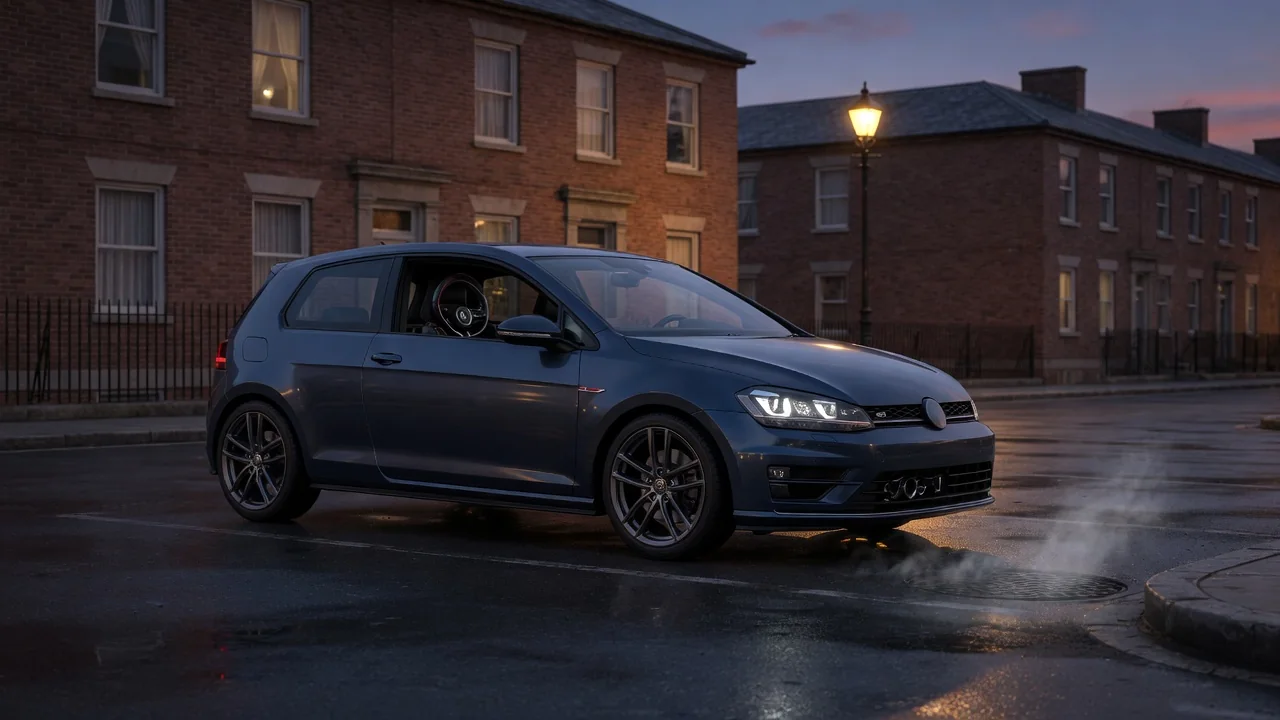
A hot hatch is a compact hatchback with much more performance than the everyday version it is based on. It usually gets a stronger engine, firmer suspension, bigger brakes and sharper steering, but it keeps the practical body, rear hatch and usable seating of the original car. The hot hatch car definition is informal rather than legal or technical. It describes a recognizable type of vehicle, not a fixed set of specifications.
Hatchback packaging
To understand what makes a hot hatch, start with the hatchback itself. A hatchback has a rear door hinged at the roof that lifts together with the rear window, opening directly into a cargo area that shares space with the passenger cabin. Most hatchbacks have a two-box profile: one box for the engine and a second box that combines cabin and cargo, with no separate trunk. The rear seats usually fold to create a longer load floor. Mainstream compact hatchbacks commonly mount the engine transversely at the front and drive the front wheels. That layout keeps the drivetrain compact and leaves more of the car's length for people and luggage. The result is a small footprint with a lot of usable interior space for its size.
The same packaging makes a good starting point for a performance version. Compact hatchbacks tend to be relatively light and have short wheelbases, which helps them feel agile and quick to change direction. The platform is already engineered for volume production, so a manufacturer can install a more powerful engine and add wider wheels and tires, a lower and stiffer suspension, larger brakes and reinforced driveline parts without designing a new car. Front-wheel drive has known trade-offs when power rises. The front tires must steer and put power down at the same time, which can cause wheelspin and torque steer, a tug at the steering wheel under hard acceleration. Engineers address this in different ways, including limited-slip differentials, revised suspension geometry and, on some performance hatchbacks, all-wheel drive. These are general approaches; the actual hardware differs from one vehicle to another.
Enthusiast use
Enthusiasts value hot hatches because one car can cover several roles. The same vehicle can handle a weekday commute, a trip to the hardware store with the seats folded and a weekend drive on a winding road. A dedicated two-seat sports car may be more focused, but it usually gives up passenger room and cargo space. A hot hatch accepts some compromise in outright performance in exchange for everyday usefulness, which is why many people describe it as a practical way to own an engaging car.
Owners use these cars in a range of driving activities. Common examples include spirited road driving, autocross events in parking lots or on airfields, track days on closed circuits, and club-organized hill climbs or time trials. Compact size and modest weight suit tight autocross courses and narrow roads especially well. Hot hatches also have a strong modification culture. Typical changes include wheels and tires, suspension components, brake pads and fluid, intake and exhaust parts, and engine control software. How much a particular change helps or hurts depends on the specific car and the quality of the parts and installation.
Enthusiasts often describe the driving character of a good hot hatch as playful or adjustable. That usually refers to how the car responds to driver inputs near the limit of grip. Some front-wheel-drive chassis are tuned so the rear of the car can rotate slightly when the driver lifts off the throttle in a corner, which helps point the nose toward the exit. Other setups favor stability and predictable understeer. Neither approach defines a hot hatch on its own. Both are tuning choices made for each vehicle.
Terminology
The phrase comes from enthusiast and motoring press slang. Hatch is simply short for hatchback. Hot is long-standing car-culture shorthand for a higher-performance version, the same sense found in terms such as hot rod. Several related labels have grown up around the hot hatch. A warm hatch usually means a sportier trim with styling upgrades, revised suspension or a modest power increase, sitting between the ordinary model and a full hot hatch. Pocket rocket is an informal nickname often used for the smallest and lightest performance hatchbacks. Hyper hatch or mega hatch is sometimes used for the most powerful examples, which frequently use all-wheel drive to manage their output. None of these terms has an official definition, and writers and owners apply them inconsistently.
It also helps to know what the term does not cover. In the United States, sport compact is a broader label that can include small performance sedans and coupes as well as hatchbacks. A hot hatch must have a hatchback body. Both three-door and five-door versions qualify, since the definition depends on the rear opening rather than the number of side doors. Sporty-looking crossovers and small SUVs are generally not called hot hatches, although the boundary blurs as body styles converge. Manufacturer badges are not a reliable guide either. Some sport-badged trims mainly add appearance items, while a car without a dramatic badge may carry substantial performance hardware.
Practical implications and limits
Living with a hot hatch every day involves costs and compromises that the label does not show. A firmer suspension and low-profile tires usually transmit more road texture and noise into the cabin. Wheels with less sidewall cushioning are more exposed to pothole damage. Performance tires, larger brake components and specialized parts generally cost more to replace than standard equipment, and grippy tire compounds may wear faster. Higher-output engines, which are often turbocharged, can have specific requirements for fuel grade, oil specification and service intervals. The owner's manual for the particular vehicle is the authoritative source for those details, not general assumptions about the category.
The category also has physical limits. A compact hatchback is still a compact car, so rear-seat room and cargo volume remain smaller than in larger vehicles, whatever the engine output. In front-wheel-drive versions, traction under hard acceleration is limited by how much load sits on the front tires, so extra power does not always translate into quicker launches. Because the term is informal, two cars both called hot hatches can differ widely in drivetrain, differential type, brake size and overall performance. When evaluating one, check its actual equipment and published specifications instead of relying on the name.
Modifications and paperwork deserve attention as well. Aftermarket changes to engine software, exhaust or emissions-related parts can affect warranty coverage and may conflict with emissions or inspection rules, which vary by state. Lowering a car can create clearance problems on steep driveways and speed bumps. Insurers may rate performance trims differently from standard versions, so it is worth checking how a specific trim is classified before buying. Track days and timed events often have their own requirements for safety equipment, tire condition and brake fluid, set by the organizing club or venue.