What Is a Homologation Special? Meaning, Rules and History
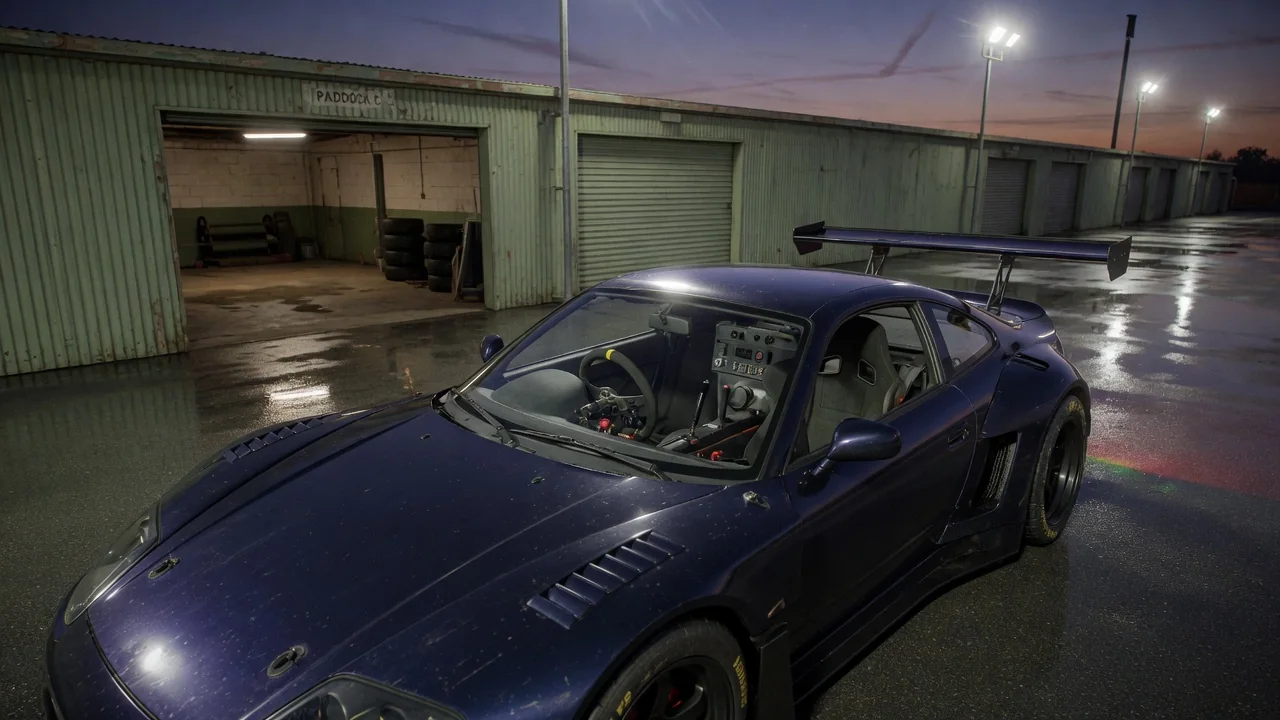
A homologation special is a road-legal car built mainly so a manufacturer can race a closely related version in a series that requires a minimum number of production vehicles. The homologation car meaning comes down to approval: the street car exists to certify an engine, body shape or set of parts for competition. This guide explains how competition rules create these cars, what the road versions usually include, how the idea developed, and what it means for owners and buyers.
Competition rules context
Homologation is the formal process by which a sanctioning body approves a vehicle or component as eligible to compete. Many production-based categories, including forms of rallying, touring car racing, GT racing and stock car racing, have required race cars to be derived from models sold to the public. To show that a car is a genuine production model rather than a one-off racer, organizers set minimum build or sales quantities within a defined period. The manufacturer then submits documentation describing the approved specification, which can cover body dimensions, engine displacement, induction type, suspension layout, aerodynamic parts and sometimes materials or minimum weight.
The important consequence is that a race team can generally use only what has been homologated, plus whatever modifications the class rules allow. If engineers want a larger rear wing, a different turbocharger, wider wheel arches or a revised cylinder head, the most direct route is often to fit that feature to a road car and build enough of them. Some rulebooks also allow evolution versions, which update an already approved model with a smaller additional production run. Exact thresholds, time windows and definitions of what counts as production vary widely by series, era and governing body, so there is no single universal number behind every homologation special.
Road version
The car the public can buy is usually a limited-run variant of an existing model, with changes chosen for competition rather than everyday comfort. Depending on what the racing program needed to legalize, it may have a more powerful or differently configured engine, distinctive aerodynamic bodywork, a wider track, lighter panels, a reinforced body shell, a different gearbox or upgraded brakes. Not every homologation special has all of these features. Each one reflects the specific parts its maker needed approved at that time.
Because the street car serves a rulebook first, some of its features make little sense on public roads. Aerodynamic parts may do little at legal speeds, and the suspension can feel firmer and the cabin noisier than in the regular model. In some cases the road engine is deliberately conservative, because the full performance potential is unlocked only by competition tuning that the class permits. Certain parts may be included mainly so they appear in the approved specification, giving race teams a legal basis to use or develop them.
It also helps to separate homologation specials from other limited editions. A special trim package, anniversary model or appearance edition is not a homologation special unless it was built to meet competition eligibility rules. Equally, a homologation special is not a race car adapted for the street. The road car comes first in the approval process, and it must meet the safety and emissions requirements of the markets where it is sold.
History
The idea is as old as production-based racing itself. Once organizers tied eligibility to cars available to the public, manufacturers had a reason to put competition features into the showroom. In late-1960s and early-1970s American stock car racing, aerodynamic bodywork was put on limited road versions so it could be used on track. Rallying in the 1980s brought one of the best-known examples: the Group B rules required only a few hundred road examples, which led to extreme cars that often shared little with ordinary production models.
After Group B ended in the mid-1980s amid safety concerns, top-level rallying moved to rules based on much higher production volumes. Homologation specials then tended to become intense versions of mainstream sedans and hatchbacks, with features such as turbocharging, all-wheel drive or high-revving engines and revised aerodynamics, built in larger numbers than earlier low-volume specials. Later, GT racing rules that demanded only small road runs again produced exotic machines that existed mainly to qualify a racing design.
Over time, many series moved toward purpose-built competition cars with looser links to the showroom, such as silhouette bodies over racing chassis or rules that certify competition kits rather than high-performance road cars. That shift reduced the need for traditional homologation specials, which is one reason the earlier examples attract so much enthusiast attention. Today the term is also used loosely in marketing, sometimes for cars with racing-inspired styling but no actual eligibility purpose.
Practical implications and limits
Ownership is shaped by the small production numbers. Unique body panels, engine components or trim pieces were often made in limited quantities, so replacements can be scarce or expensive, while parts shared with the base model are usually easier to find. When planning maintenance, use the service documentation for the exact variant rather than assuming the regular model's schedule and specifications apply. Competition-oriented components can have different inspection or replacement needs.
For buyers, authenticity matters. Because these cars are often valued for their competition connection, check the vehicle identification number, build records and any manufacturer documentation that confirms the car is the genuine homologated variant. Body kits, badges and replica parts can make an ordinary model look like a special, and some cars have been modified so heavily over the years that original features are missing. Matching paperwork to the car is more reliable than judging by appearance.
The label also has limits. A homologation special is not automatically quicker, more comfortable or more practical than a regular performance model for daily driving, and its road behavior does not match the race version built from it. Note too that homologation has a separate regulatory meaning: in many markets it refers to the type approval a vehicle needs to be sold for road use. In enthusiast terminology, however, a homologation special specifically means a road car created to satisfy competition eligibility rules.