What Is a High-Pressure Fuel Pump? How It Works and How It Is Serviced
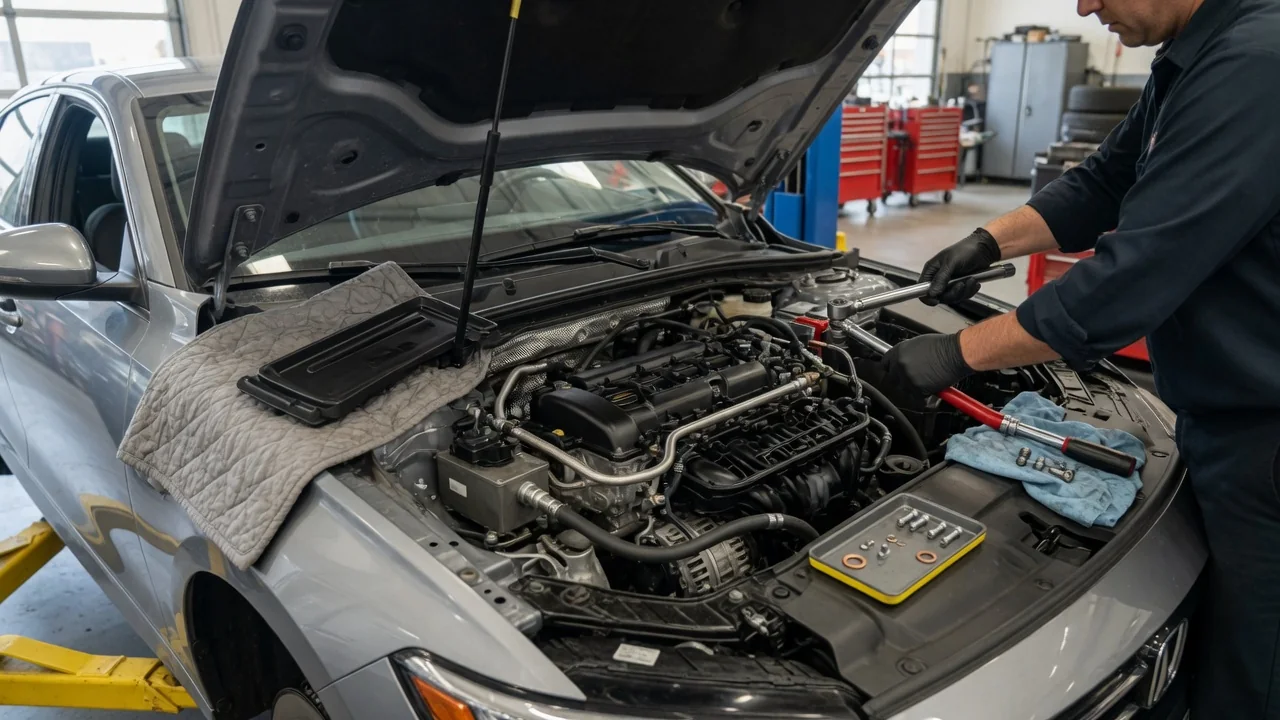
A high-pressure fuel pump is an engine-driven component. It raises fuel pressure far beyond what an in-tank pump can deliver, so the injectors can spray fuel directly into the combustion chamber or feed a diesel common rail. It is central to gasoline direct injection and modern diesel common-rail systems. This guide explains what a high-pressure fuel pump does, how the engine drives it, and what service considerations owners should understand, without assuming any one vehicle's design.
Fuel pressure: why direct injection needs a second pump
Most direct injection fuel systems use two pumps in series. An electric lift pump, usually located in or near the fuel tank, sends fuel forward at relatively low pressure. The high-pressure pump is mounted on the engine. It takes that supply and compresses it to the much higher level the injectors need. A port-injected engine sprays fuel into the intake port, where the air is still at manifold pressure, so modest fuel pressure is enough. A direct injection high-pressure pump has a harder job. The injector must open against cylinder pressure during the compression stroke and atomize the fuel into a fine mist within a very short window of time. Higher pressure helps break the fuel into smaller droplets, which evaporate faster. That supports more complete combustion and more precise metering.
The pump does not simply run flat out. In typical designs, the engine control module commands a metering or volume control valve on the pump. That valve regulates how much fuel is actually compressed on each stroke. A pressure sensor on the fuel rail reports the actual pressure back to the control module. The module then adjusts the valve to hit a target pressure that changes with engine load, speed and temperature. A pressure relief or limiting valve, on either the pump or the rail, protects the system if pressure climbs too high. Exact target pressures, valve arrangements and sensor locations vary by manufacturer and engine. The service information for a specific vehicle is the reference for real values.
Cam drive: how the engine powers the pump
Unlike the electric lift pump, the high-pressure pump is driven mechanically by the engine. In many gasoline direct injection engines, a dedicated lobe on one of the camshafts pushes a plunger inside the pump. The lobe acts on a follower, often a roller tappet or a bucket-style follower, which transfers the motion to the plunger. As the cam lobe rises, the plunger moves up and compresses fuel in a small chamber. As the lobe falls, a spring returns the plunger and fresh fuel is drawn in from the low-pressure side. A one-way outlet valve lets the pressurized fuel into the high-pressure line and rail.
Because the pump is tied to engine rotation, its stroke rate rises with rpm, and its output can be timed relative to injection events. The number of lobes and the pump's position on the engine differ between designs. Diesel common-rail systems commonly use a different arrangement. Their pump may be driven by the timing belt, timing chain or a gear train, and it may contain several pumping elements rather than a single plunger. In both cases, the mechanical link means the pump adds some load to the valvetrain or drive system. That contact area becomes a wear point worth keeping in mind.
Service: symptoms, inspection and safe repair
A failing high-pressure pump usually shows up as a fuel delivery problem that the control module can detect. Common complaints include: • extended cranking; • hesitation or loss of power under load; • rough running; • stalling; • a check engine light with codes showing fuel rail pressure too low, too high or not following its target; These symptoms are not unique to the pump. A weak lift pump, a clogged filter, a faulty rail pressure sensor, a wiring fault or a leaking injector can produce similar codes. Diagnosis therefore normally starts by checking low-side supply pressure. A technician then compares commanded and actual rail pressure using a scan tool. Where the manual specifies it, a gauge is also fitted on the low-pressure side.
Mechanical wear is another service concern. On cam-driven designs, both the follower and the cam lobe that drives the pump can wear. Some manufacturers specify inspecting these parts whenever the pump is replaced. On some gasoline pumps, an internal seal leak can let fuel into the engine oil. This may show up as a fuel smell in the oil or a rising oil level. On diesel systems, fuel quality matters greatly because the diesel fuel also lubricates the pump internals. Water or contamination can damage the pump and send debris downstream to the injectors.
Repair calls for caution. The high-pressure side can hold dangerous pressure after shutdown, so the system must be depressurized according to the manual before any line is loosened. Many manufacturers treat high-pressure lines and certain fasteners as single-use parts. They also specify exact torque values and installation steps, including setting the cam position when fitting the pump. Clean working conditions are essential, because even small particles can damage injectors. For most owners, inspection and replacement are jobs for a technician who has the correct service data.
Practical implications and limits
In everyday driving, the pump mostly works in the background, but a few owner habits support it: • Avoid routinely running the tank very low. This helps the lift pump keep a steady supply flowing to the high-pressure side. • Use fuel of the grade specified in the owner's manual. • Replace the fuel filter at the scheduled interval, if the vehicle has a serviceable filter. • Follow the recommended oil change intervals. These steps reduce stress on the pump and its drive. Some engines make a light ticking sound from the pump during normal operation. That noise alone is not a sign of failure; a change in the sound or new symptoms are more meaningful.
General knowledge has limits here. Pump designs, operating pressures, maintenance requirements and known failure patterns differ widely between engines, even within one manufacturer. A rail pressure code does not by itself confirm a bad pump. Replacing a pump without checking the drive follower, the supply side and the sensors can leave the real fault in place. Additives should not be assumed to repair a worn pump. When a problem appears, the most reliable path has three parts: the vehicle's own service information, a proper diagnosis of commanded versus actual pressure, and any manufacturer service bulletins that apply.