What Is a High-Mounted Brake Light?
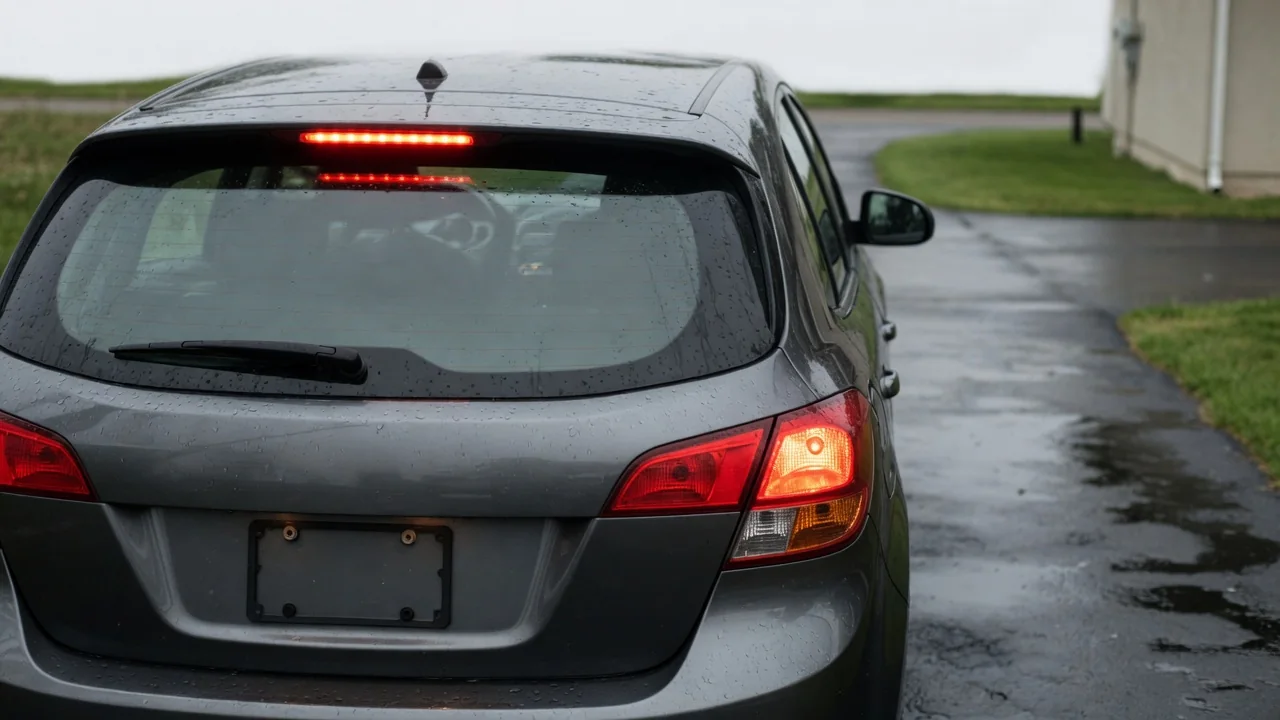
What is a high mounted brake light? It is the extra stop lamp positioned along the vehicle's centerline, above the regular left and right brake lights, usually at the rear glass, on the trunk lid, or in a spoiler. Often called the third brake light or center high-mounted stop lamp, it gives following drivers an additional, higher signal that the vehicle is slowing.
Location
The lamp sits on the vehicle's centerline, higher than the two main stop lamps in the tail light assemblies. On many sedans it is mounted inside the cabin, either on the rear parcel shelf or at the top of the rear window, shining through the glass. Hatchbacks, wagons, and SUVs often carry it at the upper edge of the liftgate or within a roof spoiler, while pickup trucks typically place it on the back of the cab above the rear window, sometimes combined with a cargo lamp.
The height is the point of the design. A driver following closely may have the lower lamps hidden by the hood line of their own vehicle or by a car in between, yet a lamp near the roofline can still be seen through the windows of intervening traffic. Shape varies widely: some vehicles use a short rectangular housing, others a thin strip spanning much of the spoiler or glass. Convertibles and vehicles with trunk-mounted spoilers often locate the lamp on the decklid or within the spoiler itself.
How it activates
The high-mounted lamp is wired into the brake light circuit, so it illuminates whenever the driver presses the brake pedal and goes dark on release. A switch or sensor at the pedal provides the signal. On older, simpler vehicles that switch feeds power to the lamps directly through a fuse; on many newer vehicles a body control module reads the pedal input and commands the lamps electronically. Either way, the center lamp should light together with the left and right stop lamps.
Unlike the lower lamps, which often share a housing or bulb with the tail lights and sometimes the turn signals, the center lamp usually has a single job: it shows braking only, without glowing dimly when the headlights are on and without flashing for a turn. That makes its message unambiguous. Some vehicles add behaviors, such as lighting the stop lamps during strong regenerative deceleration in hybrids and electric vehicles, when driver assistance systems brake automatically, or flashing during hard stops. Those features depend on the manufacturer, so the owner's manual is the reference.
Service access
How the lamp is reached depends on where it sits. Interior units on a parcel shelf or at the top of the glass are commonly covered by a plastic housing that unclips or is held by small fasteners. Liftgate and spoiler lamps may be reached from inside after removing a trim panel, or the lamp may be fastened from outside. On pickups, the cab-mounted unit is typically secured from the exterior and sealed with a gasket against the cab's sheet metal.
The light source also matters. Older designs use replaceable bulbs in a twist-out socket, while many modern units use LEDs built into a sealed assembly, which is generally replaced as a whole if it fails. Because exterior-mounted housings rely on a gasket to keep water out, a disturbed or aged seal can let moisture into the cargo area or cab, so reseating it properly matters. Trim clips and glass-mounted parts can be brittle, and the vehicle's service information shows the intended removal method and the correct replacement part.
Everyday Use and Observations
Drivers rarely see their own brake lights, so a failed center lamp can go unnoticed for a long time. A simple check is to back up toward a garage door, wall, or storefront window at dusk and watch the reflection while pressing the pedal, or to ask a helper to stand behind the vehicle. All stop lamps should come on promptly and evenly. With LED strips, look for dark segments; a partly lit strip suggests individual emitters or their circuit board are failing.
Other everyday factors affect how well the lamp does its job. Cargo stacked on a parcel shelf, items piled high in a hatchback, dark window tint, stickers, and snow on the glass or spoiler can block or dim the light. Condensation inside the lens points to a sealing problem. Some vehicles display a warning message or an indicator when a lamp circuit fault is detected, but not every vehicle monitors the center lamp, so periodic visual checks remain worthwhile regardless of what the instrument cluster shows.
Limits and Next Steps
The high-mounted lamp supplements the main stop lamps; it does not replace them, and it cannot make up for following too closely or for worn brakes. In the United States it has long been required equipment on new passenger vehicles, and an inoperative one may draw attention during a traffic stop or a safety inspection where inspections apply. Rules for trailers, truck caps, and aftermarket spoilers or lamps differ by jurisdiction, so anyone modifying the rear of a vehicle should confirm local requirements first.
When the center lamp stays dark, the cause is not always the lamp. If the lower brake lights still work, the fault is likely confined to the center unit, its connector, or its wiring, particularly where the harness flexes at a trunk or liftgate hinge. If every stop lamp is out, the fuse or pedal switch deserves attention first. Any stored fault code is evidence to interpret alongside testing rather than proof that a specific part has failed, and a qualified technician can confirm the cause using vehicle-specific wiring information.