What Is a Heated Windshield Wire? How It Works, Why You See It, and Repair Limits
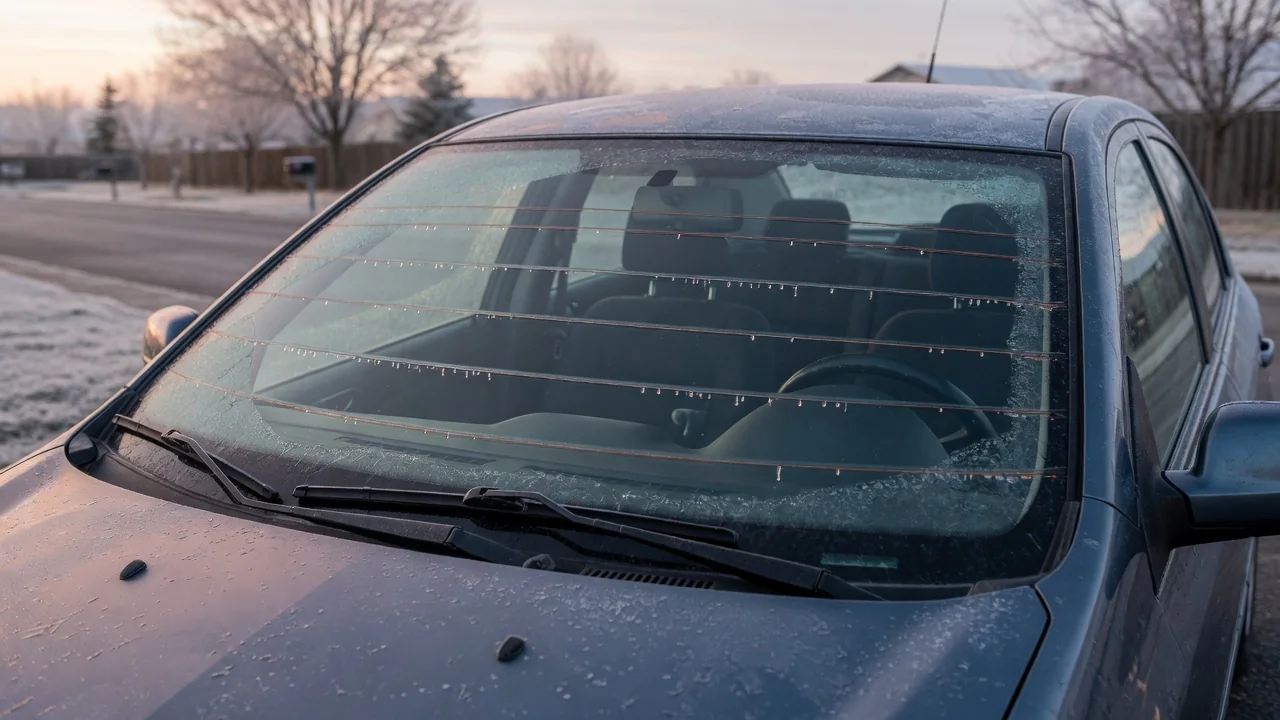
A heated windshield wire is one of many extremely fine resistive wires sealed inside a laminated windshield. When current flows through them, they warm the glass from within, helping clear ice, frost, and exterior condensation faster than warm air from the vents alone. Often called a windshield heating filament, this element is built into the glass itself rather than added as an accessory. Knowing how the wires are routed, why they are sometimes visible, and what can be fixed helps owners set realistic expectations.
Conductive path
A windshield is laminated glass: two sheets of glass bonded to a plastic interlayer, most commonly polyvinyl butyral (PVB). In a wire-heated design, the filaments are laid onto the interlayer before lamination. After the layers are bonded under heat and pressure, the wires sit between the two glass plies, sealed away from moisture, cleaning chemicals, and physical contact. The filaments are commonly made from tungsten or a similar metal chosen for strength and suitable electrical resistance, and they are drawn far thinner than ordinary automotive wiring.
At the edges of the glass, the filaments connect to busbars, which are flat conductive strips usually hidden behind the black ceramic band around the windshield perimeter. The wires run between the busbars in parallel, so the current divides among many individual strands. Each strand behaves as a resistor, turning electrical energy into heat as current passes through it. Because the strands are parallel rather than linked in one long chain, a single broken filament does not shut down the whole windshield; only that strand stops warming. Connection tabs lead from the busbars out to a harness connector at the edge of the glass.
On the vehicle side, power typically passes through a fuse, a relay, and often a control module that runs the heater for a limited time and may restrict operation to when the engine is running or system voltage is adequate. The exact control logic varies by manufacturer and model. Wire-heated glass should also be distinguished from two related technologies: windshields that use a transparent metallic coating instead of wires to carry current, and rear window defrosters, whose heating grid is printed on the inner glass surface rather than embedded in a laminate.
Visibility
The filaments are thin enough that in most daytime driving they are barely noticeable, especially when the driver is focused on the road rather than on the glass. Manufacturers commonly lay the wires in a wavy or zigzag pattern instead of perfectly straight lines. Varying the shape tends to make the filaments less conspicuous and spreads light effects more evenly than rows of straight parallel lines would.
The wires become easier to see under specific lighting. Low sun, oncoming headlights, and streetlights at night can reflect or scatter off the filaments, producing faint streaks, a fine shimmer, or a slight starburst around bright points of light. How much this bothers a driver varies from person to person. Many people stop noticing the pattern after a period of regular driving, while others remain aware of it, particularly on dark roads with heavy oncoming traffic. Looking deliberately at the glass surface instead of through it also makes the wires stand out.
Not every part of a heated windshield necessarily contains filaments. Depending on the design, areas in front of cameras and sensors, head-up display projection zones, or locations intended for electronic devices may be left clear or treated differently. These details are specific to each windshield part, which is one reason replacement glass has to match the original configuration.
Repair limits
Because the heating wires are sealed inside the laminate, they cannot be reached without separating the glass plies, and doing that destroys the windshield. This is a key difference from a rear window defroster, where a break in the surface grid can often be bridged with conductive repair material. A broken filament inside a windshield is generally a permanent fault in that strand. The rest of the heater may still work, but the area served by the damaged wire will no longer warm.
Stone chips and cracks raise separate questions. Resin repair of a small chip in the outer glass ply may still be possible on a heated windshield, but whether it is appropriate depends on the size and location of the damage and the repair shop's own criteria. A chip repair restores the glass, not any filament that may have been damaged with it. Cracks that run through the wired area can coincide with broken strands, and warming glass unevenly around a flaw can add stress. Having the damage assessed before continuing to use the heater is a sensible precaution.
Much of the system outside the glass is serviceable through normal electrical diagnosis: fuses, relays, switches, wiring harnesses, connectors, and control modules can be tested and replaced individually. The connection tabs at the glass edge are bonded to the busbars; if one detaches or breaks, whether it can be reattached depends on the design and is usually specialist work, and in many cases the windshield is replaced. A replacement must be the heated version with matching connectors and features, and vehicles with windshield-mounted cameras may need calibration according to the manufacturer's procedures.
Practical implications and limits
A heated windshield is most useful against thin exterior ice, frost, and condensation, including the area where wiper blades rest and can freeze to the glass. It does not remove a thick layer of snow; it loosens the bond at the glass surface, but heavy snow still needs to be cleared by hand. Warmer glass is also less prone to interior fogging, yet the cabin climate system still has to manage humidity, so the heater works best alongside the normal defrost setting rather than in place of it.
Heating glass electrically places a substantial load on the vehicle's charging system, which is why heater operation is usually time-limited and may be blocked when voltage is low. A weak battery or short trips can limit how much use the system gets. Clearing patterns also offer useful clues for owners: a narrow stripe that stays frosted while the rest of the glass clears suggests a broken filament, whereas no heating anywhere points toward the supply side, such as a fuse, relay, connector, or controller.
Vehicle-specific details, including activation conditions, run time, and any designated areas for mounting toll tags or other devices, belong in the owner's manual and service information rather than general rules. When glass is replaced, confirming that the new part is identified as a heated windshield for that exact vehicle configuration avoids losing the feature or creating connector mismatches.