What Is a Headlight Vent? Purpose, Condensation, and Damage
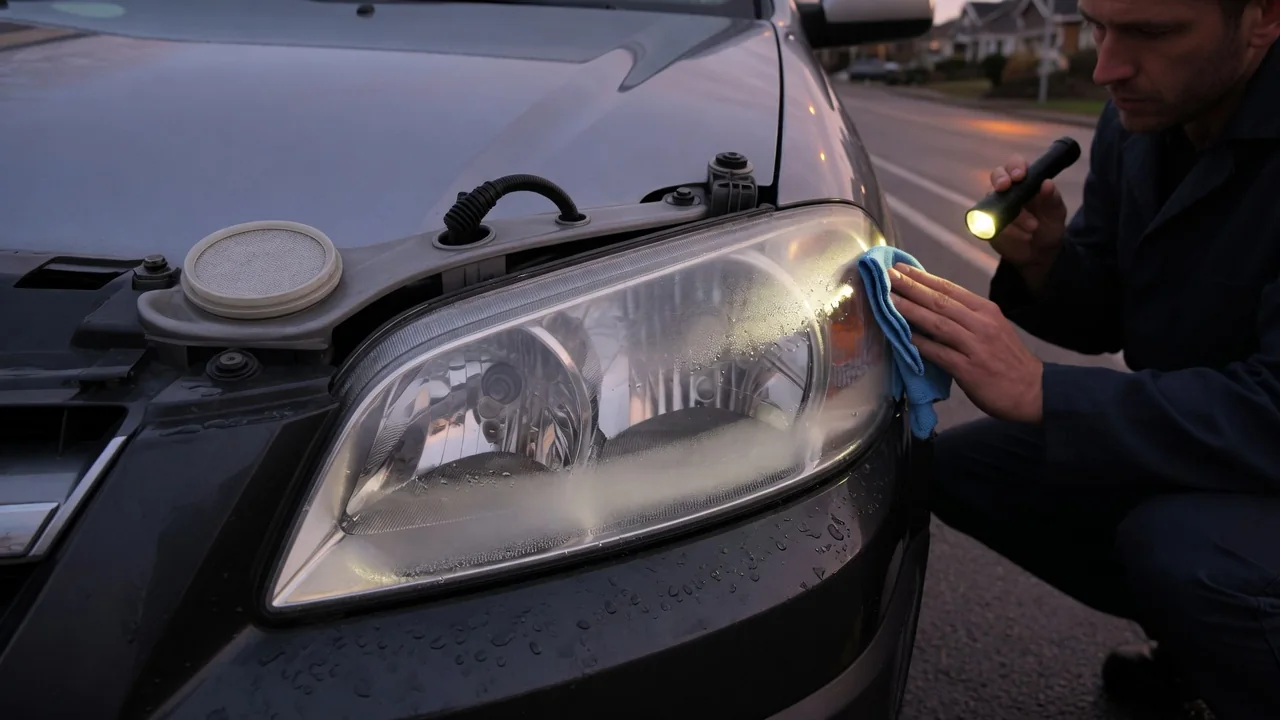
A headlight vent is a small breathing path built into a sealed headlight housing. It is usually a capped port, a short tube, or a membrane patch on the back or top of the assembly. It lets air move in and out as temperature and pressure change, while keeping liquid water, dirt, and road spray out. Knowing what a car headlight vent is for explains why some fogging is normal and some is a warning sign.
Pressure and moisture: why a sealed headlight needs to breathe
Headlight assemblies are sealed against the weather, but they cannot be completely airtight. When the lamps are on, bulbs, heat sinks, and electronics warm the air inside the housing, and that air expands. When the lights switch off, or the car moves from a warm garage into cold weather, the air contracts. Without a way to equalize, the housing would keep swinging between higher and lower pressure. Over time that cycling can stress the bond between the lens and the housing and strain the seals around bulb covers and adjusters. In the worst case, it can pull outside water in through any weak point while the inside pressure is low. A vent gives that pressure difference a controlled place to go.
Vents also manage water vapor. Air always carries some humidity, and the vent is the path through which humid air enters and drier air leaves as the housing warms and cools. Designs vary by manufacturer. Some use a rubber or plastic cap with a maze-like passage inside, so air has to follow a winding route that keeps out splash and dust. Others use a breathable membrane that passes air and vapor but resists liquid water. Some assemblies run a short hose to a sheltered area. Many headlights have more than one vent, often one high and one low. Warm air can then leave at the top while cooler air enters at the bottom, which helps the interior dry after it gets damp.
Normal condensation and how to recognize it
Because the vent lets humid air in, a light film of condensation inside the lens is often a normal side effect of the design rather than a defect. It tends to appear after a car wash, heavy rain, high humidity, or a cold night. These are the times when the lens surface cools below the point where the moist air inside starts to condense. The moisture usually shows up as a fine, even mist, often along the top or outer edges of the lens where the plastic is coolest.
Normal fogging usually clears on its own once the lamps have been on for a while or the car has been driven, because warmth and airflow carry the vapor out through the vents. The key signs are a haze rather than distinct drops, fog that comes and goes with the weather, and no standing water, streaks, or residue left behind. Some owner's manuals describe this behavior and say what the manufacturer considers acceptable, so that manual is the best reference for a specific vehicle. Cooler-running headlamps, such as many LED designs, may take longer to clear because they put less heat near the lens. The exact behavior depends on the individual design.
Damage: when a vent problem becomes a leak
Trouble begins when liquid water gets in or when moisture cannot get out. Common causes include a cracked or chipped lens, a separated seal between the lens and housing, or a missing or poorly seated bulb access cover. A vent cap may have fallen off, or a vent tube or membrane may be clogged with dirt, kinked, or blocked by undercoating or debris. Collision repairs and bulb replacements are typical moments when caps, covers, or hoses get disturbed. A blocked vent can cause as much trouble as a missing one, because humid air that enters through small gaps then has no easy way back out.
The signs differ from normal fogging. Watch for large droplets that last for days, a visible waterline or puddle at the bottom of the housing, mineral spots or streaks inside the lens, or fog that never clears after driving. These all suggest an actual leak or a ventilation failure. If ignored, trapped water can corrode bulb sockets and electrical connectors and shorten the life of bulbs or lighting modules. It can also cloud or flake the reflective coating and reduce or scatter the light output. In cars with electronic headlight modules, moisture can also cause warning lights or lights that work only some of the time.
Practical implications and limits
For owners, the main takeaway is to judge moisture by its pattern, not by whether it is there at all. A brief, light mist that comes and goes is generally no reason to replace a headlight. Lasting droplets or pooled water call for a closer look at the lens, seals, covers, and vent parts. Where the vents are and how you reach them varies widely. On some vehicles they are visible under the hood, while on others the bumper cover or the whole assembly has to come off. The service manual for the specific vehicle is the reliable guide to where the vents are and how they should be fitted.
A few common shortcuts can make things worse. Sealing vents with silicone or tape to stop fogging blocks the path for both pressure and drying, and can trap moisture inside. Drilling extra holes can let in dirt and water unless the housing was designed for it. Better first steps are usually to replace a lost vent cap or damaged bulb cover with the correct part, clear any blocked tube, and make sure every cover is fully seated.
There are also limits to what a vent can do. It handles everyday changes in pressure and humidity, but it cannot make up for a cracked lens or a failed housing seal. Once those are present, the usual fix is resealing or replacing the assembly. Even a perfectly working vent will not prevent all condensation in certain weather, because the design always lets some humid air in. Aftermarket or modified headlights may behave differently from factory assemblies, and whether moisture problems are covered under warranty depends on the manufacturer's own terms.