What Is a Headlight Ballast?
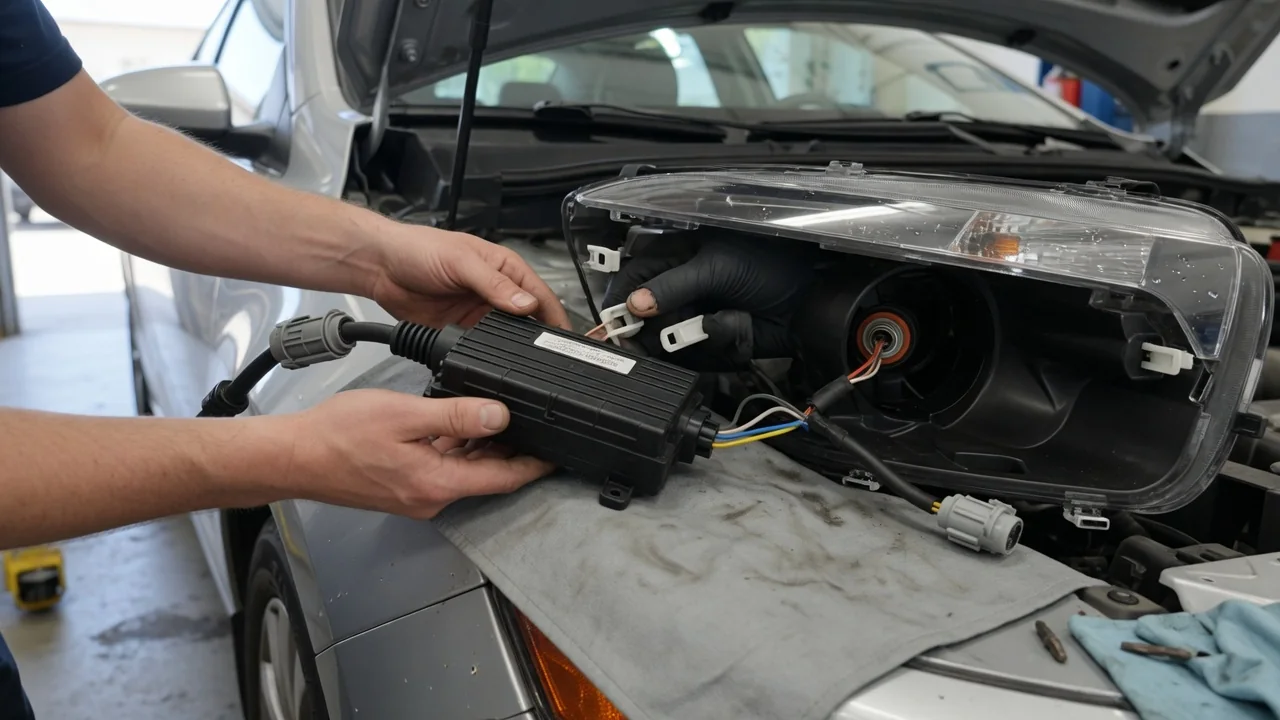
Anyone asking what is a headlight ballast is usually looking at a xenon lighting system and wondering why it needs an extra box. In high-intensity discharge headlights, the ballast is the electronic power supply that converts the vehicle's low-voltage electrical feed into the very different power an arc lamp needs to start and to keep burning steadily.
Ignition voltage
An HID bulb has no filament. Light comes from an electrical arc that jumps between two electrodes inside a small capsule filled with xenon gas and metal salts. The ordinary electrical supply in a car cannot bridge that gap on its own, because cold gas resists conduction. The ballast, working with an igniter, produces a brief pulse of very high voltage that ionizes the gas and establishes the arc. Once the gas conducts, that extreme voltage is no longer needed and the electronics change their behavior.
Where the igniter lives depends on the design. Some systems build it into the bulb base, some package it inside the ballast housing, and others use a separate module joined by a short high-voltage lead. From the driver's seat, ignition shows up as a quick flash followed by a short period where the light grows brighter and its color shifts as the salts vaporize. Because the starting pulse is hazardous, the warning labels on these components deserve to be taken seriously, and the exact layout should be confirmed for the specific vehicle.
Running current
After the arc is established, the ballast stops acting as a voltage booster and becomes a regulator. An arc does not limit its own current the way a filament does, so without control it would draw more and more power until the bulb or wiring suffered. The ballast holds the lamp at its intended power level, typically feeding it alternating current so both electrodes wear evenly. During warm-up it deliberately supplies extra power to bring the capsule up to temperature quickly, then tapers back to a steady operating level.
This regulation is why a healthy xenon lamp gives consistent brightness even when system voltage moves around, such as when the engine restarts at a stoplight or a heavy electrical load switches on. A halogen bulb would dim noticeably under the same conditions, while a regulated arc lamp should stay visually stable. The rated power and the electrical characteristics of the lamp differ between bulb types and vehicle generations, so a ballast is matched to a particular lamp family and cannot be assumed to suit another one.
Fault clues
Ballast trouble tends to show itself in a few recognizable ways. A lamp may flicker, fail to strike on the first attempt, light briefly and then shut off, or work when cold and drop out once everything is warm. Some ballasts shut down on purpose when they sense an abnormal load, which protects the circuit but looks like a dead headlight. A buzzing sound near the housing or a lamp that only lights after the switch is cycled are also worth noting, along with the conditions when they occur.
None of these symptoms identifies the ballast by itself. An aging bulb needs more voltage to sustain its arc and can cause identical flicker or shutdown, and corroded connectors, moisture in the housing, a weak ground, or low supply voltage can do the same. On vehicles that monitor the lighting circuit, a stored fault code or dashboard warning points to where the system detected a problem, not to which part has failed. Code meanings vary by manufacturer, so they need to be checked against vehicle-specific information.
Everyday Use and Observations
In daily driving, the ballast mostly goes unnoticed. The headlights come on with a short warm-up, settle to a steady white output, and stay that way for the whole trip. Many vehicles mount the ballast on the bottom or back of the headlight assembly, while others place it nearby on the body structure, which affects how exposed it is to heat, road spray, and vibration. Repeated quick on-and-off cycling means repeated ignition events, and each cold start is harder on the lamp and electronics than steady running.
Paying attention to changes over time is useful. A bulb that slowly shifts toward pink or purple, or one side that looks dimmer or a different color than the other, usually reflects lamp aging more than a power supply problem. Condensation inside the lens, a cracked housing, or a damaged seal matters because moisture and high-voltage electronics do not mix. Whether a vehicle uses xenon for low beam only, or a shutter to provide both beams from one lamp, depends on the model and trim.
Limits and Next Steps
A general explanation has limits. Not every bright white headlight uses a ballast, since halogen bulbs run directly from vehicle voltage and LED units rely on a different kind of driver electronics. Aftermarket conversion kits add ballasts to housings designed for filament bulbs, and their behavior, beam pattern, and legality may not match factory equipment. The lamp type, connector style, and communication with the vehicle's body electronics all differ, so the right information comes from the owner's manual, the labels on the components, and service documentation for that vehicle.
When a xenon headlight misbehaves, a sensible path is to describe the symptoms carefully and have the system evaluated with the proper equipment. A technician can compare the two sides, inspect connectors and seals, read any stored codes, and test with known-good parts before recommending a replacement. Because the ignition circuit produces dangerous voltage, probing or opening these components is not a casual driveway task. Having headlight aim checked after any lamp or housing work helps make sure the restored light actually lands where it should on the road.