What Is a Grand Touring Car? Comfort, Performance and Luggage Explained
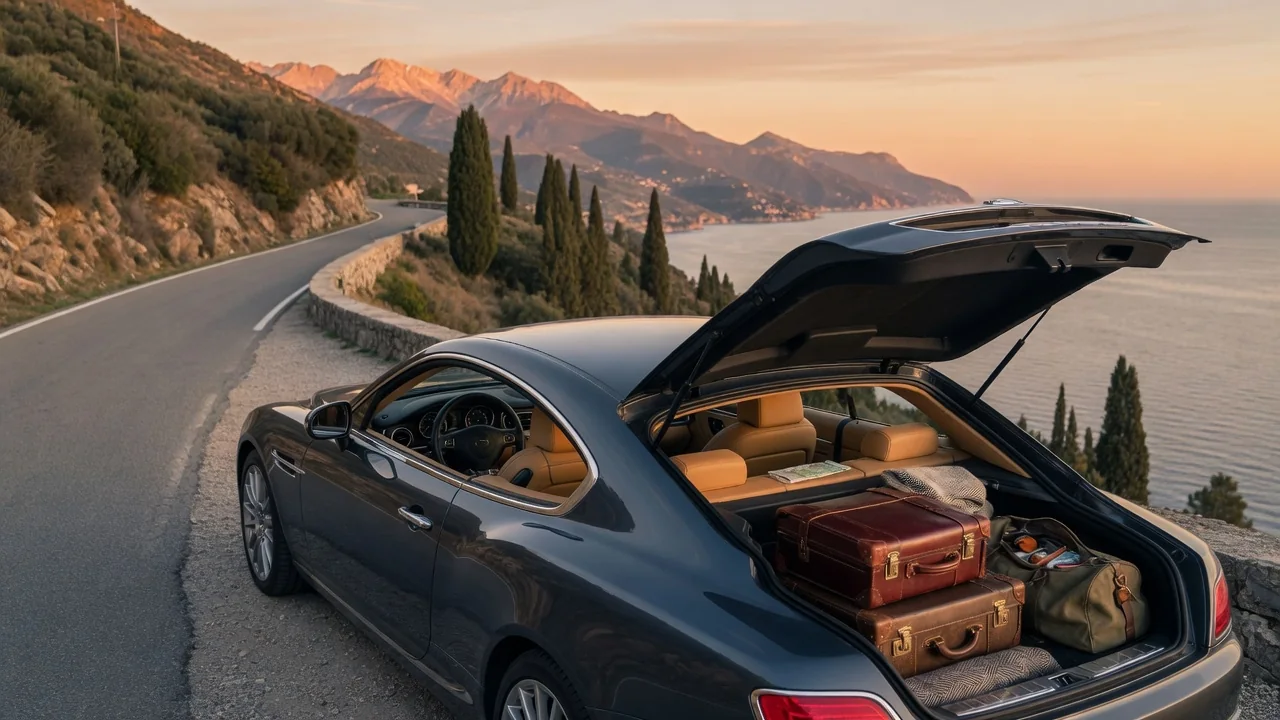
A grand touring car, usually shortened to GT, is a vehicle designed to cover long distances quickly and comfortably while carrying two or more people and their luggage. The term comes from the Italian gran turismo, a nod to the long European journeys travelers once made. No legal or technical standard defines the label, so it describes a design balance rather than a fixed set of specifications. That balance rests on three qualities: comfort, performance, and practical space.
Long-distance comfort
The core of a grand touring car is comfort over hours, not minutes. Engineers typically tune a GT's suspension to absorb road imperfections and settle quickly after bumps. A dedicated sports car, by contrast, usually prioritizes firm, track-focused control. Many GT designs have a long wheelbase relative to their overall size, which tends to reduce pitching over expansion joints and undulating highways. Some GTs have adjustable or adaptive dampers, which let the driver soften the ride on the highway and firm it up on a winding road. How much adjustment they offer varies widely between vehicles.
Seating and cabin isolation matter just as much. Seats with good lumbar and thigh support reduce fatigue over several hours, and a driving position that lets the driver's arms and legs stay relaxed helps them stay alert. Sound insulation, laminated glass, and careful sealing around doors and windows lower wind and tire noise, which is a major cause of tiredness on long trips. Effective climate control, intuitive controls, and storage for small items complete the picture. None of these features is unique to GTs, but a grand tourer is expected to combine them so that a long day of driving is less draining.
Performance
A GT is expected to be fast, but its performance is shaped by the journey rather than by lap times. The emphasis usually falls on strong pulling power across a wide range of engine speeds. That lets the car pass slower traffic or climb a mountain grade without frequent downshifts or a noisy, high-revving engine. For this reason, grand tourers have traditionally used larger engines or turbocharging, and more recently electric drive. All of these can deliver substantial torque at relaxed cruising speeds. In cars with conventional transmissions, tall top gears keep engine speed and noise low on the highway.
Handling and braking follow the same logic. A GT should feel stable at sustained highway speeds, respond cleanly on a winding road, and stop confidently even when fully loaded with passengers and bags. The trade-off is weight. The insulation, equipment, and reinforced structure that make a grand tourer comfortable also make it heavier than a stripped-down sports car of similar size. Engineers compensate with more power, wider tires, and larger brakes. The result is a car tuned for composed, flowing progress rather than the sharpest possible response. Drivers who want maximum agility are generally better served by a different kind of car.
Luggage
Luggage capacity is what separates a grand tourer from many sports cars that look similar. A GT is meant for trips lasting several days, so it needs a usable trunk or cargo area that holds soft bags or small suitcases for everyone on board. The type has long been associated with a front-engine layout, partly because placing the engine up front leaves room for a trunk behind the cabin. Some mid-engine and rear-engine designs struggle to offer comparable space. Shape matters as much as volume. A wide, regular opening and a flat floor are often more useful than a larger but awkwardly shaped compartment.
Seating layout also affects how much a GT can carry. Many are two-door coupes or convertibles with either two seats or a 2+2 arrangement. In a 2+2, the small rear seats suit children, short trips, or extra bags better than adults on long drives. Folding rear seatbacks, a parcel shelf behind the front seats, or a pass-through to the trunk can add practical capacity. Convertibles add another variable, because the folded roof often takes up space that would otherwise belong to the trunk. When judging any car as a grand tourer, check whether the luggage space still works with the roof down and every seat occupied.
Practical implications and limits
Because GT is a marketing and cultural term rather than a regulated category, manufacturers apply it inconsistently. Some use it for genuine long-distance coupes. Others use it for trim levels, appearance packages, or racing classes that have little to do with touring. The badge alone does not tell you anything about ride quality, cargo space, or seating. Judge a specific vehicle on comfort, performance, and luggage space, using its official specifications and a test drive on the kinds of roads you actually travel.
Ownership costs follow from the design priorities. Large wheels, wide tires, powerful drivetrains, and heavy bodies typically mean higher fuel or electricity use and faster tire and brake wear than a mainstream sedan. Actual running costs depend heavily on the specific model and how it is driven. Low ground clearance and long front overhangs can make steep driveways and speed bumps awkward. Rear seats in many GTs are cramped, so a family of four may find a sedan, wagon, or crossover more practical for regular use.
For a couple or a solo driver who values long drives, a well-chosen grand tourer can work as a single car, since it combines everyday usability with real capability on open roads. Before a long trip, check the owner's manual for the recommended tire pressures at full load, any roof-load or towing limits, and the service intervals for long-distance driving. This helps the car perform as intended when it is fully packed.