What Is a Freeze-Frame Snapshot? How Car Freeze Frame Data Works
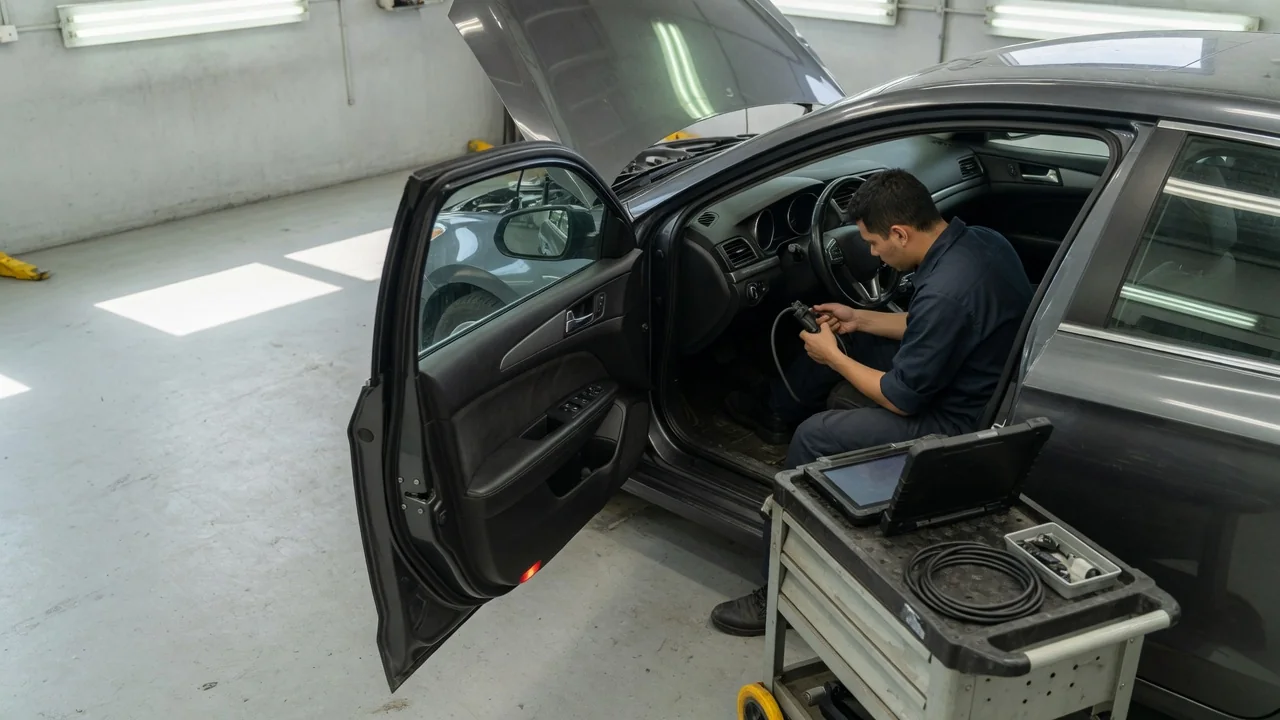
A freeze-frame snapshot is a set of engine and vehicle readings that the powertrain control module saves when it records a diagnostic trouble code. A code alone tells you only which fault was detected. Car freeze frame data adds the operating conditions at that moment: how fast the engine was turning, how warm it was, and how hard it was working. Knowing what the snapshot contains, and what it leaves out, makes a scan tool far more useful.
Fault moment
On OBD-II vehicles, the engine computer runs continuous and periodic self-tests called monitors. When a monitor sees a condition outside its expected range, the module typically logs a diagnostic trouble code. Many faults first appear as pending codes. A pending code means the problem was seen once but has not yet been confirmed on a later drive cycle. Depending on the vehicle and the type of fault, the freeze frame may be captured when the pending code is set, or when the code becomes confirmed and turns on the check engine light.
The snapshot belongs to a single instant. The module does not record the minutes leading up to the fault. It stores one set of values tied to the detection event. Generic OBD-II freeze frame storage is limited, and many systems keep only one generic frame at a time. When several codes are present, the stored frame may belong to a higher-priority fault rather than to the code that appeared first. Misfire and fuel system faults are commonly given that priority because of their effect on emissions and engine health. A scan tool usually shows which code triggered the frame. Check that detail first, because every other value in the frame describes the conditions for that code, not necessarily for the one you are chasing.
Recorded values
So what does a freeze-frame snapshot actually contain? The exact list depends on which parameters the vehicle supports. Generic OBD-II data commonly includes: • engine speed and vehicle speed; • calculated engine load; • engine coolant temperature; • short-term and long-term fuel trims for each bank; • fuel system status (open loop or closed loop); • intake air temperature and throttle position; • intake manifold pressure or mass airflow; Some vehicles also report ignition timing advance, oxygen sensor readings, fuel pressure, or distance traveled since codes were last cleared.
Each value answers a practical question about the moment the fault was logged: • Coolant temperature shows whether the engine was cold, warming up, or fully warm. • Fuel system status shows whether the computer was adjusting fuel from oxygen sensor feedback or following a preset strategy, as it often does during warm-up or heavy acceleration. • Load, rpm, and speed together describe the driving situation, such as idling at a light, steady cruising, or accelerating hard. • Fuel trims show how much the computer was adding or removing fuel to keep the air-fuel mixture on target.
Factory-level and enhanced scan tools may display extra data beyond the generic set, sometimes as separate failure records with their own format and parameter names. These additional readings can be valuable. Their availability and meaning vary by manufacturer, model, and control module software, so use the service information for the specific vehicle to interpret them correctly.
Diagnosis
The snapshot turns a code into a scenario. A lean code, for example, says only that the computer saw too much air relative to fuel. The freeze frame shows when that happened. Large positive fuel trims at idle that would normally shrink at higher load often point a technician toward unmetered air, such as a vacuum leak. A lean condition that shows up mainly under heavy load may shift attention toward fuel delivery. These are general diagnostic directions, not conclusions. Confirming the cause still requires testing on the actual vehicle.
Freeze frame data is also the starting point for reproducing an intermittent fault. Suppose the frame shows the code set during a cold start at low vehicle speed. A road test that recreates those conditions is more likely to bring the problem back while you watch live data. Comparing the snapshot with live readings from a normal drive shows which values were out of character when the fault occurred. Implausible numbers are clues too. A coolant temperature that makes no sense for the situation may point to the sensor or its wiring rather than to an engine problem.
Practical implications and limits
The most important practical rule is to save the freeze frame before clearing any codes. Clearing codes with a scan tool erases the stored snapshot along with the code, and on many vehicles disconnecting the battery does the same. Once it is gone, the information cannot be recovered. Write the values down, take a photo of the screen, or save a report from the scan tool. That record matters most when the fault is intermittent or when a repair shop will take over the diagnosis.
The snapshot also has clear limits: • It is a single sample, so it cannot show trends, rapid changes, or what happened just before the fault was detected. • It reports what the computer believed. A faulty sensor can put misleading numbers into the frame itself. • Not every code stores a frame. Basic code readers may not display every parameter the vehicle supports. • The stored frame may belong to a different code than the one you are investigating. Use freeze frame data as a guide for where to look and how to reproduce the problem. Then confirm the cause with live data, circuit tests, and the procedures in the vehicle's service information.