What Is a Foam Adhesive in a Car Interior?
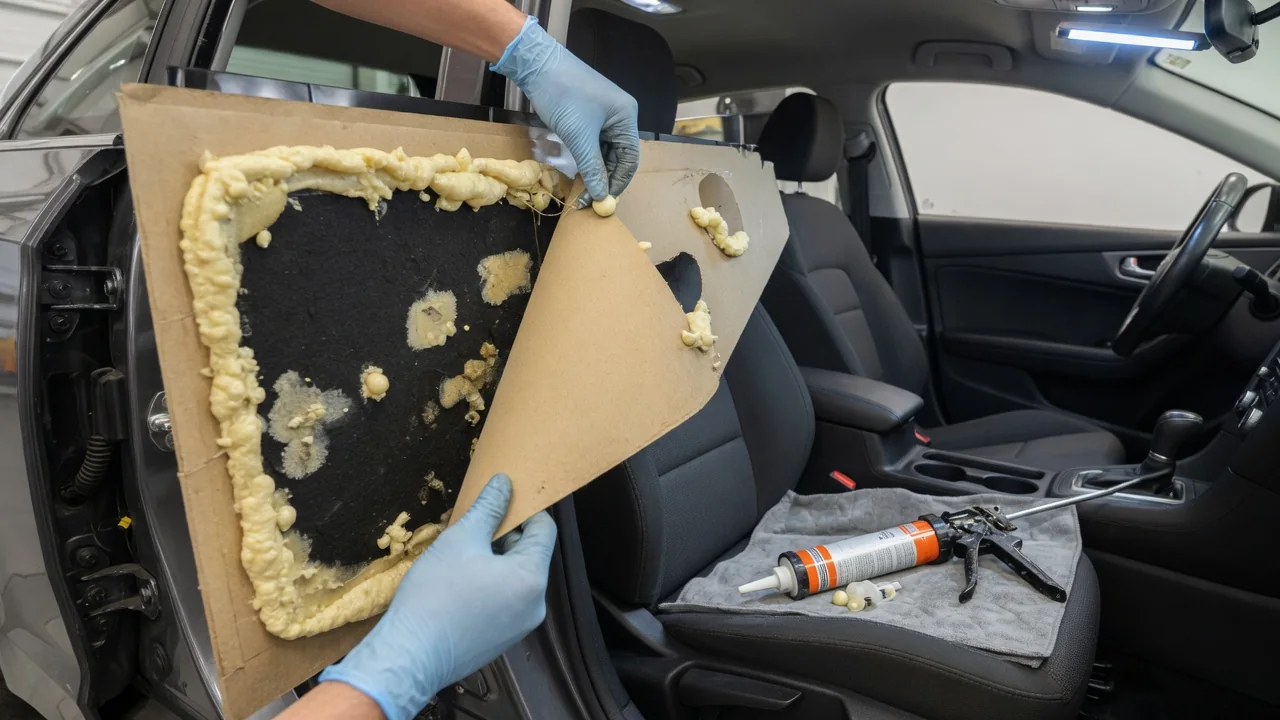
A foam adhesive in a car interior is any adhesive or adhesive-backed product used to attach foam, or foam-backed materials, to the surfaces around them. The term covers sprayable contact adhesives for headliners and upholstery, as well as double-sided foam tapes and self-adhesive foam pads used to hold trim and stop rattles. Understanding how these products work explains why headliners sag, why panels buzz, and what a sensible repair looks like.
Soft surfaces: headliners, upholstery and trim
Much of a modern cabin is built in layers. A headliner is typically a formed backing board covered by a thin layer of foam and a face fabric. Door inserts, armrests, seat covers and some dashboard skins also combine a soft foam layer with a cover material. Car interior foam bonding is what keeps these layers together and attached to the rigid part underneath, so the surface stays smooth instead of wrinkling, bubbling or drooping.
Adhesives used on soft surfaces have a few general requirements. They must grip a porous, flexible material without dissolving or hardening it, and they should stay somewhat flexible after curing so the bond tolerates pressing, vibration and seasonal movement. Because a closed car parked in the sun can get very hot inside, products intended for headliners and upper trim are usually marketed with heat resistance in mind. Common chemistries include solvent-based contact adhesives, water-based adhesives and heat-activated films, and the factory bonding method may differ from anything sold for home repair.
A frequent misunderstanding involves headliner sag. In many cases the glue itself has not simply let go; the thin foam layer between the fabric and the board has aged, crumbled and separated. When that happens, the fabric falls away carrying a dusty residue of foam, and no adhesive sprayed into the gap can restore a material that has already broken down.
Noise: anti-rattle pads and isolation layers
Foam adhesives also play a quieter role. Many interior parts are separated by small foam pads, strips or tapes that sit between plastic panels, brackets, wiring and sheet metal. These self-adhesive pieces cushion contact points so that two hard parts do not tap or rub against each other as the body flexes over bumps. When one of them dries out, compresses permanently or loses its adhesion, the result is often a new buzz, squeak or rattle that seems to appear from nowhere.
It helps to separate two different jobs. Anti-rattle and isolation foam mainly decouples parts and fills small gaps, which reduces squeaks and buzzes at the source. Sound-deadening treatments for floors, doors and roof panels are a separate category: dense damping mats reduce panel vibration, while foam or fiber layers absorb and block airborne sound. Both rely on a reliable bond, because a pad or mat that partially detaches can become a noise source itself. Open-cell foams can also hold moisture, so placement near water paths in doors or floors deserves attention.
Repair: rebonding foam and fabric correctly
A durable repair starts with identifying what has actually failed. If a foam layer has deteriorated, the remaining crumbly foam has to be removed from the board and, if the original fabric is reused, from the back of the cover as well. In practice, sagging headliners are often re-covered with new foam-backed fabric rather than reglued, because the original material can no longer hold a bond. For a loose anti-rattle pad or trim tape, old adhesive residue should be cleaned off and the contact surfaces made clean, dry and free of oils or protectant dressings.
Product choice and application follow from the surfaces involved. Contact-type spray adhesives are typically applied to both mating surfaces and allowed to become tacky before joining, and following the label's flash time and coverage directions affects whether the bond holds. Too heavy a coat on thin fabric can soak through and stain the visible side. Solvent-based products can attack some foams and plastics, so testing in a hidden area is a reasonable precaution. Foam tapes need firm, even pressure across the whole contact area to bond properly.
Working conditions matter as much as the product. Solvent-based adhesives release fumes and are often flammable, so good ventilation and distance from ignition sources are basic safety steps. Panels being rebonded usually need to stay supported or lightly held in position until the adhesive has developed strength, and the cure time on the label should be respected before the part is reinstalled or exposed to heat.
Practical implications and limits
For owners, the main implication is that a foam adhesive is a maintenance material, not a structural one. It holds soft layers and small pads in place, and its performance depends on the condition of the foam, the cleanliness of the surfaces and the heat the cabin experiences. A bond that fails repeatedly in the same spot often points to a degraded substrate, a gap the adhesive cannot bridge, or a part under constant tension, rather than simply to a weak glue.
There are also limits that general advice cannot resolve. Headliners, roof pillars, seats and door panels may contain airbags, sensors, wiring or deployment seams, and adhesive or added material in the wrong place could interfere with how those components work. Trim removal methods, clip locations and factory bonding processes vary between vehicles, so the service information for the specific model is the right reference before taking panels apart. Where cover materials, airbag hardware or electrical parts are involved, a professional trim shop is often a safer route than a home repair.