What Is a Driver Eye Ellipse? How Designers Model Where Drivers See From
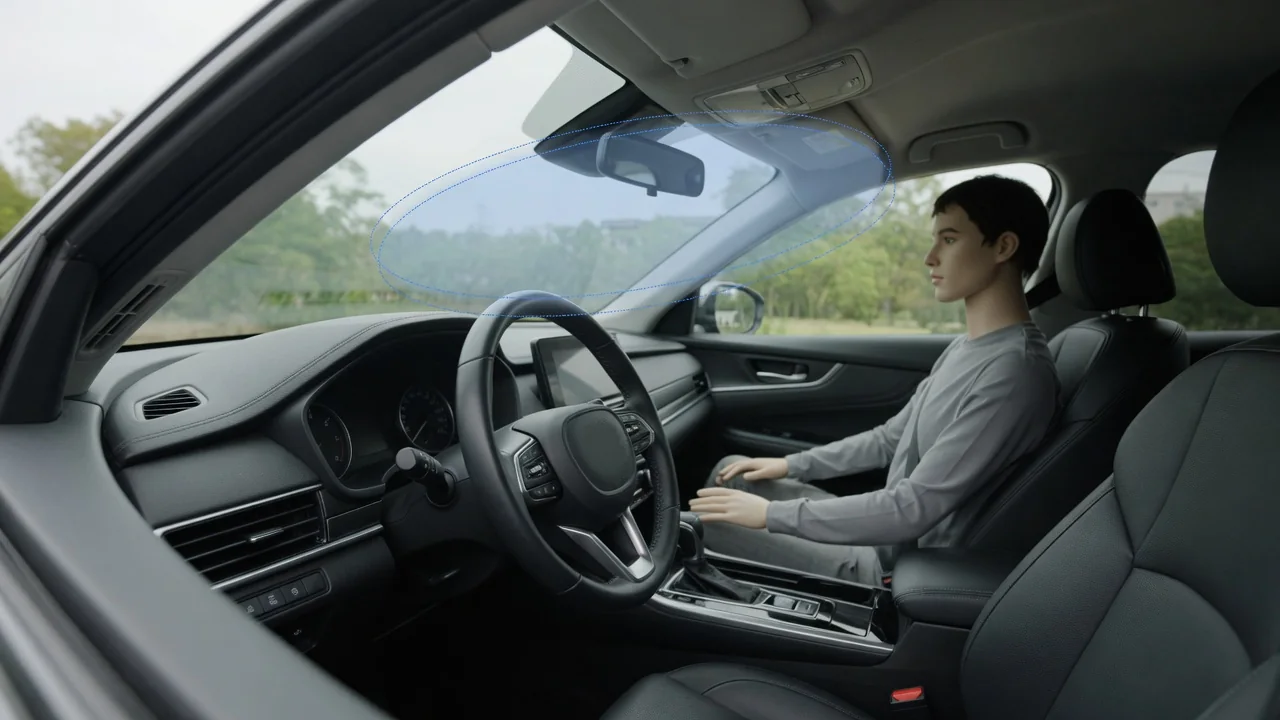
A driver eye ellipse, often shortened to eyellipse, is a three-dimensional statistical shape that engineers use to represent where drivers' eyes are likely to be when they sit behind the wheel. Instead of designing around one imaginary average person, vehicle driver eye position design uses this ellipse to account for differences in body size, seat adjustment and posture. It then guides decisions about outward visibility, mirror placement and the layout of the dashboard.
Vision Range: Where the Eye Ellipse Comes From
The eye ellipse starts from the seating package. Designers define a reference point for the seat, the seat track travel and the seatback angle, then apply statistical data on how real drivers of different stature position themselves. The result is not a single point but a cloud of likely eye locations, described as a pair of overlapping ellipses, one for each eye, or as a combined shape. In the SAE framework widely used in the industry, SAE J941, the ellipse is drawn so that a stated percentage of drivers' eye positions fall on one side of any tangent line drawn to it. Versions at the 95th and 99th percentile are common reference choices. For vision range, engineers draw sight lines tangent to the edges of the ellipse. A line from the lower edge across the hood shows how much of the road ahead is hidden for drivers whose eyes sit lowest. A line from the upper edge under the windshield header shows how much overhead view, such as a raised traffic signal, remains for drivers whose eyes sit highest. Using the edges rather than the center lets one analysis cover tall and short drivers together.
Side and forward-angled vision are treated in a similar way. Windshield pillars, door frames and the inside mirror block parts of the view, and how much they hide depends on where the eyes are. Because people use two eyes and move their heads, designers often evaluate obstruction with both eye positions and some allowance for head movement, so a pillar that hides an object from one eye may leave it visible to the other. The ellipse also helps define where wiper and defroster coverage needs to be effective, since a cleared area is useful only if it lies in front of the eyes that need it.
Mirrors: Fitting Rear Views to Many Eye Positions
Mirrors are where the eye ellipse becomes especially concrete. A mirror's field of view is not a fixed property of the glass. It depends on the geometry between the driver's eyes, the mirror surface and the area behind or beside the vehicle. Engineers place and size the interior and exterior mirrors so that, after normal adjustment, drivers across the ellipse can see the required zones. Regulations and standards in many markets describe mirror visibility requirements in relation to defined driver eye locations, which is one reason the ellipse enters the design process early rather than after the body shape is fixed.
The ellipse also influences how much adjustment a mirror needs. A tall driver sitting far back and a shorter driver sitting closer to the wheel view the same mirror from noticeably different points, so the housing must tilt and swivel enough to serve both. The size of the glass, the use of flat or convex surfaces and the position of the housing relative to the windshield pillar are all checked against eye positions. The goal is that the mirror itself does not create a new blind area and does not end up partly hidden behind the pillar for some drivers.
Dashboard: Gauges, Displays and Obscuration
Inside the cabin, the eye ellipse helps decide where gauges, warning lights and screens can go. Designers check that the instrument cluster can be seen through or around the steering wheel rim and spokes across the range of eye positions and typical wheel adjustments. A display that is fully visible from the center of the ellipse might be partly covered by the rim for a driver whose eyes sit lower, so the edges of the ellipse are used to test critical indicators. Glare and reflections are analyzed the same way: light from a screen or a bright trim surface can reflect in the windshield or side glass, and whether that reflection reaches the driver depends on eye location.
Head-up displays add another layer. A head-up display projects an image that can be seen only from a limited region of space, often called the eyebox. For the image to be usable, that region has to overlap the eye ellipse, and many systems let the driver adjust the image height to bring the eyebox in line with their own eyes. Glance angles are a related consideration: frequently used information is commonly placed close to the driver's normal line of sight, which reduces how far the eyes must move away from the road.
Practical Implications and Limits
For owners, the eye ellipse explains why seat and mirror adjustment matter so much. A vehicle is designed to provide acceptable visibility for drivers whose eyes fall within the modeled range, and that model assumes a normal driving position. Sitting unusually reclined, very low or far forward can move the eyes outside the area the designers analyzed, and some of the planned sight lines may no longer hold. Setting the seat first, then the steering wheel and finally the mirrors follows the same order of logic the design process relies on.
The model has clear limits. It is statistical, so it describes typical populations rather than any one person, and drivers at the extremes of body size may fall outside it. It reflects a seated posture at a moment in time, while real drivers shift, lean and turn their heads. Meeting visibility targets based on the ellipse does not eliminate blind spots; it defines how they are managed. How a particular vehicle balances pillar thickness, mirror size and dashboard height is a design choice that varies by model, so the owner's manual and the vehicle's own adjustment range are the best guide to its specific setup.
Accessories and add-ons can also interact with the ellipse. Seat cushions raise the eyes, phone mounts and dash cameras on the windshield or dashboard can intrude into sight lines that were deliberately kept clear, and stickers or tinted strips can reduce usable glass area. None of these were part of the original visibility analysis, so their effect has to be judged by the driver in the actual vehicle, with local rules on windshield obstructions in mind.