What Is a Crew-Cab Pickup? Rear Seating, Bed Length and Everyday Use
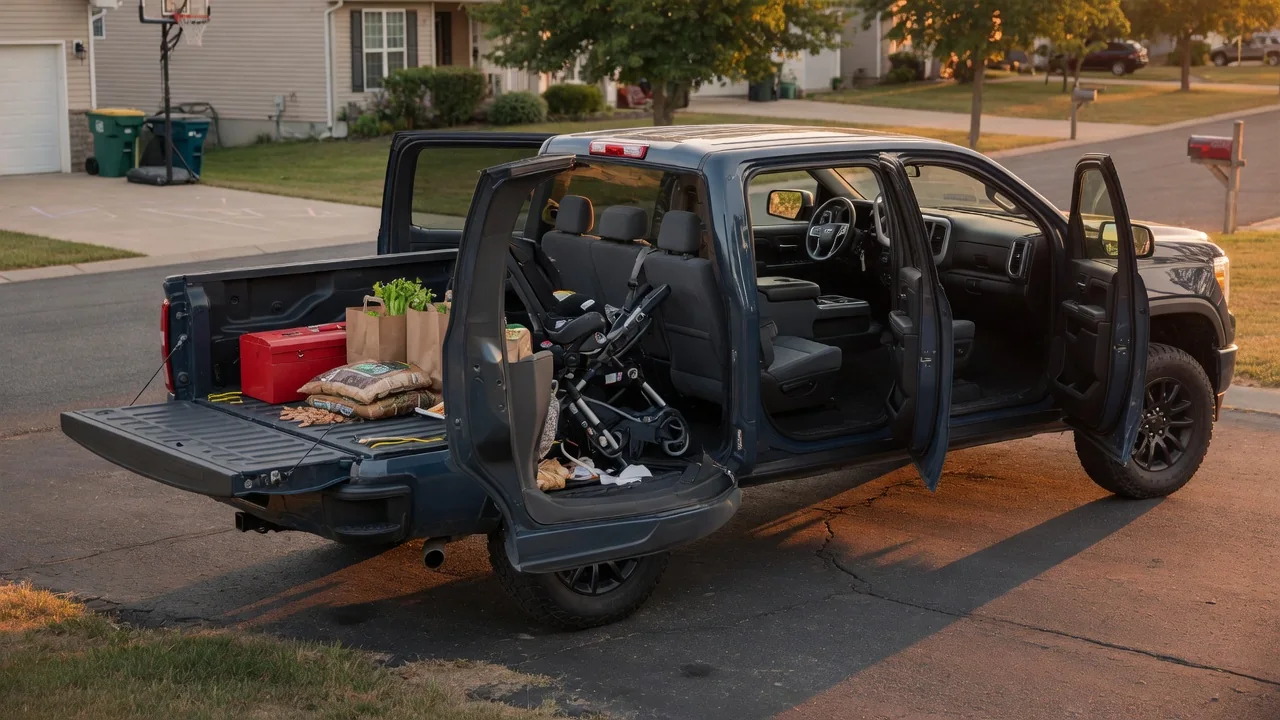
A crew-cab pickup is a pickup truck whose cab has two full rows of seats and four conventional, front-hinged doors, giving rear passengers access much like a sedan or SUV. The term describes a crew cab pickup layout rather than one specific model, and manufacturers often market it under their own names. This guide explains what the layout means for rear seating, bed length, and everyday use, along with the trade-offs worth weighing before choosing one.
Rear Seating in a Crew-Cab Pickup
The defining feature of a crew cab is a full second row. Instead of small fold-down jump seats or a narrow space behind the front seats, the cab extends far enough rearward to fit a proper rear seat, and each rear passenger gets a full-size door that opens independently of the front doors. That separates it from a regular cab, which has a single row, and from an extended cab, which typically has a smaller rear area and, on many designs, smaller rear doors that may be rear-hinged and open only after the front door is opened. Naming and door designs vary between manufacturers, so a brochure's cab description is less reliable than looking at the doors and the rear seat itself.
In most crew cabs, the rear seat is meant for regular adult use rather than occasional short trips. A rear bench commonly provides room for up to three passengers, although some configurations use two individual seats instead. Legroom, headroom, seatback angle, and floor shape still differ from truck to truck and between generations of the same line, so sitting in the rear seat or checking published interior dimensions is the only way to know how it fits your passengers. Many crew cabs also let the rear seat cushion fold up, which turns the rear floor into covered, lockable space for items that should stay dry or out of sight.
Families often care about child seats. Conventional rear doors and a full-width rear row generally make installing and reaching a child restraint easier than in a smaller cab. The number and position of anchor points and tether locations depend on the specific truck, so the owner's manual is the place to confirm which seating positions are approved for child seats.
Bed Length and Overall Size
A pickup's overall length is largely the cab plus the bed, mounted on a frame whose wheelbase has to span both. Because a crew cab uses more of that length for passenger space, manufacturers commonly pair it with a shorter bed to keep the truck from becoming excessively long. Many lineups, especially larger trucks, offer the crew cab with more than one bed length. Choosing the longer bed usually means a longer wheelbase and a longer truck overall, not a smaller cab.
For cargo, the practical question is what fits flat on the bed floor with the tailgate closed. A shorter bed may not accept full-size sheet goods, long lumber, or some equipment without dropping the tailgate, using a bed extender, or carrying the load on a rack. Any overhanging load needs to be secured properly, and rules about marking or limiting overhang depend on local regulations. Terms such as short bed or standard bed are not used consistently across brands, so it is better to compare actual interior measurements: floor length, width between the wheel wells, and bed depth.
How Crew-Cab Pickups Are Used
The crew cab exists for people who need to move passengers and cargo with a single vehicle. The name reflects its work origins: carrying a crew of workers and their tools to a job site in one trip. Today the same layout also suits households that use a pickup as their main vehicle, carrying family members in the cab while the bed handles bulky, dirty, or awkwardly shaped loads that would not belong inside a car or SUV.
The division of space is the core idea. The cab protects people and anything that needs to stay clean, dry, or secure, such as tools, bags, or electronics. The bed takes items like mulch, firewood, bicycles, camping gear, or equipment that is too tall or messy for an enclosed interior. Many owners also use crew cabs for towing trailers, campers, or boats while bringing passengers along, which is difficult to do with a single-row cab.
The cab style by itself does not determine how much a truck can tow or carry. Those capabilities depend on the engine, transmission, axle ratio, frame, suspension, drivetrain, and installed equipment. Cab size does matter indirectly: payload capacity is the difference between the maximum rated vehicle weight and the truck's own weight, so a heavier cab and extra seats leave less payload than a lighter configuration with otherwise identical ratings. The label on the driver's door jamb and the owner's manual list the figures that apply to a particular truck.
Practical Implications and Limits
Size is the most noticeable everyday consequence. A crew cab with a longer bed can be a long vehicle, and a longer wheelbase generally means a wider turning circle. That affects parking spaces, multi-level garages, drive-through lanes, tight driveways, and three-point turns. Before buying, it is worth measuring a home garage, including the usable depth with the door closed and the clearance at the opening, rather than assuming the truck will fit.
The extra body structure, glass, and seating also add weight, which tends to increase fuel use compared with a lighter cab on an otherwise similar truck. Within the same lineup and trim level, a crew cab is often priced above smaller cab styles, although pricing varies too much to generalize further. These costs are worth weighing against how much the second row will actually be used.
The most useful way to decide is to compare how often you carry rear passengers with how often you carry long items. If the rear seat will be used regularly, a crew cab is usually the logical choice, and a bed extender or rack can cover occasional long loads. If passengers are rare and long cargo is frequent, a smaller cab with a longer bed may serve better. Whichever direction you lean, confirm rear-seat dimensions, bed measurements, and weight ratings for the exact truck, since the cab label alone does not guarantee any of them.