What Is a Coupe SUV Body Shape? Roofline, Cargo, and Naming Explained
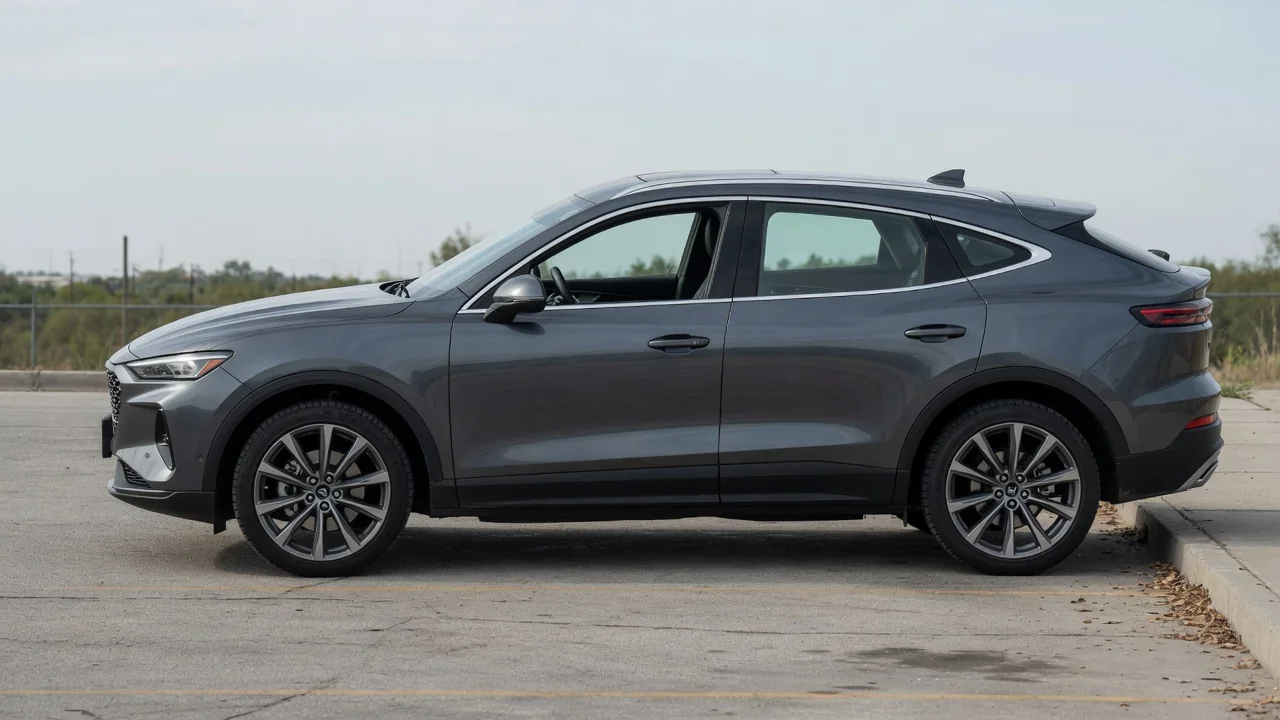
A coupe SUV is a crossover or sport utility vehicle with a roofline that drops toward the rear much more steeply than on a conventional, boxy SUV. It usually keeps the raised ride height and higher seating position buyers expect from an SUV, but its rear profile resembles a fastback car. That single change in shape affects cargo space, rear-seat room, and visibility, and the name itself can be misleading. Here is what defines the body style and what it means in everyday use.
Sloping rear: how the coupe SUV roofline is shaped
On a traditional SUV, the roof runs nearly flat toward the back, and the rear glass and tailgate stand close to vertical. The result is a tall, box-like cargo area. A coupe SUV roofline begins descending earlier, typically somewhere above the rear seats, and continues in a long arc into a steeply raked rear window. The window often blends into the liftgate, which may end in a small integrated spoiler or lip. Seen from the side, the vehicle looks more like a fastback or hatchback stretched upward than a station wagon on raised suspension.
In many cases, a coupe SUV is developed alongside a conventional SUV and shares its platform, front end, and much of its lower body. The differences tend to concentrate above the beltline: the roof panel, the upper frames of the rear doors, the rear pillars, the rear glass, and the tailgate. The rear pillars are often broader to support the swept shape, and the overall roof height may be slightly lower as well. The rear opening is normally still a top-hinged liftgate that includes the rear window, so loading works like a hatchback rather than a sedan trunk, although the exact design varies from vehicle to vehicle.
The motivation is primarily visual. A sloping rear gives a lower, sportier appearance without giving up ground clearance or the elevated driving position. Rear-body shaping can also influence how air leaves the vehicle, but a sloping roof alone does not guarantee lower drag or better efficiency. Frontal area, ride height, wheels, underbody design, and many other details matter, so any aerodynamic effect is specific to the individual vehicle rather than a property of the body style.
Cargo effects of a sloping roofline
The most direct trade-off is cargo space. The floor area behind the rear seats can be similar to that of a conventional SUV, but the usable height above it shrinks as the glass slopes toward the tailgate. Space close to the floor is largely preserved, while the upper rear portion of the cargo area, the part a boxy SUV fills with near-vertical walls, is reduced or lost. Soft bags, groceries, and flat items are usually unaffected. Tall, rigid, square objects such as moving boxes, upright suitcases, pet crates, or small appliances are the loads most likely to run into the angled glass or prevent the liftgate from closing.
The opening itself changes too. Because the liftgate is raked, the aperture can be shorter or more angled than on a squarer tailgate, and the lower edge of the glass sits closer to the load area when the gate is closed. Bulky items may need to be tilted to pass through. With the rear seats folded, the long load floor generally remains, but the height near the tailgate still limits objects that are both tall and long. A single cargo volume figure does not describe this shape, so two vehicles with similar numbers can handle real items quite differently.
Naming: why it is called a coupe SUV
In traditional US usage, a coupe is a fixed-roof car with two doors and a sloping roofline. Most coupe SUVs, however, have four side doors plus a liftgate. The name borrows the coupe silhouette rather than the door count, so the word describes the roofline, not how many doors the vehicle has. This mismatch is a common source of confusion when shoppers first encounter the term.
Several labels are used for the same general idea, including coupe SUV, SUV coupe, crossover coupe, coupe-style crossover, and fastback SUV. Some manufacturers also apply their own marketing terms that combine words like sport, activity, or coupe. There is no single industry-standard definition, and official vehicle classifications rely on other criteria rather than on whether the roof slopes, so the label is descriptive and promotional rather than technical.
Because the term is informal, the degree of slope varies widely. Some vehicles called coupe SUVs have a dramatic fastback rear, while others have only a mildly tapered roof that differs little from a conventional design. Conversely, some SUVs with a noticeably sloped rear are not marketed with the coupe label at all. When browsing a catalog or listing, it is more reliable to look at the actual side profile and rear opening than to rely on the name.
Practical implications and limits
For daily use, the best test is the owner's own cargo. Bringing a stroller, golf bag, cooler, dog crate, or the tallest item regularly carried, and checking that the liftgate closes over it, reveals more than any brochure figure. It is also worth folding the rear seats and checking the loading height at the sill, since those determine how easily heavy items go in. Published cargo measurements can be produced with different methods, so comparing numbers across sources may not be meaningful.
Rear passengers can feel the shape as well. The lowered roof and rear door frames can reduce headroom over the back seat and require taller occupants to duck when getting in. Installing child seats, especially larger rear-facing ones, and lifting children into them may take more care near a lower door opening. The smaller, steeply angled rear window can also narrow the view through the interior mirror; rear cameras and other driver aids help where fitted, but equipment varies by vehicle and trim.
Finally, the body shape does not by itself determine mechanical capability. Ground clearance, all-wheel-drive availability, towing capacity, and payload are set by the engineering of the specific vehicle, and a coupe SUV may or may not match its conventional counterpart on these points, so the specifications for the exact model and trim should be checked. A shorter, sloping roof can also limit roof rack or cargo box options, which should be confirmed in the owner's manual. For buyers who rarely carry tall loads or adult rear passengers, a coupe SUV can be a reasonable style choice; for those who regularly use the full height of the cargo area, a conventional SUV shape usually remains more practical.