What Is a Clutch Slave Cylinder?
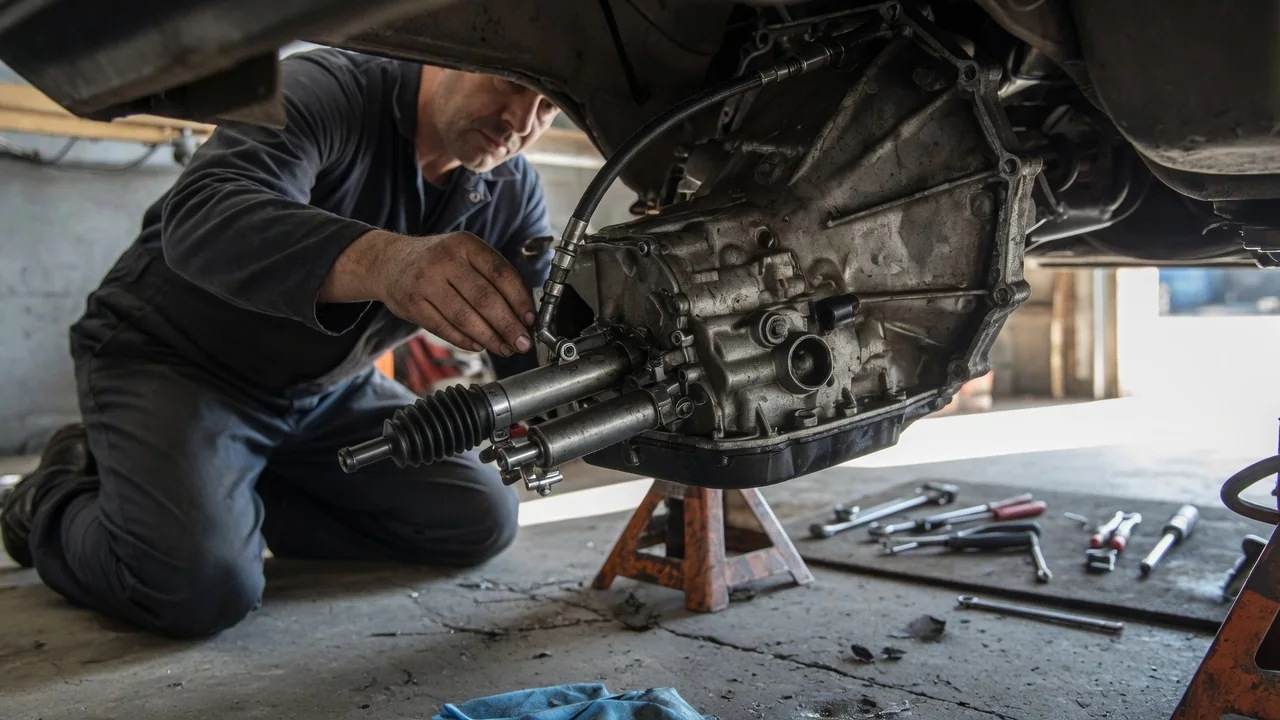
Anyone asking what is a clutch slave cylinder is really asking how foot pressure on a pedal becomes movement inside the bellhousing. The slave cylinder is the hydraulic actuator at the transmission end of the clutch system. It receives pressurized fluid from the master cylinder and converts it into the mechanical push that separates the engine from the gearbox during a shift.
Pedal hydraulic path
Pressing the clutch pedal moves a pushrod into the clutch master cylinder, which is mounted on the firewall near the pedal box. A piston inside the master displaces brake-type fluid into a rigid line or flexible hose that runs down toward the transmission. Because fluid barely compresses, the volume leaving the master arrives almost immediately at the slave cylinder, where it pushes a second piston outward. The pedal's travel and the difference in bore sizes between the two cylinders determine how much force and stroke reach the clutch.
Under the hood, the visible part of this circuit is usually a small reservoir, sometimes shared with the brake reservoir through a separate chamber or feed hose. Following the line downward leads to the slave end, though how much is visible varies widely. Some vehicles bolt an external cylinder to the outside of the bellhousing where it can be seen from below, while others place a concentric unit inside the housing around the transmission input shaft, leaving only the hydraulic line and a bleed fitting showing.
Release motion
When pressurized fluid enters the slave cylinder, its piston extends. On an external design, a short pushrod presses against a release fork, which pivots and drives the release bearing against the diaphragm spring fingers of the pressure plate. On a concentric design, the piston and bearing are one assembly that slides directly along the input shaft sleeve. Either way, pressing the spring fingers lifts the pressure plate's clamping force off the clutch disc, so the disc stops transmitting engine torque to the transmission.
Releasing the pedal reverses the sequence. The diaphragm spring pushes the bearing and piston back, fluid returns toward the master cylinder, and the pressure plate clamps the disc against the flywheel again. Most hydraulic systems self-adjust as the disc wears because the piston simply rests at a slightly different position over time. Some clutches are a pull type rather than a push type, and some older designs use adjustable pushrods, so the exact motion and any adjustment provisions should be confirmed for the particular vehicle.
Fault signs
A slave cylinder that leaks or draws in air cannot deliver a full stroke, and the clutch may not release completely. Drivers often notice a pedal that feels soft, sinks farther than usual, or engages very close to the floor. Gears may grind or resist selection, particularly first and reverse from a standstill, because the disc is still dragging. A dropping fluid level in the reservoir, damp residue on the bellhousing, or drips beneath the transmission area are further clues worth noting.
These symptoms are evidence to interpret rather than proof that the slave cylinder has failed. A worn master cylinder, a deteriorated hose, air trapped after earlier service, or contaminated fluid can produce nearly identical pedal behavior. An internal concentric unit may leak inside the bellhousing where nothing is visible until fluid reaches the clutch disc and causes slipping or judder. Mechanical faults such as a worn release fork pivot or damaged pressure plate can also mimic hydraulic trouble, so the whole system deserves inspection before any part is blamed.
Everyday Use and Observations
In normal driving, a healthy slave cylinder goes unnoticed. The pedal offers consistent resistance, the engagement point stays in the same place from day to day, and shifts feel clean whether the drivetrain is cold or fully warmed up. Each pedal press cycles the piston and seals, so stop-and-go traffic works the component far more than highway cruising. Holding the pedal down for long periods at traffic lights keeps the hydraulics pressurized and the release bearing loaded, which adds wear that selecting neutral avoids.
Simple observations help track the system's condition. The fluid in the reservoir should sit between its marked levels and look reasonably clear; dark or cloudy fluid suggests moisture or seal material in the circuit. A level that falls slowly can reflect normal clutch wear on some designs, while a faster drop points toward a leak. Changes in pedal feel between a cold morning and a hot afternoon, or after a long drive, are also worth remembering, since intermittent behavior gives a technician useful direction.
Limits and Next Steps
There are limits to what can be judged from the driver's seat or a quick look under the hood. External cylinders can often be inspected for wetness around the dust boot, but concentric units are hidden, and reaching them generally means separating the transmission from the engine. That difference strongly affects the labor involved, which is why many shops suggest dealing with the clutch disc, pressure plate, and release components together when the transmission is already out. The correct approach depends on the vehicle's layout.
If the pedal suddenly drops, stays on the floor, or the transmission will not go into gear, the car should not be driven in traffic, because losing clutch release removes the ability to disconnect engine power predictably. Topping up fluid with the type specified in the owner's manual may restore function briefly, but it does not fix a leak. Bleeding procedures and fluid specifications differ between manufacturers, so the service information for the exact model, or a qualified technician, is the reliable next step for diagnosis.