What Is a Clutch Delay Valve?
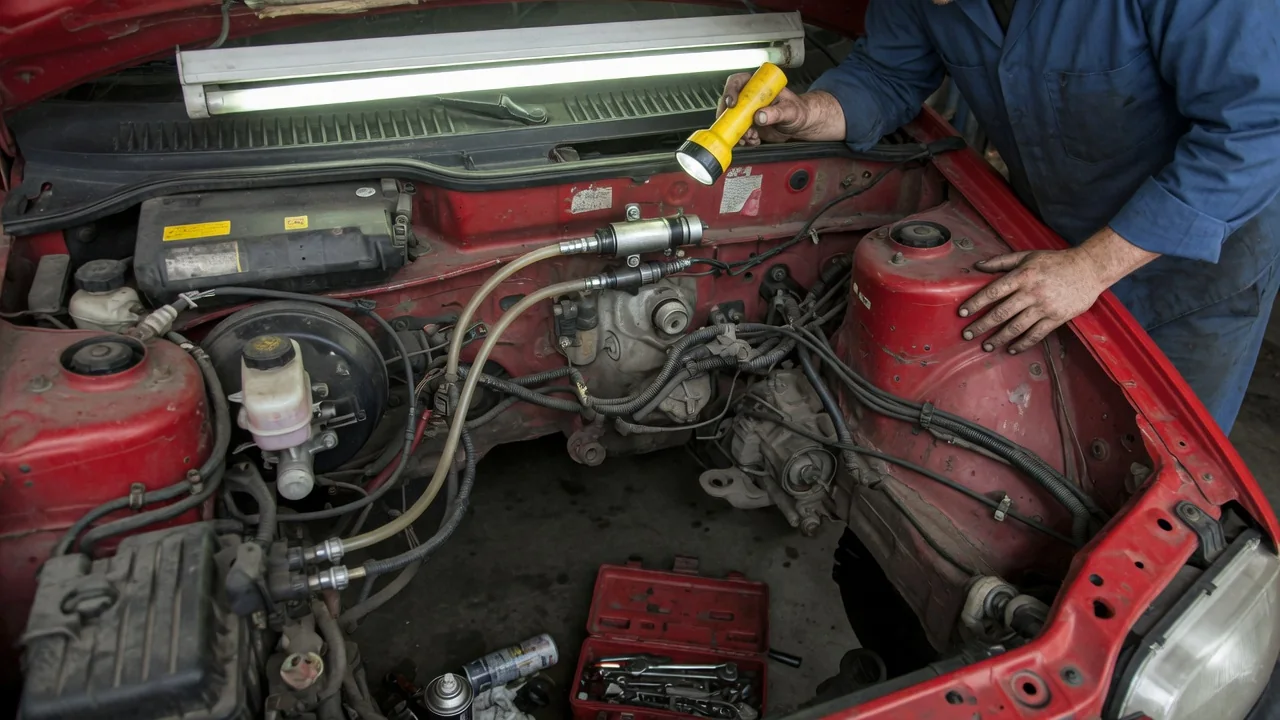
Drivers who ask what is a clutch delay valve are usually trying to explain a manual transmission that seems to engage on its own schedule. It is a small restriction in the hydraulic clutch circuit of some vehicles, designed to slow how quickly the clutch re-engages after the pedal is released, softening the load on the drivetrain.
Fluid flow
A hydraulic clutch works by moving fluid. Pressing the pedal pushes fluid from the master cylinder through a line to the slave cylinder, which moves the release mechanism and separates the clutch disc from the flywheel. Lifting the pedal lets the pressure plate spring push that fluid back the other way. A clutch delay valve sits somewhere in this path and narrows the return route, so fluid leaving the slave cylinder can only flow back at a limited rate, no matter how quickly the driver's foot comes up.
Many designs behave like a one-way restrictor. Fluid moves freely toward the slave cylinder, so disengagement stays quick, while the return stroke is forced through a small orifice. The result is that the clutch takes up drive progressively even after an abrupt pedal release. Where the valve lives varies by manufacturer: it may be a separate inline fitting, a piece built into the slave cylinder, or part of a line connector. Some vehicles with hydraulic clutches have no such restriction at all, so vehicle-specific confirmation matters.
Pedal feel
Because the valve limits the return flow rather than the pedal itself, the driver's foot and the clutch can briefly fall out of step. The pedal rises as fast as the leg allows, yet the clutch finishes engaging a moment later. Many drivers describe this as a vague or elastic bite point, where the point of take-up seems to shift depending on how quickly the pedal is released. During slow, deliberate releases the restriction has little to do, and the pedal feels much like any other hydraulic clutch.
The effect is most noticeable during quick shifts. A fast upshift under hard acceleration may produce a short moment of slip, with engine speed hanging or rising slightly before the drivetrain fully couples. Some drivers find this makes smooth, rapid gear changes harder to time, while others never notice it in ordinary commuting. How pronounced the sensation feels depends on the size of the restriction, the clutch design, fluid temperature, and the rest of the hydraulic layout, so two different models may behave quite differently.
Service implications
From a service standpoint, the valve is one more component in a sealed hydraulic circuit, and anything that affects that circuit can change how it behaves. Old, moisture-laden, or contaminated fluid may pass less cleanly through a small orifice, and debris can partially obstruct it. Air trapped in the system produces a soft pedal and incomplete release, symptoms that can be mistaken for a restriction problem. A technician will usually check fluid condition, leaks, and bleeding quality before drawing conclusions about the valve itself.
The restriction can also influence how the system is bled, since a narrow passage may slow fluid movement and make trapped air harder to chase out with some methods. Following the manufacturer's bleeding procedure is the dependable route. Some owners choose to remove or replace the valve with a free-flowing part, but that alters the original engagement characteristics and may have warranty or durability consequences. Any work that opens the clutch hydraulics involves brake-type fluid that damages paint and demands careful handling, so it is best left to qualified hands.
Everyday Use and Observations
In daily driving, the valve mostly works in the background. Pulling away from a stop with a clumsy or hurried pedal release, the car may move off more gently than expected instead of lurching or stalling. That is the intended benefit: slower engagement reduces shock through the gearbox, driveshafts, differential, and engine mounts, and it can make the car more forgiving for less practiced drivers. Passengers may simply experience smoother starts and gear changes without anyone knowing a restrictor is responsible.
Attentive drivers can pick up a few clues. The engagement point may feel as though it moves around from shift to shift, and matching revs on quick changes can feel inconsistent. A faint smell of hot friction material after repeated hard launches may point to slip being prolonged by delayed engagement, although a worn clutch, oil contamination, or driving technique can produce the same thing. Cold weather may thicken the fluid and exaggerate the lag until the system warms up, and behavior varies between vehicles.
Limits and Next Steps
A delay valve can soften engagement, but it cannot compensate for worn or damaged parts. A clutch that slips in higher gears under load, a pedal that sinks or stays down, grinding when selecting gears, or fluid loss all suggest faults elsewhere, such as a worn disc, failing master or slave cylinder, or a leak. Likewise, vague engagement on a car that never had a restrictor has another cause entirely. Blaming the valve without checking the wider system risks missing a problem that will keep getting worse.
The sensible first step is confirming whether a particular vehicle is fitted with one, using the service documentation for that exact model, year, and transmission, or asking a dealer or specialist familiar with it. If engagement has changed over time rather than always feeling the same, that points toward wear or a hydraulic fault and deserves inspection. Describing when the symptom occurs, whether cold, hot, during fast shifts, or under load, gives a technician useful evidence to interpret and helps separate normal designed-in behavior from a developing defect.