What Is a Clay Bar for Car Paint?
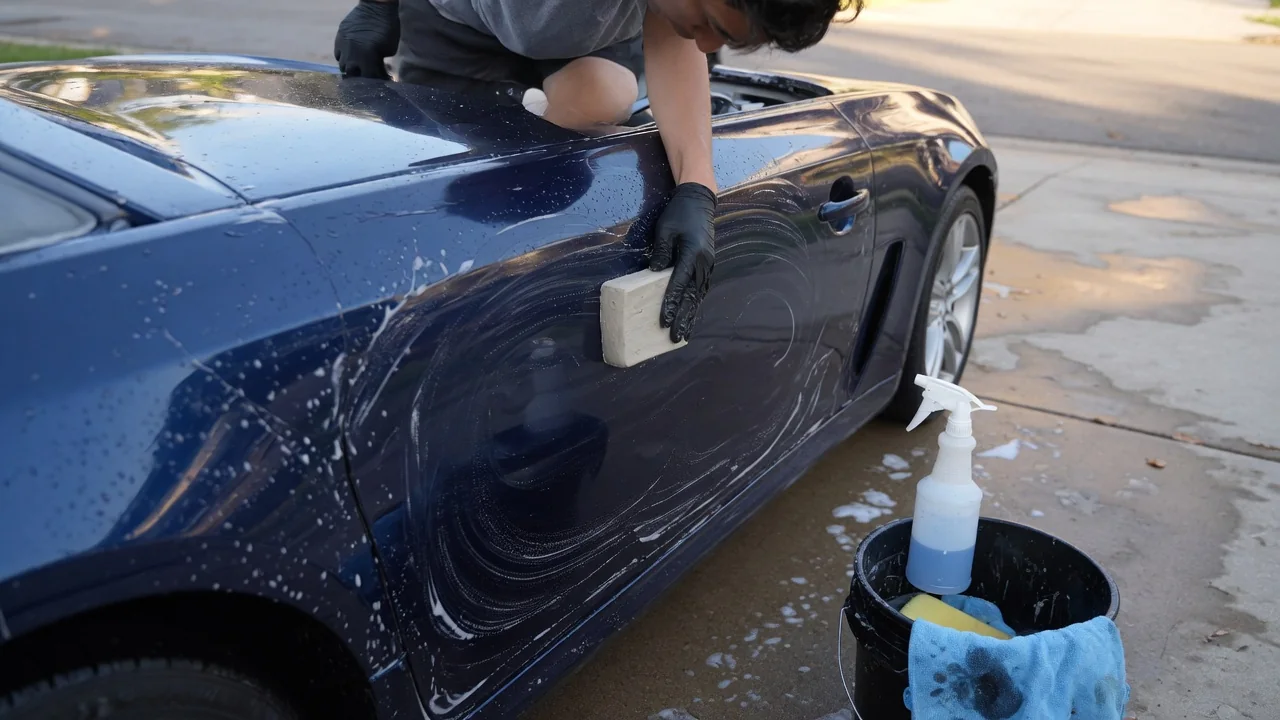
Anyone asking what is a clay bar for car paint is really asking how to remove the grit that washing leaves behind. A clay bar is a pliable, mildly abrasive detailing compound that glides over lubricated paint and pulls bonded contamination off the clear coat, leaving a clean surface ready for polishing, sealant, or wax.
Surface feel
Freshly washed paint can look clean and still feel rough. Slide dry fingertips lightly across a hood or roof and you may notice a gritty, sandpaper-like drag. That texture comes from bonded contaminants such as rail dust, brake dust, industrial fallout, tree sap mist, and paint overspray. These particles lodge in the clear coat and resist normal shampoo and a wash mitt, which is why the surface still feels coarse after a thorough rinse and dry.
A common check is to place your hand inside a thin plastic sandwich bag and sweep it over the panel. The film amplifies small bumps, making contamination easier to detect. Horizontal panels usually feel roughest because fallout settles on them, while lower doors and the rear bumper collect road tar and brake particles. Results vary with vehicle age, parking conditions, and climate, so a garaged car may feel smooth where a car parked near railways or construction feels noticeably gritty.
Lubrication
Clay should never touch dry paint. It works by shearing off particles that stand above the surface, and without a slick film between the bar and the clear coat it grabs, skips, and drags those particles across the finish. A dedicated clay lubricant, a quick detailer, or a product the clay manufacturer recommends keeps the bar floating. The panel should look visibly wet throughout, and more lubricant should be added the moment the clay begins to stick.
Feedback through your fingers tells you how the lubrication is working. On a contaminated section, the bar meets slight resistance and may produce a faint hissing sound, then glides silently as the area comes clean. Warm panels and direct sunlight dry the lubricant quickly, so working in shade on small sections helps keep the film intact. Product instructions differ, and some synthetic clay mitts or towels tolerate different lubricants than traditional bars, so check the label for the specific product.
When to avoid overuse
Clay is mildly abrasive, so every pass carries some risk of light marring, especially on soft or dark paint where fine haze shows easily. Claying on a fixed schedule regardless of condition removes nothing useful and adds needless friction to the clear coat. The better rule is to let the surface decide: if the bag test finds smooth paint, skip the clay. Many daily drivers only need it occasionally, though exposure and storage conditions change that considerably.
Claying also strips or weakens wax and many sealants, so frequent use means frequently reapplying protection. Vehicles with ceramic coatings, paint protection film, matte finishes, or vinyl wraps deserve extra caution, since clay can dull or mark those surfaces, and the coating or film maker's care guidance should take priority. A bar dropped on the ground should be discarded, because embedded grit will scratch. Aggressive grades suit heavy contamination and are usually followed by polishing, while fine grades are gentler.
Everyday Use and Observations
In practice, claying fits between washing and polishing. The car is washed and rinsed first so loose dirt is gone, sometimes with an iron remover or tar remover used beforehand to dissolve what chemistry can handle, leaving less work for the clay. A small piece is flattened into a patty, moved in straight overlapping passes with light pressure, then folded to expose a fresh face once it darkens. Each finished section is wiped dry with a clean microfiber towel.
The clay itself shows what was on the paint. Brown or gray smears, tiny dark specks, and orange flecks point to road film, tar, and iron particles, and white cars tend to reveal rust-colored dots most clearly. Afterward the panel feels glassy, towels slide with less drag, and water behavior often changes because old protection has been disturbed. Glass, and sometimes wheels, can be clayed too, though it is wise to keep a separate piece for dirtier areas.
Limits and Next Steps
Clay removes what sits on top of the paint, not defects within it. Swirl marks, scratches, oxidation, water spot etching, and bird dropping etching remain afterward, and may even look more obvious once the surface is clean. Correcting those takes polishing, which levels a small amount of clear coat with abrasives. Claying first matters because a polishing pad running over bonded grit can drag it across the panel, creating new defects and clogging the pad.
Once the paint is smooth, inspect it under good lighting to decide what comes next. Light haze from the clay usually clears with a finishing polish, while deeper defects may call for a more involved correction or a professional detailer, particularly on thin or repainted finishes where clear coat thickness is uncertain. If no polishing is planned, apply wax, sealant, or a coating promptly, because bare paint is unprotected. Regular careful washing then slows the return of contamination.