What Is a Clamshell Hood?
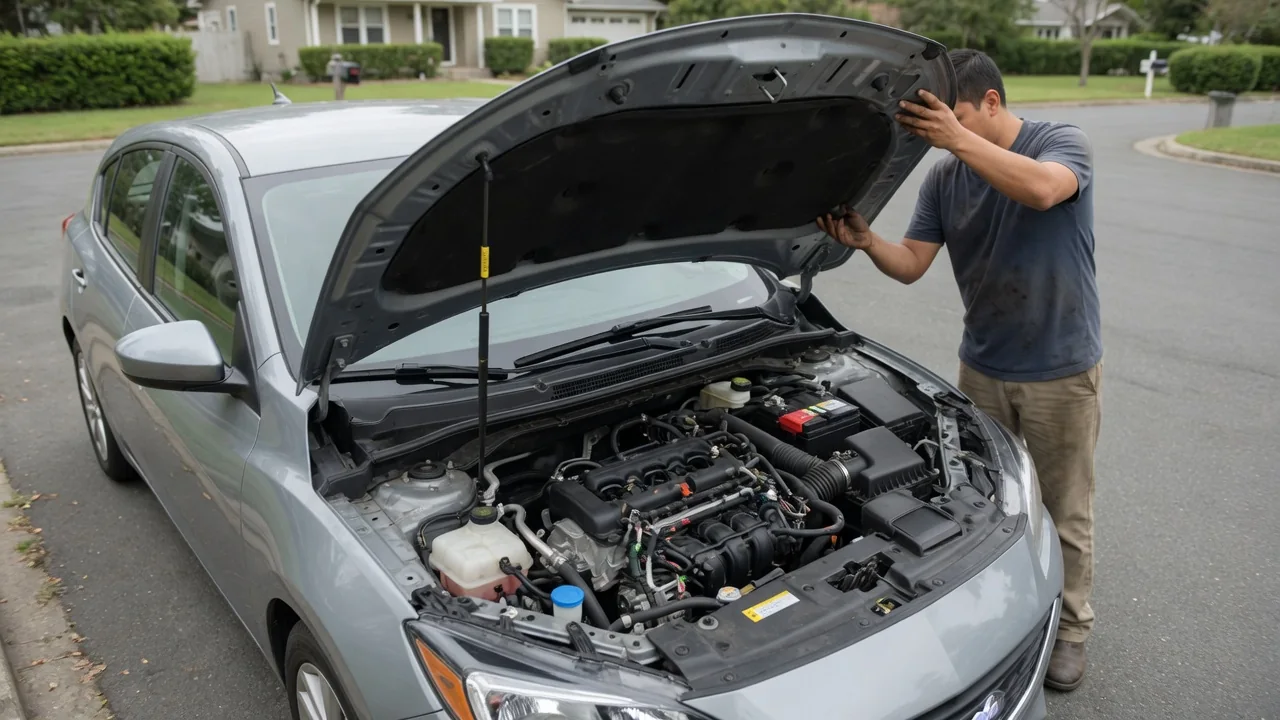
What is a clamshell hood? It is a hood panel that extends beyond the usual opening between the fenders, wrapping over the top of the front wheel arches and sometimes down the sides of the car. Instead of a flat lid sitting inside a frame of surrounding bodywork, the whole upper front surface lifts as one broad shell, much like the hinged half of a clam.
Panel boundaries
On a conventional hood, the panel gaps run along the top of the car, where the hood meets each fender, and those seams are visible when you look down from the driver's seat or stand at the front corner. A clamshell design moves those boundaries outward and downward. The cut lines typically sit on the side of the body, often along a crease near the top of the wheel arch, leaving the upper surface smooth and uninterrupted from one side to the other.
How far the panel reaches depends on the vehicle. Some designs wrap only a few inches over the fender tops, while others take in much of the front fender area, and certain sports cars and older designs tilt the entire front bodywork forward as one piece. The leading edge may stop at the grille or meet the headlights and bumper cover. Tracing the shut lines with your eye on a parked car is the quickest way to tell which layout it uses.
Service access
Opening a clamshell hood usually begins the same way as any other: an interior release, a safety catch at the front, then lifting the panel. What differs is the hinge arrangement. Many are hinged at the rear, near the windshield, and rise on gas struts, while some are hinged at the front and tilt forward. Because the panel is wide, it often uses two latches, one toward each side, to hold the outer edges down firmly at speed.
With the panel raised, the engine bay can feel more open because the sides of the hood lift away with the top. That can improve reach to components mounted near the inner fenders, such as fluid reservoirs, the battery or suspension tower tops, depending on where the manufacturer placed them. The benefit is not universal, though. Under-hood covers, bracing and packaging still determine how easy routine checks are, and the owner's manual shows the correct release and prop or strut arrangement for that vehicle.
Repair considerations
The size and shape of a clamshell panel affect bodywork repairs. A larger panel with compound curves is generally more involved to straighten or replace than a flat hood, and damage near a front corner that would only involve a fender on a conventional car may reach the hood as well. Material matters too; hoods may be steel, aluminum or composite, and each responds differently to repair methods. A body shop will assess whether repair or replacement makes sense for the specific panel.
Alignment is the other major consideration. Because the shut lines run along the body sides where they are easy to see, uneven gaps or a panel sitting proud of the fender stand out more than a slight mismatch on top of the car. Fitting involves adjusting hinges, latches and rubber stops so the edges sit flush on both sides, and the wide panel is awkward and heavy enough that removal is normally a two-person job handled with care to protect paint and neighboring surfaces.
Everyday Use and Observations
In daily driving, a clamshell hood behaves like any other, and most owners notice it mainly as a styling feature. The clean upper surface has no seams to collect dirt, which makes washing and waxing simpler across the top. The side shut lines, however, sit closer to road spray from the front wheels, so grit can gather along the lower edges. Wiping those edges and the mating surfaces on the fenders during a wash helps keep debris from rubbing the paint.
A few habits are worth adopting. When closing the hood, confirm that both sides have latched, since a wide panel with twin latches can catch on one side and sit slightly raised on the other. Follow the closing method the manufacturer describes rather than pressing hard on thin sections of the panel. Watch for changes over time as well, such as a gap that grows uneven, flutter at highway speed or struts that no longer hold the panel up, since these suggest something needs attention.
Limits and Next Steps
The term describes a shape and layout, not a single engineering standard, so it tells you little about how any particular vehicle is built. Hinge position, latch count, support method, panel material and the presence of pedestrian-protection features all vary by manufacturer and model. Some vehicles marketed with the label have only a modest wraparound, while others not described that way share similar seams. For that reason, general descriptions should be treated as orientation rather than a guide to a specific car.
For anything beyond routine opening and closing, vehicle-specific information is the next step. The owner's manual explains the release sequence and any cautions about supporting the panel, and factory service information covers adjustment and removal. If the hood will not latch evenly, triggers a dashboard warning that it is open, or has been in a collision, have a qualified technician or body shop inspect it. A hood that is not securely latched should not be driven on until the cause is found.