What Is a Chassis-Cab Vehicle? Upfit Platform, Cab and Real Uses
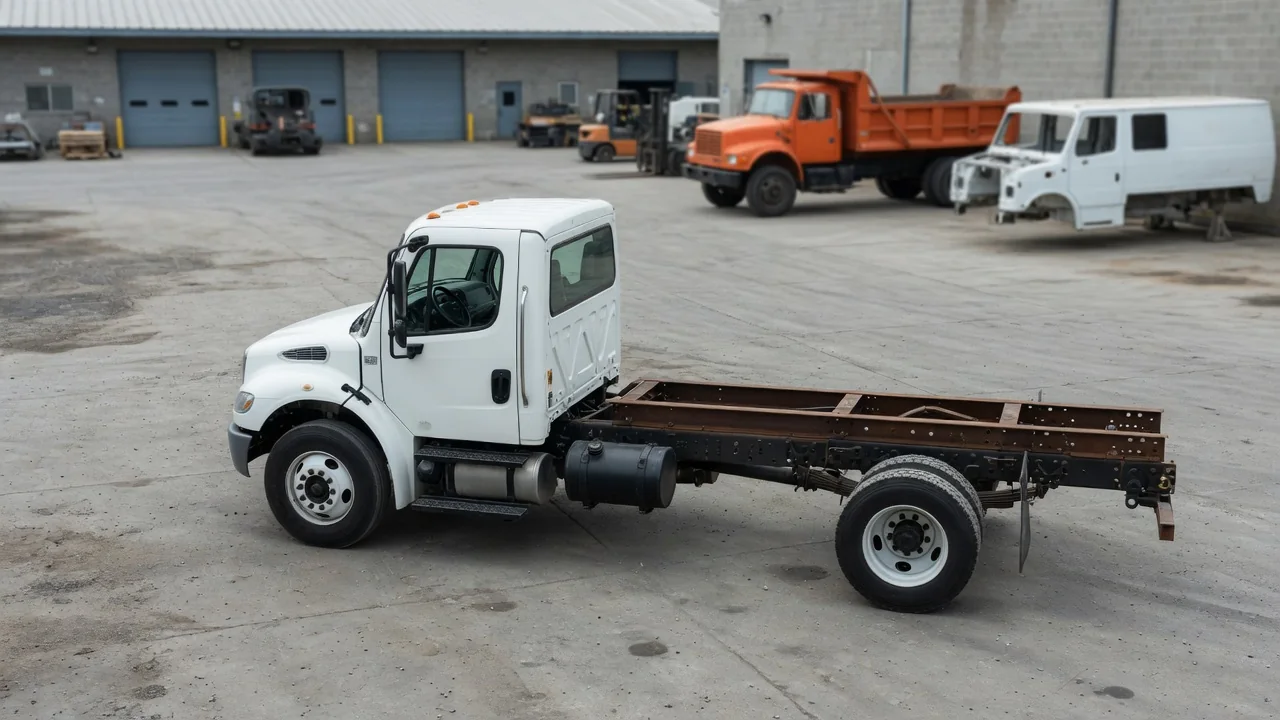
A chassis-cab vehicle is a truck sold with a finished cab and a bare frame behind it, without a factory bed or body. Instead of a pickup box, the space behind the cab is left open so a specialized body can be mounted later. This guide answers the question of what a chassis cab vehicle is in practical terms: how the open frame works as an upfit platform, what the cab provides, and where these trucks are typically used.
Upfit platform
The defining feature of a chassis cab is the exposed frame behind the cab. The frame rails are left accessible so a body builder, often called an upfitter, can attach a subframe, mounting brackets and the working body itself. A key dimension in this process is cab-to-axle length, usually shortened to CA. It measures the distance from the back of the cab to the centerline of the rear axle, and it largely determines which body lengths fit and how the body's weight is distributed between the front and rear axles. Manufacturers commonly offer several wheelbase and CA combinations so that a chassis can be matched to a planned body.
In the United States, a chassis cab is generally treated as an incomplete vehicle. The chassis manufacturer supplies documentation describing which requirements the vehicle already meets and which ones the final-stage manufacturer must address once the body is installed. The upfitter then completes the truck and, where required, certifies the finished vehicle. Many chassis manufacturers also publish body builder guidance that covers approved mounting methods, areas where drilling or welding on the frame is restricted, and locations for electrical connections.
Depending on the vehicle and its configuration, a chassis cab may come with provisions intended to make upfitting easier, such as auxiliary wiring circuits, dash-mounted upfitter switches or provisions for a power take-off that drives hydraulic equipment. Availability varies by manufacturer and model year, so the build specification is the reliable reference. Because the chassis cab vehicle body is chosen and installed separately, buyers typically make two related decisions: the chassis itself and the body that will turn it into a working truck.
Cab
The cab on a chassis cab is a complete, enclosed driver compartment. It includes seating, controls, instruments, climate control, glass, doors and a closed rear wall, so the vehicle can be driven as soon as it leaves the factory, even before any body is fitted. In many lineups the cab is closely related to the cab of a pickup from the same manufacturer, while the frame, suspension, axles and rear structure may be specified differently for heavier work. Those differences should be confirmed for a specific vehicle rather than assumed.
Chassis cabs are commonly offered in several cab styles. A regular cab has two doors and a single row of seats, keeping the cab short and leaving more of the overall length for the body. Extended cab designs add some space behind the front seats, and crew cabs provide four full-size doors and a full rear seat for carrying a work team. A longer cab occupies more of the vehicle's length ahead of the body, so for a given body the overall truck becomes longer, or a longer wheelbase is needed to keep the same body space.
It helps to separate the chassis cab from similar commercial formats. A cutaway is based on a van front end and is open at the back, so the body attaches directly to the cab structure. A cab-over design places the cab above or ahead of the engine rather than behind it. A conventional chassis cab keeps the engine ahead of the cab under a hood and finishes the cab with its own rear wall, leaving the frame behind it entirely free for the body.
Use cases
Chassis cabs are built to carry bodies that a standard pickup bed cannot provide. Common examples include flatbeds and stake beds for bulky materials, dump bodies for gravel, soil and debris, and service or utility bodies with enclosed side compartments for tools and parts. Box or van bodies turn a chassis cab into a small delivery truck, and insulated or refrigerated bodies serve businesses that move temperature-sensitive goods.
Specialized equipment is another major category. Tow trucks, wreckers and rollback car carriers are often built on chassis cabs, as are bucket trucks and aerial lifts used by utility crews. Municipal and contractor fleets may fit plows, spreaders or crane equipment. Some ambulances use a conventional cab chassis with a separate patient compartment mounted behind the cab, and certain camper or expedition builds use the same approach to mount a living module.
The appeal across these uses is flexibility. A business can choose a body sized and equipped for its exact job instead of adapting work to a factory bed. Fleets can standardize on one chassis type while fitting different bodies for different departments. In some cases, a worn or outdated body can be removed and replaced while the chassis remains in service, or a body can be moved to a newer chassis, subject to compatibility and the builder's guidance.
Practical implications and limits
Weight ratings shape almost every decision. The gross vehicle weight rating applies to the completed truck, including the body, installed equipment, fuel, occupants and cargo. A heavy steel body or a crane leaves less capacity for payload than a light flatbed on the same chassis. Individual axle ratings matter too, because a long body or equipment mounted far back can overload the rear axle even when total weight is within the limit. Weighing the finished truck after upfitting gives a real figure for remaining capacity instead of an estimate.
Ownership involves more paperwork than a typical pickup. Registration, licensing and inspection requirements often depend on weight rating and on whether the truck is used commercially, and these rules vary by jurisdiction. Before ordering a body, it is worth confirming which requirements will apply to the finished vehicle, since a body choice that raises the weight rating or changes the vehicle's classification can affect driver qualifications and operating obligations.
Warranty and service responsibilities are usually split. The chassis manufacturer generally covers the chassis, while the body builder covers the body and its equipment, and modifications that ignore the chassis manufacturer's guidance can complicate coverage. Day to day, a chassis cab built for heavy duty may ride firmly when lightly loaded and can be harder to park or maneuver than a pickup. For owners who mainly need occasional hauling, a standard pickup is often the simpler choice; a chassis cab makes the most sense when the body itself is central to the work.