What Is a Center-Channel Speaker in a Car?
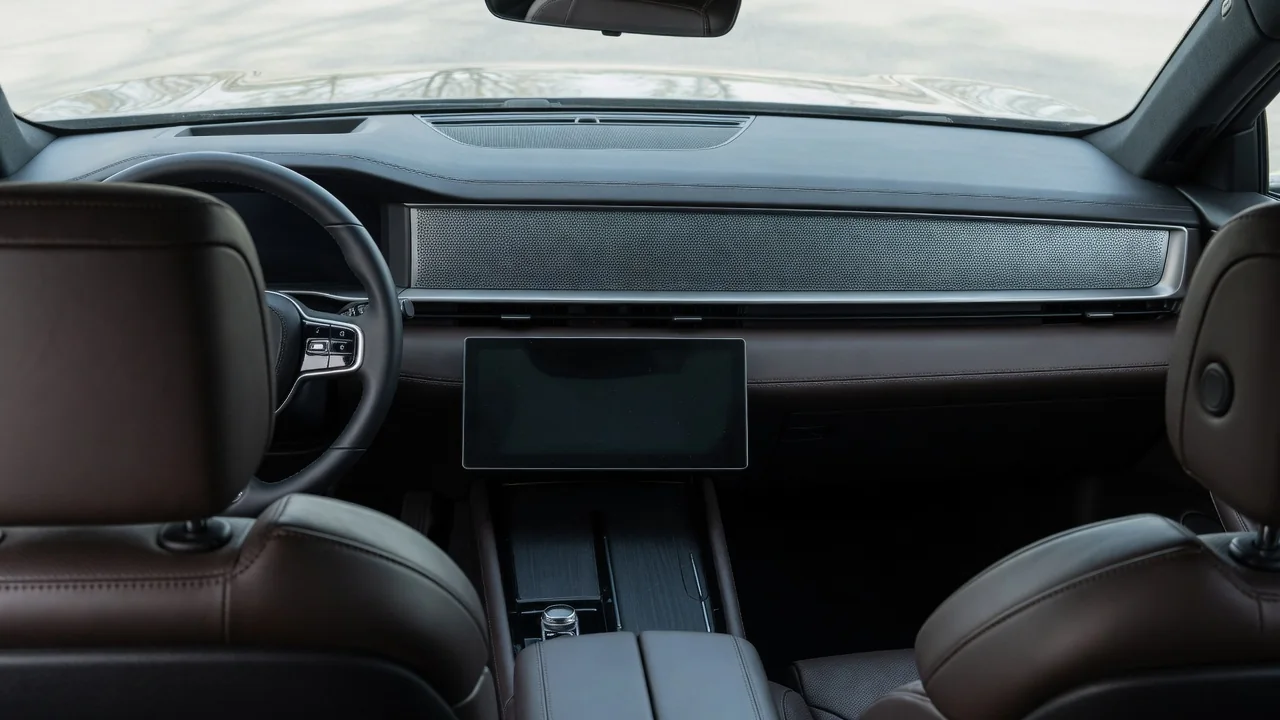
A center-channel speaker in a car is a single speaker, usually mounted in the middle of the dashboard, that reproduces sound meant to appear directly in front of the listeners. Its main job is to anchor voices and other centrally mixed sounds so they stay put between the left and right speakers. Whether it helps or hurts depends on how the signal is created, where the speaker sits, and how carefully the system is tuned around it.
Voice image: why cars struggle with a centered sound
In a home stereo, the listener ideally sits equidistant from two speakers. When both play the same signal at the same level, the brain fuses them into a phantom center that seems to come from the space between them. That phantom image is how a singer appears in the middle of the stage even though no speaker is there. A car breaks this arrangement. Every seat is off-center, so the nearest door or dash speaker arrives first and is usually louder. Because human hearing weights the earliest arriving sound heavily when locating a source, the vocal tends to pull toward the near side. For the driver in a left-hand-drive car, the singer often seems to sit near the left door or A-pillar rather than in the center of the dash.
A center channel addresses this problem with a real source instead of a phantom one. When centrally mixed content, such as a lead vocal or a podcast host, is sent to a speaker that physically sits in the middle, the image no longer depends entirely on the left and right speakers arriving in balance. Both front occupants hear the voice coming from roughly the same place, which is why center speakers appear in many factory premium audio systems. The goal is not more volume but a more stable, focused image that holds its position for more than one seat.
Dashboard placement and how it shapes the sound
Most center speakers sit on top of the dashboard, near the base of the windshield, because it is one of the few locations roughly midway between the two front seats and reasonably close to ear height. Some vehicles have a grille in the middle of the dash for this purpose, while others have no provision at all, which means an aftermarket installation may require custom mounting. The available space is usually shallow, so center speakers are commonly small midrange or full-range drivers rather than large woofers.
Placement brings acoustic side effects. A speaker firing upward bounces sound off the windshield, and that reflection can raise the apparent height of the image, which many listeners find pleasing because it lifts voices toward eye level. The same reflection also adds a delayed copy of the sound, producing peaks and dips in the frequency response that vary with seat position. Defroster vents, dash materials, and the angle of the glass all influence the result, so two cars with similar layouts can sound different. Aiming the driver, choosing a speaker that fits the opening, and keeping the mount free of rattles matter as much as the speaker itself, because a center channel exposes flaws in a way that is hard to hide.
Tuning a center channel for a stable image
The center speaker needs a signal designed for it. Most music is mixed in two channels, so there is no dedicated center track to play. Factory systems that include a center speaker typically rely on processing that extracts content common to both channels and steers it toward the middle. In aftermarket systems, a digital signal processor or a head unit with center-channel processing usually performs this job. Simply wiring the center to a mono sum of left and right is possible, but it tends to narrow the stage and can create cancellations when the same sound arrives from three locations at slightly different times.
Once the signal exists, level is the most sensitive adjustment. Too much center collapses the stage so everything seems to come from one spot; too little and the speaker contributes nothing noticeable. Many tuners set it below the left and right channels and raise it only until the vocal locks into place. A high-pass crossover keeps low frequencies out of the small driver, and the upper range may be limited if the tweeters already create a convincing image. Time alignment and polarity also matter: delays are set so that sound from the center, left, and right speakers arrives in a coordinated way at the listening position, and the center's phase is checked against the side speakers where their ranges overlap. Equalization then addresses the windshield reflection and dash resonances, ideally guided by measurements rather than guesswork.
Practical implications and limits
A center channel is not an automatic upgrade. Its benefit depends heavily on the source processing, so the same speaker can sound natural in one setup and artificial in another. Upmixing algorithms make judgments about what belongs in the middle, and they can occasionally pull instruments or reverb that were meant to sit off to the side. Recordings with unusual stereo effects tend to reveal this most clearly. Listeners who prefer to hear a recording exactly as mixed in two channels sometimes disable the center or leave it at a very low level.
There is also a trade-off between seats. Tuning that centers the image precisely for the driver may not do the same for the passenger, and a center speaker narrows that gap without fully eliminating it. Some installers skip the center channel entirely and rely on time alignment and careful speaker placement to build a convincing phantom center for one seat, accepting that the passenger hears a less precise image. Either approach can work, and the right choice depends on who usually rides in the car and what kind of material is played.
Integration limits matter as well. In vehicles that came with a factory center speaker, its signal may be generated by a factory amplifier or processor, and replacing the head unit or amplifier can remove that processing unless the new equipment provides its own. Dash space, airbag and sensor locations, and defroster ducting restrict what fits, so checking the vehicle's service information before cutting or modifying the dash is sensible. When the hardware fits and the processing is set up thoughtfully, a car audio center channel is best judged by a simple test: voices should sound as if they come from the middle of the dash, at a natural size, without drawing attention to the speaker itself.