What Is a Car Window Belt Seal? Glass Contact, Water Control and Wear
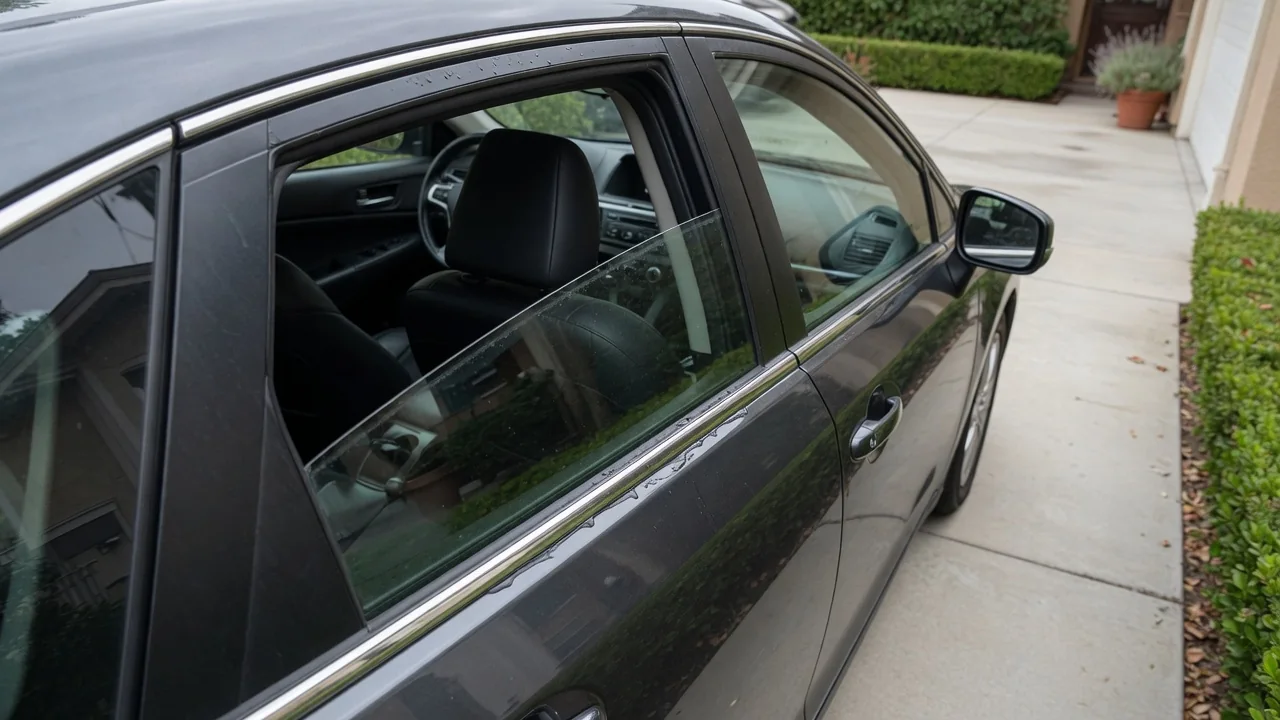
A car window belt seal is the long, narrow strip along the bottom edge of a door's window opening, where the glass slides down into the door. Many vehicles use two: an outer seal on the exterior side of the glass and an inner seal facing the cabin. Also called a belt molding, beltline weatherstrip or window sweep, it guides the glass, wipes it, and limits how much water and debris enter the door.
Glass contact: how the seal meets the window
The beltline is the horizontal line along the top of the door panel where the window glass exits the door body. Because movable side glass has to travel up and down through a gap in the door, that gap cannot be closed with a rigid seal. The belt seal bridges it with flexible contact instead. In a typical design, a metal or plastic carrier clips or presses onto the edge of the door's inner or outer panel, and one or more flexible lips extend from that carrier toward the glass. As the window moves, the lips stay pressed against its surface, bending slightly rather than blocking the glass.
The contact surface is usually not bare rubber. Many belt seals carry flocking, a layer of short fibers bonded to the lip, or a low-friction coating. This reduces drag so the window regulator does not have to work as hard, and it helps the lip wipe the glass instead of grabbing it. The contact pressure is a balance: firm enough to steady the glass and keep it from rattling inside the door, but light enough that the window moves smoothly without being scratched. The outer seal is often visible as a trim piece along the base of the window, which is why it is commonly called a belt molding. Exact profiles, materials and attachment methods vary by manufacturer and model, so the seal on one car can look quite different from the seal on another.
Water management: what the belt seal keeps out and what it does not
A car door is not designed to be watertight inside. Rain running down the side glass reaches the beltline, and some of it will always get past the seal into the door cavity. Water control is a central part of the belt molding's function, but in a specific way: the outer seal wipes most of the water and grit off the glass as the window lowers and deflects water running down the outside surface, so that only a limited amount enters the door. The water that does get in is expected to run down the inside of the outer door skin and leave through drain holes along the bottom edge of the door.
Inside the door, a separate barrier, often a plastic sheet or molded panel behind the interior trim, keeps that water away from the cabin side. The inner belt seal mainly serves the cabin: it wipes moisture and condensation from the inner surface of the glass, reduces drafts, and helps keep dust and small objects from dropping into the door. Taken together, belt seals manage water rather than stop it completely. They work alongside the glass run channel, the door's perimeter weatherstrip and the drain holes, so a leak or damp spot is not automatically the fault of the belt seal.
Wear: how and why belt seals deteriorate
Belt seals sit in a demanding position. The outer seal is exposed to sunlight, heat, cold, rain, road salt and car wash chemicals, and every window movement rubs its lips against the glass. Over the years, rubber and similar elastomers can harden, shrink and lose their ability to spring back, a property often described as compression set. Ultraviolet light and ozone can cause surface cracking, especially on the exterior seal. Flocking can wear thin or peel away, leaving rougher material in contact with the glass.
Common visible signs of a worn belt seal include cracks or gaps along the strip, a lip that no longer touches the glass along its full length, a seal that has pulled away from its carrier or lifted at the ends, and a chalky or faded surface. Functional symptoms can include the window rattling when partly lowered, more wind noise near the beltline, streaks of dirt or water left on the glass after lowering it, or a window that moves more slowly or squeaks because of increased friction. Grit trapped in a deteriorated seal can also leave fine scratches on the glass over time.
Age is not the only cause of wear. Frequent window use, abrasive dirt, harsh cleaning products and physical damage, for example from ice scrapers or careless trim removal, can all speed it up. At the same time, some symptoms that look like seal wear, such as a slow window or a rattle, can also come from the regulator, the motor, the glass run channel or a loose glass mounting.
Practical implications and limits
For most owners, the belt seal is an inspection item rather than a part that needs scheduled service. Keeping it clean is the most useful habit, because dirt and sand embedded in the lip act as an abrasive on the glass every time the window moves. Wiping the seal with a damp cloth during a wash and avoiding aggressive solvents is a reasonable general practice. Some owners apply a rubber-safe conditioner to exposed seals; if you do, confirm the product is compatible with automotive rubber and keep greasy residue off the glass, where it can smear. Any vehicle-specific advice in the owner's manual or service information takes priority over general guidance.
There are also limits to what a belt seal can explain or fix. Because it is a wiping and guiding seal rather than a watertight barrier, replacing it will not cure a wet floor caused by a torn vapor barrier, clogged door drains or a failed perimeter weatherstrip, so finding the actual leak path is usually more productive than replacing parts on suspicion. When replacement is needed, the procedure depends on the vehicle: some seals clip or press on and can be removed from outside, while others require removing the interior door panel or nearby trim. Parts can differ in profile and attachment between models, model years and door positions, so matching the correct part to the specific vehicle matters more than general appearance.