What Is a Car Storage Checklist for the First Week Back?
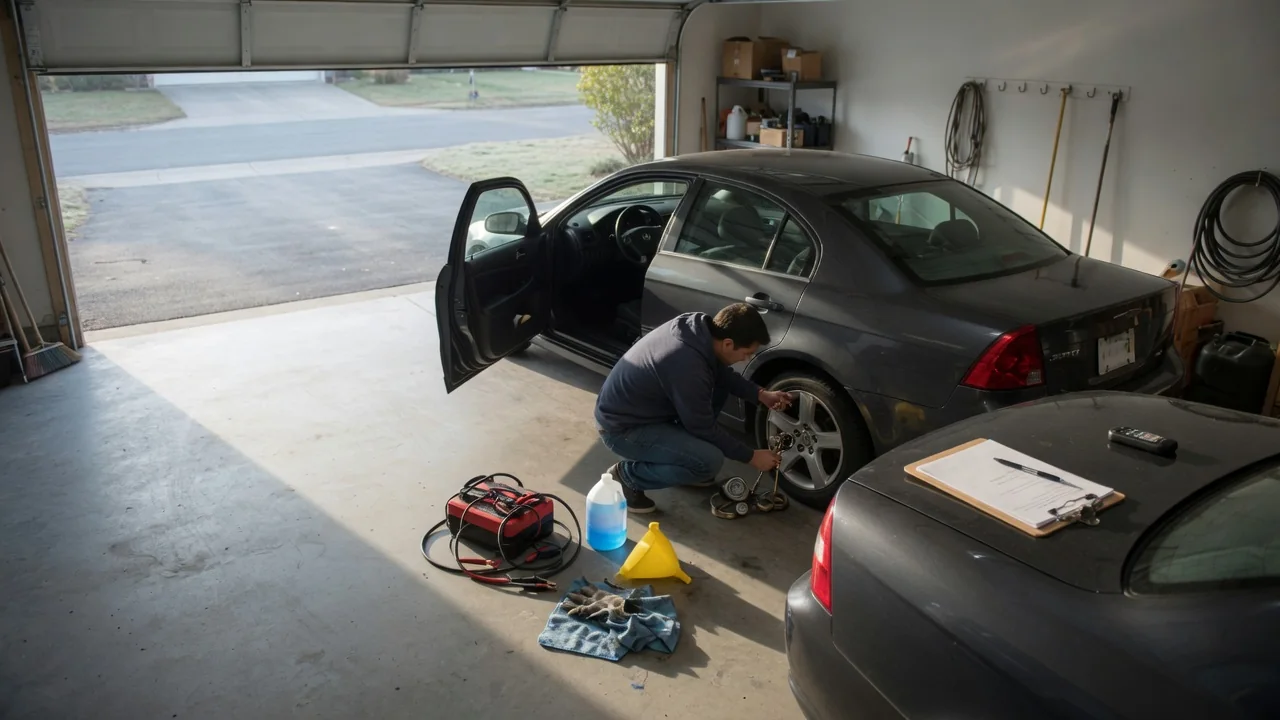
Bringing a car back from seasonal or long-term storage is less about one big inspection and more about a series of small checks spread over the first several days. A sensible returning stored car checklist covers three areas: tires and fluids, the battery, and a short, controlled test drive. This guide explains what to look at, why each item matters after a car has been sitting, and which signs mean the car needs more than a routine restart.
Tires and fluids
Start with the tires before the car moves at all. Tires lose air gradually even when a vehicle is parked, and a long rest can leave them noticeably underinflated. Check pressure with a gauge while the tires are cold and compare the reading with the figure on the vehicle's tire placard, usually found on the driver's door jamb or in the owner's manual, rather than the maximum number molded into the sidewall. Look closely at each tire for cracks in the sidewalls or between tread blocks, bulges, embedded objects, or uneven wear. A car that sat in one position for a long time can develop temporary flat spots, which often show up as a vibration that fades after some driving; a vibration that persists is a reason to have the tires and wheels inspected. Check the spare if the vehicle has one, and make sure any wheel chocks, blocks, or jack stands used during storage have been removed.
Next, look at the ground where the car was parked. Fresh spots or puddles can point to a leak that developed while the vehicle sat, and noting the color and location helps narrow down the source. With the engine off and the car on level ground, check the engine oil level and condition using the dipstick or the method described in the owner's manual, since some vehicles use an electronic oil level display instead. Check coolant in the overflow reservoir only when the engine is cold, and never open a hot cooling system. Confirm the brake fluid reservoir is within its marked range, check power steering fluid if the car has a reservoir for it, and top up washer fluid. While the hood is open, look for chewed wiring, nesting material, or debris near the air intake, because rodents commonly shelter in parked cars. Low fluid after storage is a signal to find the cause, not just to refill.
Battery
The battery is the most common reason a stored car refuses to start. Even with everything switched off, modern vehicles draw a small amount of current to keep clocks, alarms, and control modules alive, and a battery also loses charge on its own over time. If the car was on a battery maintainer during storage, it will usually be ready to go. If not, check its condition before relying on it. A voltmeter reading across the terminals with the engine off gives a general idea of state of charge; for a typical 12-volt lead-acid battery, a reading well below roughly 12.4 volts suggests it needs charging before use. Many parts stores and repair shops can perform a load test, which is a better indicator of battery health than voltage alone.
Inspect the terminals for white or greenish corrosion and make sure the clamps are tight. If the battery was disconnected for storage, reconnect it in the order the owner's manual specifies, typically positive first and negative last. A battery that has been deeply discharged may accept a charge but still struggle under load, so slow cranking during the first week is worth taking seriously. On some vehicles, reconnecting or recharging the battery can require resetting power windows, the clock, radio presets, or other settings; the procedure varies by model, so the owner's manual is the reference. Hybrids and electric vehicles still rely on a 12-volt battery to power up their systems, and the manufacturer's storage guidance should be followed for both the 12-volt and high-voltage batteries.
Short test
Once tires, fluids, and battery check out, start the engine and let it settle while you watch the instrument cluster. Warning lights normally illuminate briefly at startup and then go out; any that stay on, such as the check engine, oil pressure, brake, or charging light, deserve attention before driving. Listen for unusual noises like squealing belts, knocking, or grinding, and glance underneath again for new drips. Avoid revving a cold engine hard. Before pulling away, press the brake pedal a few times: it should feel firm and consistent, not soft or sinking. Check that the headlights, brake lights, turn signals, horn, and wipers work, since storage can affect bulbs, connectors, and wiper rubber.
Keep the first drive short and close to home, ideally on quiet streets at low speed. Light surface rust often forms on brake rotors during storage and usually clears after a few gentle stops, though it may cause some noise at first. Pay attention to pulling to one side, vibrations, steering that feels heavy or loose, hesitant acceleration, or a temperature gauge that reads higher than normal. After returning, let the car sit and look again for leaks, then recheck fluid levels once the engine has cooled. Over the rest of the first week, drive the car several times rather than letting it sit again, and recheck tire pressure after a few days, because a slow leak may only become obvious once the car is back in regular use.
Practical implications and limits
How much of this checklist matters depends heavily on how long the car sat and how it was prepared. A vehicle parked for a few weeks in a dry garage may need little more than a pressure check and a look underneath, while one stored for many months outdoors, without a maintainer or fuel stabilizer, has more opportunity for flat tires, a weak battery, stale fuel, and animal damage. Fuel left in the tank for a long period can degrade, and rough running or hard starting may trace back to it. Rubber parts such as tires, belts, hoses, and wiper blades age with time regardless of mileage, so a car that barely moved can still need these items replaced.
A first-week checklist is a screening tool, not a full inspection. It can reveal obvious problems, but it cannot measure brake pad thickness, internal tire damage, or the condition of components you cannot see without lifting the vehicle. Time-based maintenance intervals in the owner's manual, such as oil changes, still apply even if the car covered few miles. If something you find goes beyond topping up, charging, or inflating, such as a persistent warning light, an active leak, a soft brake pedal, or damaged wiring, it is safer to have the car inspected by a qualified technician before driving it further.