What Is a Car Splash Guard?
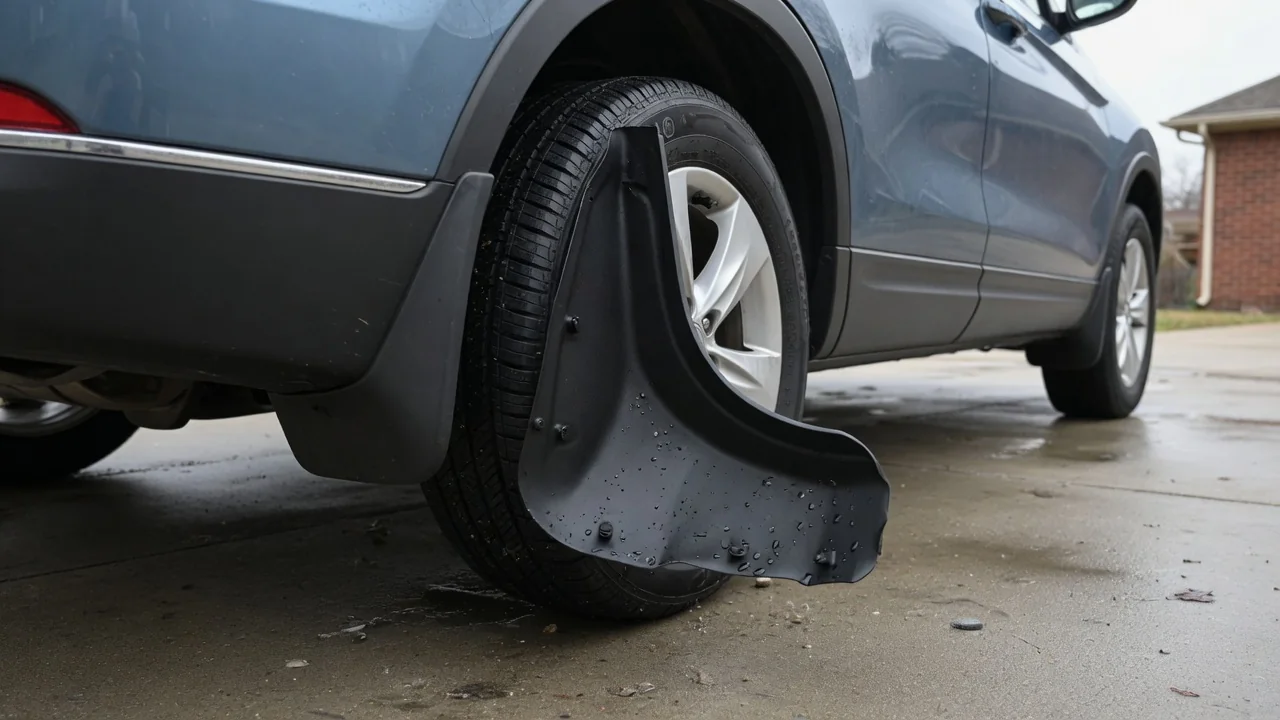
Anyone asking what is a car splash guard is usually looking at one of two parts: a flexible flap hanging behind a wheel, or a flat panel fastened beneath the engine. Both carry the same name in everyday use, and both manage the water, mud, and grit that tires throw around. This guide explains where they sit, what they protect, and how they wear.
Location
The term covers parts in two areas of the vehicle. The first is the wheel opening, where a splash guard, often called a mud flap or mudguard, hangs behind the tire at the rear edge of the fender or bumper. It may be a short molded piece that follows the body contour or a longer flat flap, as seen on many pickups and commercial trucks. Front and rear wheels can each have one, though some vehicles leave the factory with none at all.
The second location is underneath the front of the vehicle. Here the name refers to an engine splash shield, also called an undertray or underbody cover, which spans the gap below the engine bay between the front bumper and the subframe. Related panels line the inside of the wheel arches and are usually called fender liners. Looking behind a front tire or crouching at the front bumper reveals most of these pieces, although their shape, material, and coverage differ widely between manufacturers and model years.
Protection
A rotating tire lifts water, mud, sand, road salt, and small stones, then releases them rearward and outward. A flap behind the wheel interrupts that spray before it reaches the rocker panels, lower doors, and rear quarter panels, which are the areas most likely to collect stone chips and caked grime. Reduced spray also benefits other road users, since less mist and gravel is flung toward following vehicles. On trucks with wide or exposed tires, that effect is especially noticeable in heavy rain.
The under-engine shield works differently. It keeps road water and debris away from drive belts, pulleys, electrical connectors, the oil pan, and wiring routed low in the engine bay. A belt soaked by a deep puddle can slip briefly, and connectors exposed to salt spray may corrode over time, so the panel acts as a barrier against both. Many designs also smooth airflow under the car and help direct air through the radiator, which is why some shields include ducts, vents, or sound-absorbing lining.
Fit and service
Wheel splash guards are generally attached with screws, plastic push clips, or existing fender fasteners, and molded versions are shaped for a particular body style. A flap contoured for one vehicle rarely sits flush on another, because wheel arch curves, bumper edges, and trim differ. Universal flat flaps are more forgiving but still depend on a solid mounting surface. Tire size, suspension height, and wheel offset matter as well, since a flap needs clearance from the tread through the full range of steering and suspension travel.
Engine splash shields come into play during routine maintenance. On many vehicles the panel must be lowered or removed to reach the oil drain plug or filter, while others provide a small access door. Repeated removal wears out clips and strips threaded inserts, which is how shields end up sagging or missing altogether. After any service underneath the car, it is reasonable to check that every fastener was reinstalled and that the panel sits evenly. Fastener types and removal steps are vehicle specific, so the service information for that model governs.
Everyday Use and Observations
In daily driving, the clearest sign of working splash guards is a cleaner lower body. After a wet or muddy trip, a vehicle with flaps tends to show less streaking along the sills and behind the wheels than one without. Drivers on gravel roads may notice fewer chips in the paint over time. Winter conditions add another consideration, because packed snow and ice can build up on flaps and inside wheel arches, adding weight and occasionally rubbing against the tire until it is cleared.
Damage usually announces itself through sound. A scraping or dragging noise over bumps, a flapping sound at highway speed, or a plastic panel visible below the bumper line often points to a loose undertray or torn liner. Parking curbs, steep driveways, speed bumps, and road debris are the common causes. A cracked or bent mud flap may be seen curling toward the tire. These observations suggest where to look, but a similar noise can come from heat shields or exhaust hangers, so a visual check is worthwhile.
Limits and Next Steps
Splash guards reduce exposure; they do not seal anything. Fine spray still reaches the underbody, and a shield will not protect an engine from deep standing water, since flooding can enter the air intake regardless of any panel. Flaps can also trap damp dirt against painted edges where they mount, so the area behind them benefits from occasional rinsing. Long or rigid flaps may scrape on rough terrain, and any added piece at the wheel opening has some small influence on airflow.
When a guard is loose, cracked, or missing, the sensible next step is an inspection rather than an assumption. Driving with a dragging undertray risks it catching the road or a tire, so securing or removing it promptly matters, and a technician can judge whether it should be refitted or replaced. Whether a given vehicle was designed with a shield, and whether running without one affects cooling or belt life, depends on that model. The owner's manual or a dealer parts diagram shows what was originally fitted.