What Is a Car Seat Bolster? Side Support, Wear, and Repair
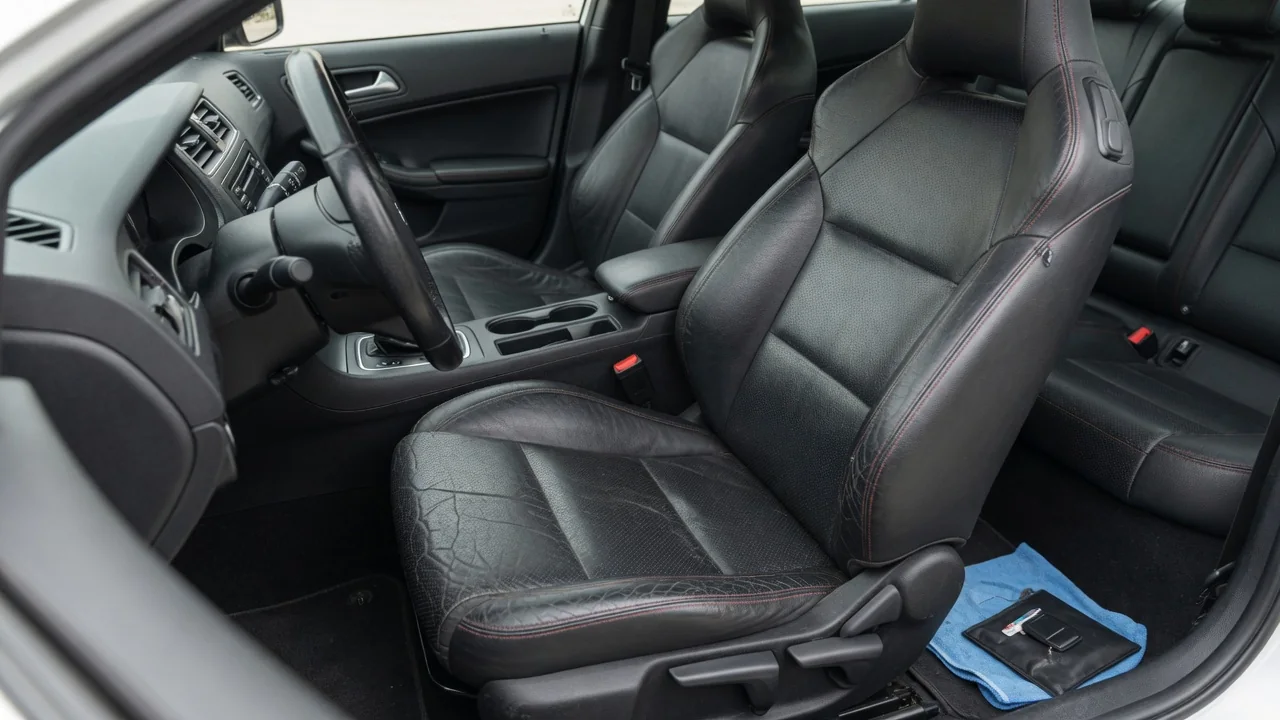
A car seat bolster is the raised, padded ridge along the sides of a seat cushion or backrest. If you have wondered about the seat bolster car meaning while shopping, reading a repair estimate, or looking at worn upholstery, the short answer is that bolsters hold your body in place and give the seat its shape. They also take a lot of abuse. This guide explains what bolsters do for side support, why the outer one wears first, and how damage is usually repaired.
Side support: what a seat bolster does
Most seats have two pairs of bolsters. The cushion bolsters run along the left and right edges of the seat bottom and cradle the thighs. The backrest bolsters rise along the sides of the seatback and wrap around the lower ribs and torso. Under the trim cover, a bolster is usually shaped foam molded or attached over the seat frame, sometimes with wire or plastic supports that help it keep its contour. When a car turns, the occupant's body tends to keep moving in a straight line, so it shifts sideways relative to the seat. Bolsters resist that motion by giving the hips and torso something to press against. This reduces the effort the driver spends bracing with knees, arms, or a tight grip on the steering wheel, which helps keep posture steady and control inputs smooth.
How pronounced the bolsters are depends on the seat's purpose. Seats intended mainly for comfort and easy access tend to have low, soft bolsters that let a wide range of body sizes sit without feeling squeezed. Seats designed for spirited driving often use taller, firmer bolsters that hold the occupant more tightly. Some seats have adjustable bolsters that can be widened or narrowed, but that is a feature of particular seats rather than a general rule. Bolster shape is always a trade-off: more lateral hold usually means a narrower pocket and a bigger ridge to climb over when getting in and out.
Entry wear: why the outer bolster fails first
On most cars, the driver's seat cushion bolster nearest the door shows wear long before the rest of the upholstery. The reason is geometry. When getting in and out, a person usually slides across that edge, pivots on it, and puts weight on it while twisting. Every entry and exit combines pressure, friction, and shearing in one small area. Clothing adds to the effect, since rivets on jeans, belts, keys in pockets, and rough fabrics act like mild abrasives. The passenger side sees the same forces but typically with fewer cycles, and the backrest bolster near the door can wear where shoulders and elbows brush against it.
How the damage shows up depends on the cover material. Leather often begins with creasing and loss of the surface finish, then progresses to color wear, fine cracking, and eventually splits along creases or seams. Synthetic leathers can peel or crack as the top layer separates from its backing. Cloth tends to pill, thin out, and fray. Beneath any material, the foam gradually compresses and can break down, so the bolster loses height and the cover becomes loose. A loose cover wrinkles and flexes more each time someone sits, which speeds up surface wear. Heat, sunlight, and dryness can accelerate deterioration, though the rate varies widely between vehicles and how they are used.
Repair options for a worn bolster
The right repair depends on how far the damage has gone. Surface wear on leather, such as faded color or a scuffed finish, can often be addressed by cleaning, preparing the surface, and recoloring with a product matched to the existing material. Small cracks may be filled with a flexible compound before refinishing. Cloth with light pilling can sometimes be tidied up, but threadbare or torn fabric usually cannot be restored invisibly. These cosmetic fixes improve appearance and may slow further wear, yet they do not restore lost foam or repair a structural tear.
Once the cover is split or the foam has collapsed, the more durable approach is to rebuild the bolster itself. An upholsterer may add or replace foam to restore its shape, then replace only the worn panel of the cover with matching material while keeping panels that are still in good condition. In other cases the whole cover or the complete cushion is replaced, which can make color and texture matching easier. Removing a seat cover usually means taking the seat out of the vehicle and releasing clips, hog rings, or retaining strips, so the job is more involved than it may first appear.
Before any work beyond surface cleaning, find out what is inside the seat. Many modern seats contain heating elements, wiring, and occupant-detection sensors, and in some vehicles a side airbag is mounted in the backrest bolster. A seat with an integrated airbag typically carries a label on the trim, and its cover may be built with a tear seam that lets the airbag deploy through it. Changing the cover material, stitching, or foam in that area can interfere with deployment, so follow the vehicle's service information or use a trimmer familiar with these seats, including the manufacturer's procedure before disconnecting any seat wiring.
Practical implications and limits
Knowing how bolsters wear makes them easier to protect. Because most damage comes from sliding over the outer edge, swinging both legs in and lowering yourself straight down, rather than dragging across the ridge, reduces friction on that spot. Emptying back pockets and moving the seat or steering wheel to leave more room can also limit rubbing. Regular cleaning and conditioning may help leather stay flexible, and a fitted seat cover can shield cloth, as long as it does not hide airbag labels or block a deployment zone and is intended for use with airbag-equipped seats.
There are limits to what any of this achieves. No habit eliminates bolster wear, and a seat with tall, firm bolsters will always see more contact at its edges than a flatter design. Repairs can restore appearance and much of the support, but an exact match to the factory color, grain, or stitching is not always possible, especially on interiors that have aged in sunlight. Whether to recolor, replace a panel, replace a cover, or source a complete seat depends on the extent of damage, the materials, parts availability for the specific vehicle, and how much originality matters to the owner. When a bolster contains safety equipment or sensors, the correct procedure for that vehicle should take priority over cost or convenience.