What Is a Car's Wheelbase?
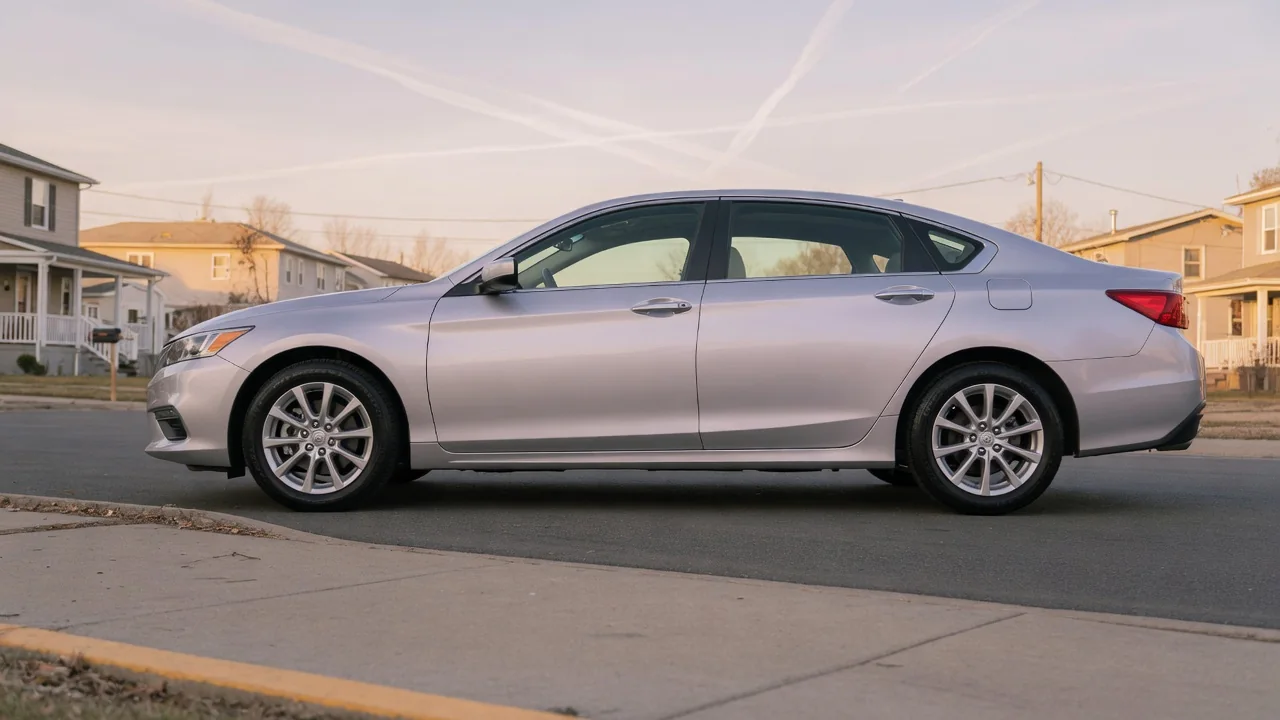
If you have ever asked what is a car's wheelbase, the answer is simple: it is the distance between the center of the front wheels and the center of the rear wheels, viewed from the side. That single dimension shapes how much room passengers get, how the vehicle rides over bumps, and how easily it turns in tight spaces.
How measured
Wheelbase is measured along the length of the vehicle, from the center of the front wheel hub to the center of the rear wheel hub on the same side. It is not the overall length, which also includes the front and rear overhangs, the bodywork that extends beyond each axle. Two cars with similar bumper-to-bumper length can therefore have noticeably different axle spacing, depending on how far the wheels are pushed toward the corners.
Manufacturers publish the figure in inches or millimeters in the specification sheet and often in the owner's manual, usually with the steering pointed straight ahead and the car at a defined load. You can approximate it yourself with a tape measure held level between hub centers on flat ground, though suspension position and tire wear introduce small errors. Some trucks and vans are offered in several wheelbase lengths under one model name, so the published number depends on the exact configuration.
Cabin packaging
The space between the axles is where the passengers sit, so a longer wheelbase generally gives designers more room to work with. Extra axle spacing often shows up as rear legroom, because the back seat can be placed farther from the front seats without sitting directly over the rear wheels. It can also allow wider rear door openings, since the rear wheel arch intrudes less into the door cutout, making it easier to step in or fit a child seat.
Wheelbase is not the whole packaging story, however. Engine orientation, drivetrain layout, seat height, and roofline all influence how efficiently that length is used. A vehicle with a compact powertrain and short overhangs may offer more cabin room than a longer car whose hood occupies much of its length. Many electric vehicles place a flat battery between the axles, which encourages long wheelbases relative to body length, but floor height and seating position still vary by design, so comparing interior dimensions directly remains worthwhile.
Maneuvering implications
A shorter wheelbase generally helps a vehicle turn in less space. With the axles closer together, the rear wheels follow a path nearer to the front wheels, and the turning circle tends to shrink, which is welcome in parking garages, U-turns, and narrow city streets. Longer vehicles need more room to swing around, and their rear wheels track further inside the front wheels in a tight corner, which is why drivers of long pickups and vans learn to take turns wider to avoid curbs.
Axle spacing is only one factor in maneuverability. How far the front wheels can steer matters just as much, and that depends on suspension design, tire width, and whether the engine bay leaves room for the wheels to turn. Some vehicles also use rear-wheel steering to make a long wheelbase behave like a shorter one at low speed. Wheelbase additionally affects breakover clearance: a long span between axles is more likely to scrape its underside on a steep driveway crest or off-road ridge.
Everyday Use and Observations
On the road, wheelbase is most noticeable in ride and stability. When the axles are far apart, the front and rear wheels hit a bump at more widely separated moments, and the body tends to pitch less, giving a calmer feel on the highway. Longer cars often feel settled in crosswinds and through gentle lane changes. Shorter cars can feel livelier and more eager to change direction, but may bob more noticeably over expansion joints and broken pavement.
These impressions are tendencies rather than guarantees, because suspension tuning, tire sidewall height, vehicle weight, and seat design all shape comfort as well. A well-tuned small hatchback may ride better than a poorly damped larger sedan. A test drive over familiar roads is the most reliable way to judge. Pay attention to how the car behaves over speed bumps, how much steering effort and space a parking maneuver takes, and whether rear passengers sit ahead of the rear axle or directly above it.
Limits and Next Steps
Wheelbase is a useful comparison tool, but it cannot predict by itself how a vehicle will fit your life. It says nothing about width, height, cargo volume, or how far the body extends past the wheels, and overall length is what determines whether a car fits in a garage or a parking space. Track width, the side-to-side distance between wheels on the same axle, is a separate dimension that also influences stability and cornering feel.
When shopping, look up the wheelbase for the exact trim, body style, and model year you are considering, since figures can change between generations and between versions such as standard and extended cabs or long-wheelbase sedans. Read it alongside the turning circle, legroom, and overall length to form a full picture. If you tow, carry heavy loads, or drive off-road, check the manufacturer's guidance for your configuration, as axle spacing interacts with those uses in ways that differ from one vehicle to another.