What Is a Car's Serpentine Belt?
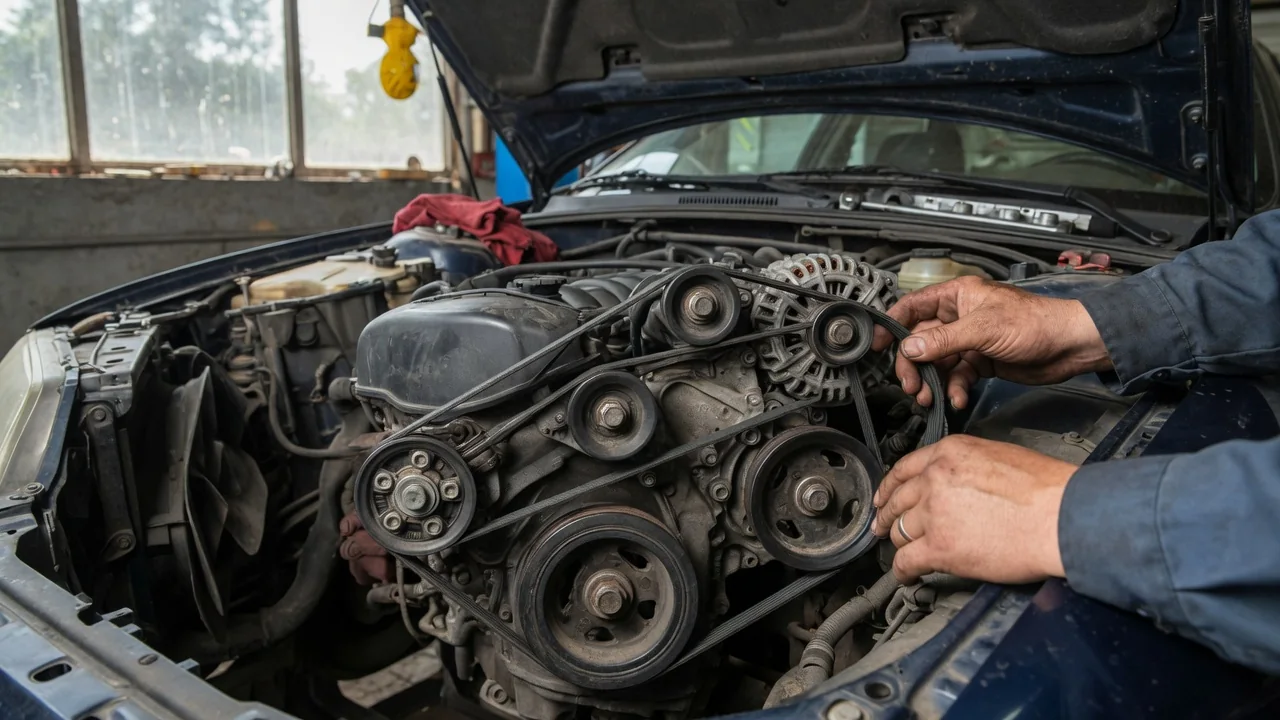
What is a car's serpentine belt? It is a single, long, ribbed rubber belt that winds around several pulleys at the front or side of the engine, carrying rotation from the crankshaft to accessories such as the alternator, air conditioning compressor and, on many vehicles, the water pump and power steering pump. Understanding its path, tension and wear helps drivers recognize trouble early.
Belt routing
The belt starts its work at the crankshaft pulley, which turns whenever the engine runs. From there it snakes across the accessory pulleys in a winding path, which is where the name comes from. The ribbed inner face grips grooved pulleys on components like the alternator and air conditioning compressor, while the smooth back side often rides against flat idler pulleys or the tensioner. This back-and-forth wrapping lets one belt contact each pulley across enough of its circumference to transfer power without slipping.
Routing differs considerably between engines, so the path on one vehicle tells you little about another. Many manufacturers place a routing diagram on a sticker under the hood, near the radiator support or on the underside of the hood itself, and the owner's or service documentation usually shows it as well. Some engines use a single belt for everything, others split accessories between two belts, and vehicles with electric power steering or an electrically driven water pump simply have fewer pulleys in the path.
Tension
A serpentine belt only transmits power when it is pressed firmly into the pulley grooves, so tension matters as much as the belt itself. Most modern engines use an automatic tensioner, a spring-loaded arm with a pulley on its end that pushes against the belt and takes up slack as the rubber wears and stretches slightly. Some older or simpler designs rely on a manually adjusted accessory bracket instead, and certain newer engines use stretch-fit belts with no tensioner at all.
Too little tension lets the belt slip, which can show up as a squeal on a cold start, when the steering is turned to full lock, or when the air conditioning compressor engages. Too much tension, more likely with manual adjustment, loads the bearings in the alternator and other accessories. With the engine running, a tensioner arm that flutters or bounces visibly suggests a weak spring or damper, though that observation should be made from a safe distance and confirmed by a technician.
Wear signs
Older belt materials tended to crack across the ribs as they aged, and visible cracks, fraying edges, missing chunks of rib, or a glazed, shiny surface remain clear reasons for attention. Many current belts use a rubber compound that resists cracking, so they can look sound while the ribs gradually wear thinner and the grooves grow deeper and wider. That material loss reduces grip in the same way a worn tire loses traction, which is why shops often check rib depth with a small gauge.
Noise offers additional clues, though it needs interpretation. A high-pitched squeal usually points toward slipping, while a rhythmic chirp often relates to pulley misalignment, and a grinding or rumbling sound may come from a worn idler or tensioner bearing rather than the belt. Oil or coolant on the belt deserves attention too, because fluids soften the rubber and signal a leak elsewhere. With the engine off and cool, a look at the belt's edges and ribs with a flashlight reveals most visible damage.
Everyday Use and Observations
In normal driving the belt does its job silently, and its importance only becomes obvious when something goes wrong. If the belt slips badly or breaks, the alternator stops charging and a battery warning light typically appears. Where the power steering pump is belt-driven, the wheel suddenly becomes heavy, and the air conditioning stops cooling. On engines whose water pump runs off the same belt, coolant stops circulating and the temperature gauge can climb quickly, making continued driving risky for the engine.
Charging or temperature fault codes that sometimes accompany these symptoms are evidence to interpret, not proof that an alternator or other part has failed; a slipping belt can produce similar readings. Everyday habits help: noticing new noises at startup, glancing at the belt during an oil check, and watching for dimming headlights at idle with many electrical loads switched on. How visible the belt is varies, since some engine bays expose it plainly while others hide it behind covers or tight packaging.
Limits and Next Steps
A visual check has limits. It cannot measure tensioner spring strength, detect a slightly misaligned pulley, or confirm that a bearing is healthy, and a belt that looks acceptable from above may be damaged along a section that is out of sight. Replacement intervals are also set by each manufacturer and vary with belt material and operating conditions, so the maintenance schedule for the specific vehicle is the right reference rather than a general rule borrowed from another model.
When symptoms or inspection findings raise doubt, the sensible next step is a professional inspection that covers the belt, tensioner, idlers, and accessory pulleys together, since replacing a belt over a failing pulley tends to bring the problem back. Hands, clothing, and tools should stay well away from the drive while the engine runs, and a vehicle whose belt has failed is generally better towed than driven, particularly if the water pump depends on it. Hybrids and electric vehicles may have no accessory belt whatsoever.