What Is a Car's Remote Climate Function? How It Works
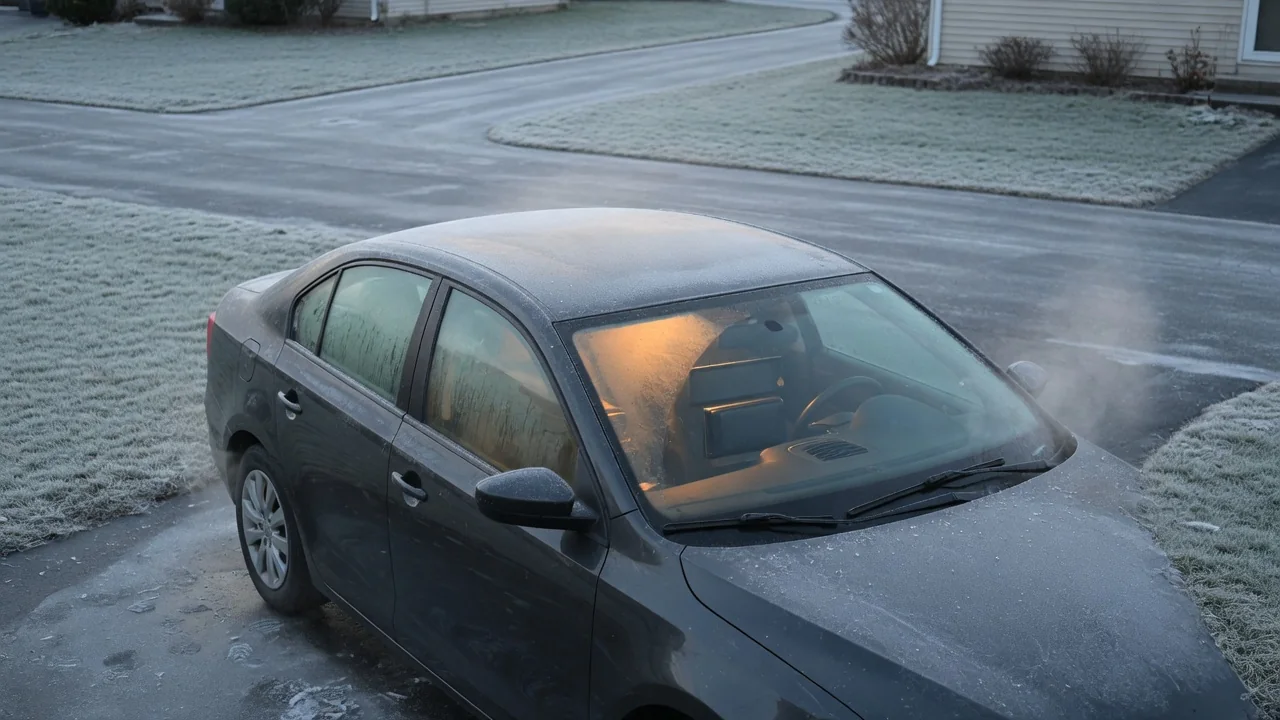
A car's remote climate function lets you start heating or cooling the cabin from a smartphone app or connected service before you reach the vehicle. Rather than climbing into a frozen or sun-baked interior, you send a command, the car wakes up, and its climate system runs for a limited period. In practice, connected car remote climate depends on three things working together: the command path from your app, the power source that drives the heating and cooling hardware, and a set of conditions the vehicle checks before it acts.
App command
When you tap a climate button in a manufacturer's app, the request usually does not go straight to the car. It travels over the internet to the automaker's connected services platform, which verifies your account, confirms that your phone is authorized for that vehicle, and then forwards the command to the car's telematics unit over a cellular network. The telematics unit is a small onboard computer with its own modem. Once it receives the command, it passes the request across the vehicle's internal network to the modules that control the engine or the climate system. Because this path relies on cloud servers and cellular coverage, remote climate typically requires an active connected services account, and in many cases a subscription or trial period that is still in effect. Some vehicles also offer limited short-range control through a key fob or a phone's Bluetooth connection.
The command itself can be simple or fairly detailed, depending on the vehicle and the app. At minimum it is a start or stop request. Many systems also let you choose a target temperature, turn on front or rear defrost, or activate heated or ventilated seats and a heated steering wheel when the car has that equipment. Some vehicles support scheduled preconditioning, where you set a departure time and the car decides when to begin. After the vehicle acts, it normally reports back, so the app can show whether the climate system started, failed, or is still waiting for a response.
Delays are a normal part of the process. To protect the battery, a parked car's telematics unit often stays in a low-power state and only checks for incoming commands at intervals, or it may need a wake-up signal before it can respond. A command can therefore take noticeably longer than pressing a button inside the cabin, and a car parked underground or in an area with weak reception may not receive it at all.
Vehicle power
What actually produces warm or cool air depends on how the car is powered. In a conventional gasoline or diesel vehicle, remote climate is usually built on remote engine start. The engine runs, the engine-driven air conditioning compressor can cool the cabin, and heat comes from engine coolant passing through the heater core. That means cabin heat depends on how quickly the engine warms up, and the system typically shuts the engine off after a set run time if no one enters and drives the car. Some vehicles use a separate fuel-burning auxiliary heater that can warm the cabin without running the engine.
Battery electric vehicles work differently. Their climate hardware runs directly from the high-voltage battery, using an electric compressor for cooling and an electric resistance heater, a heat pump, or both for heating. The trade-off is energy: every minute of heating or cooling draws from the battery unless the car is plugged in. When connected to a charger, many electric vehicles can supply climate power from the grid rather than from the battery, although exactly how that is handled depends on the vehicle and the charging setup. Hybrids and plug-in hybrids vary by design; some condition the cabin electrically, while others may start the engine when more heat is needed.
Behind all of this sits the 12-volt system. The telematics unit and control modules that receive and process the remote command run on low-voltage power, so a weak or discharged 12-volt battery can prevent the car from waking up or responding, even in an electric vehicle with a well-charged main battery.
Conditions
Before starting the climate system remotely, a vehicle checks a list of conditions intended to keep the feature safe and predictable. For engine-based systems, typical requirements include the doors, hood, and trunk or liftgate being closed, the car being locked, the transmission in Park, and no key detected inside the cabin. Many systems also refuse to start if certain warning lights are active, if fuel is very low, or if the hazard lights are on. A hood switch is a common safeguard so the engine cannot be started remotely while someone may be working under it. The exact list differs from one manufacturer and model to another, and the owner's manual is the reliable reference for any specific vehicle.
Electric vehicles usually add energy-related conditions. If the battery's state of charge falls below a threshold set by the manufacturer, the car may decline the request or shorten the session to protect remaining range. Most systems also limit how long a single remote session can run and, in some cases, how many times it can be repeated before someone must drive the car or use the key. Software settings matter too: features such as heated seats may only activate if they are enabled for remote use, and some vehicles apply the last cabin settings instead of letting the app override them.
Practical implications and limits
Remote climate is best treated as a head start rather than an instant fix. In very cold weather, an engine-based system may deliver only modest warmth in a short session, and defrost may soften but not fully clear thick ice or snow, so windows still need to be cleared before driving. In hot weather, a few minutes of cooling reduces the worst of the trapped heat without making the cabin feel fully comfortable. Planning a little ahead, or using scheduled preconditioning where available, generally gives better results than sending a command at the last moment.
Running the climate system on a parked car always has a cost. With a combustion engine, that cost is fuel and idling time; with an electric vehicle, it is driving range unless the car is on a charger. Preconditioning while plugged in is a common way to reduce it, and on some electric models it can also bring the battery closer to a favorable temperature before a trip. Local idling rules may also apply, and following them is the owner's responsibility.
Safety and reliability set the remaining limits. A combustion engine should never be started remotely in an enclosed or attached garage, because exhaust gases, including carbon monoxide, can build up and enter living spaces. The feature also depends on services outside the car: subscriptions can lapse, apps and servers can have outages, and changes to cellular networks have left some older connected vehicles without remote functions. Because the system shuts down after a timeout or when conditions change, it should not be relied on to keep people or pets in a parked car comfortable or safe.