What Is a Car's Interior Light Timer?
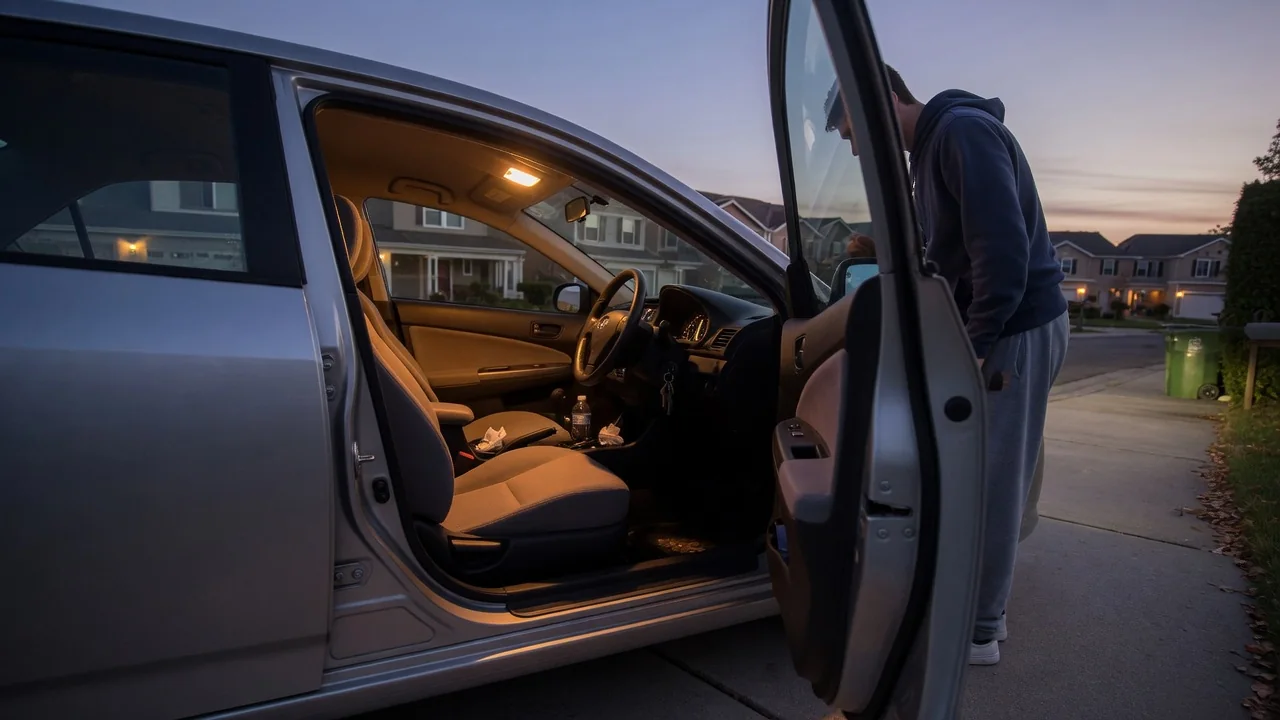
Anyone who has closed a car door at night and watched the dome lamp stay lit for a moment has seen an interior light timer at work. So what is a car's interior light timer? It is the control function that keeps cabin lighting on briefly after the doors close, then switches it off automatically to save the battery.
Door signal
The timer cannot start until the car knows a door has changed position. That information comes from a door signal, usually produced by a switch in the door jamb or one built into the latch assembly. When the door opens, the switch changes state and the lighting circuit or a body control module turns the courtesy lamps on. When the door closes, the signal reverses, and that change is the trigger that begins the countdown rather than cutting the lights instantly.
Drivers can often see this signal reflected elsewhere. A door-ajar warning on the instrument cluster generally relies on the same input, so a lamp that stays on together with an ajar message points toward the signal rather than the timer itself. Designs differ widely: older vehicles may use a simple plunger switch grounded through the body, while newer ones report door status over a data network. The liftgate, trunk, or hood may or may not be included, depending on the manufacturer.
Time delay
Once the last door closes, the delay keeps the cabin lit long enough to find the ignition, fasten a seat belt, or set down a bag. On many vehicles the lamps do not simply snap off at the end; they dim gradually, an effect often called theater dimming. On older cars the delay may come from a small standalone relay or timer circuit, while most modern vehicles handle it in software inside the body control module.
The delay is rarely a fixed, unconditional interval. Many cars cancel it early when the ignition is switched on or the doors are locked, on the reasoning that the occupant no longer needs the light. Some also turn the lamps on when the key is removed or the car is unlocked remotely, then run a similar countdown. The length of the delay varies by make and model, and some vehicles let owners adjust it through a settings menu, so the owner's manual is the reliable reference.
Battery drain clues
Interior lighting is a classic source of a dead battery, which is one reason the timer exists. A lamp that never goes out after the doors close will draw current for hours, and even small bulbs can flatten a battery over a night or a weekend. Useful clues include a faint glow visible through the windows well after parking, a warm lamp lens the next morning, or a battery that struggles to crank after the car has sat unused.
The cause is not always a failed timer. A dome lamp switch left in the constant-on position bypasses the door logic entirely, and a misadjusted door switch or a latch that does not fully register can keep the system thinking a door is open. Many modern cars add a battery saver function that cuts power to interior lamps after an extended period regardless, but not every vehicle has one, and it should not be relied on to cover an underlying fault.
Everyday Use and Observations
A simple way to learn how a particular car behaves is to watch it in a dark garage or driveway. Close all the doors with the ignition off and note how long the lights stay on and whether they fade or cut out sharply. Then repeat while locking the doors or starting the engine to see whether the delay ends early. These quick checks establish a baseline, which makes it much easier to notice later when something has changed.
The lamp switch position matters to what you see. Most dome lamps have three settings: always on, always off, and a door position that hands control to the door signal and timer. If the lights never come on when a door opens, the switch may simply be set to off, and a dashboard dimmer wheel turned to its end stop can do the same on some vehicles. Map lights operated by their own buttons often work independently of the timed circuit.
Limits and Next Steps
The timer has limits worth understanding. It only governs lamps wired into the courtesy circuit, so a glovebox light, a trunk lamp, or an aftermarket accessory may fall outside its control. Replacement bulbs can also change behavior; some LED conversions glow faintly or flicker during the dimming phase because they respond differently from the original bulbs to low current. None of this necessarily means a component has failed, only that the system is behaving differently from how it was designed.
If the lights stay on indefinitely, never illuminate, or act erratically, start with the simple items: the lamp switch position, the dimmer setting, and whether every door, the hood, and the liftgate is fully latched. Beyond that, the wiring layout, fuse locations, and any adjustable settings are specific to the vehicle, so the owner's manual or a qualified technician is the right next step. A persistent battery drain deserves a proper electrical diagnosis rather than guesswork, since several unrelated circuits can produce the same symptom.