What Is a Car's Crumple Zone?
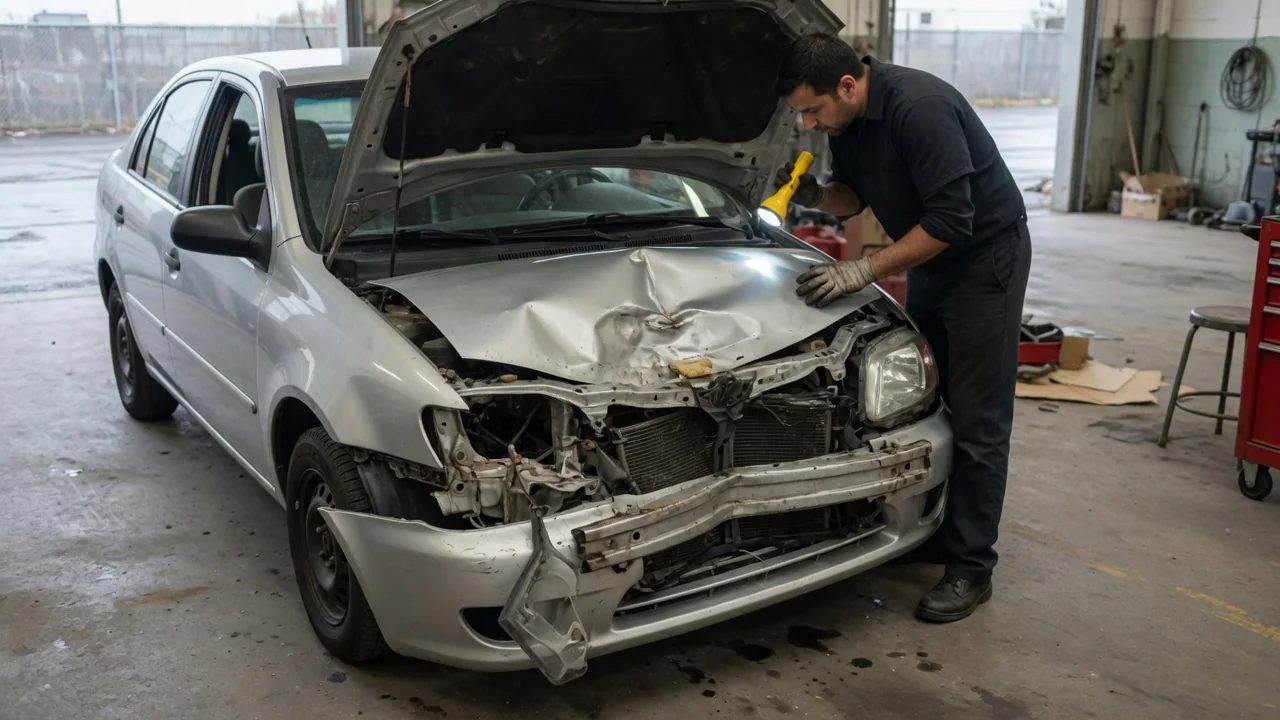
What is a car's crumple zone? It is a section of the vehicle structure, usually at the front and rear, engineered to deform in a planned way during a collision. Instead of staying rigid, these areas fold and collapse along intended paths. This article explains the idea of managed deformation, how it relates to the cabin, and why it matters after a repair.
Energy management
A moving vehicle carries kinetic energy, and in a collision that energy has to go somewhere. A crumple zone gives it a place to go: metal that bends, folds and crushes converts motion into deformation work and heat. Because the structure collapses over a distance rather than stopping instantly, the deceleration is spread over a slightly longer time. Engineers describe this as energy management, and it is the reason the front of a modern car is not built as one solid, unyielding block.
The deformation is planned rather than random. Front rails may have creases, notches or varying wall thickness, sometimes called crush initiators, that encourage the metal to fold in a sequence starting near the bumper. Bolt-on crush cans behind the bumper beam, the subframe and the hood structure can all take part. Materials differ as well, with mild steel, high-strength steel, aluminum and composites used in different places. The exact layout depends on the manufacturer, the platform and whether an engine or a battery pack sits nearby.
Passenger cell
The crumple zone is only half of the design idea. Behind it sits the passenger cell, sometimes called the safety cage, which is meant to behave in the opposite way. The pillars, roof rails, rocker sills, floor crossmembers and firewall are commonly built from stronger grades of steel or reinforced sections so the cabin resists changing shape. Soft ends and a stiff middle work as a pair: the outer structure is designed to deform, and the cell is designed to hold the space around occupants.
Load paths connect the two. Forces entering through the front rails are intended to be routed around the cabin, down into the sills, up into the A-pillars and across the floor rather than straight through the footwell. Seat belts, airbags and seat mounts are anchored to this stiffer structure, so the restraint systems and the body shell are developed together. Readers can see hints of this in thick door-opening pillars and wide sills, although the hidden reinforcement and the materials used vary considerably between vehicles and are not visible from outside.
Why repairs need inspection
Because a crumple zone works by deforming, it is a one-time structure. Once a rail has buckled or a crush can has compressed, that part has already done its folding, and it will not behave the same way again. Damage can also be subtle. A fender and bumper cover may be replaced and look perfect while a kinked rail, a shifted radiator support or a cracked weld remains underneath. This is why collision repairs call for a structural inspection rather than a judgment based on outer panels.
Method matters. Manufacturers publish body repair information that specifies where a section may be cut and joined, which parts must be replaced rather than straightened, and how particular steels or aluminum respond to heat. Applying heat or pulling a high-strength part back into shape can change its properties, and an extra weld or reinforcement plate can alter how the area folds. A qualified body shop measures the structure against the maker's dimensions and follows that vehicle-specific guidance, which is something a visual check alone can't confirm.
Everyday Use and Observations
In daily driving the crumple zone does nothing noticeable; it carries normal loads from the suspension, powertrain and bumper like any other part of the body. What owners tend to notice is the result of a low-speed bump: a bumper cover that cracks, a foam absorber that crushes, or a hood that buckles at a formed crease. Such damage can seem excessive for a minor contact, but outer parts that give way readily are consistent with a structure designed to deform rather than resist.
A few observations are worth attention on any car, especially a used one. Uneven gaps around the hood, fenders or trunk lid, doors that need extra effort to close, mismatched paint, or fresh sealer and unusual welds visible in the engine bay or trunk floor can suggest earlier structural work. Persistent pulling or uneven tire wear after a collision may also point to shifted mounting points. None of these signs proves a problem by itself, and each has other possible causes, but they justify a closer professional look.
Limits and Next Steps
A crumple zone has limits. It is designed around particular directions and severities of impact, and real collisions vary in angle, speed, overlap and the size of the other object. It also works as one element alongside seat belts, airbags, head restraints and seating position, not as a substitute for them. Understanding the concept explains how a body is meant to behave, but it does not say how any particular model performs; that depends on its own design and on published testing for that vehicle.
For owners, the practical steps are simple. After any collision beyond a cosmetic scrape, ask the repairer whether the structure was measured and whether the manufacturer's repair procedures were followed, and keep the paperwork. When buying used, review the vehicle's accident history and consider an independent inspection that includes the underbody and inner structure. Avoid adding rigid aftermarket parts to the front structure without checking how they attach, since changes there can influence how the area deforms. Vehicle-specific questions belong with the manufacturer's documentation or a qualified body technician.