What Is a Car Production Traceability Record?
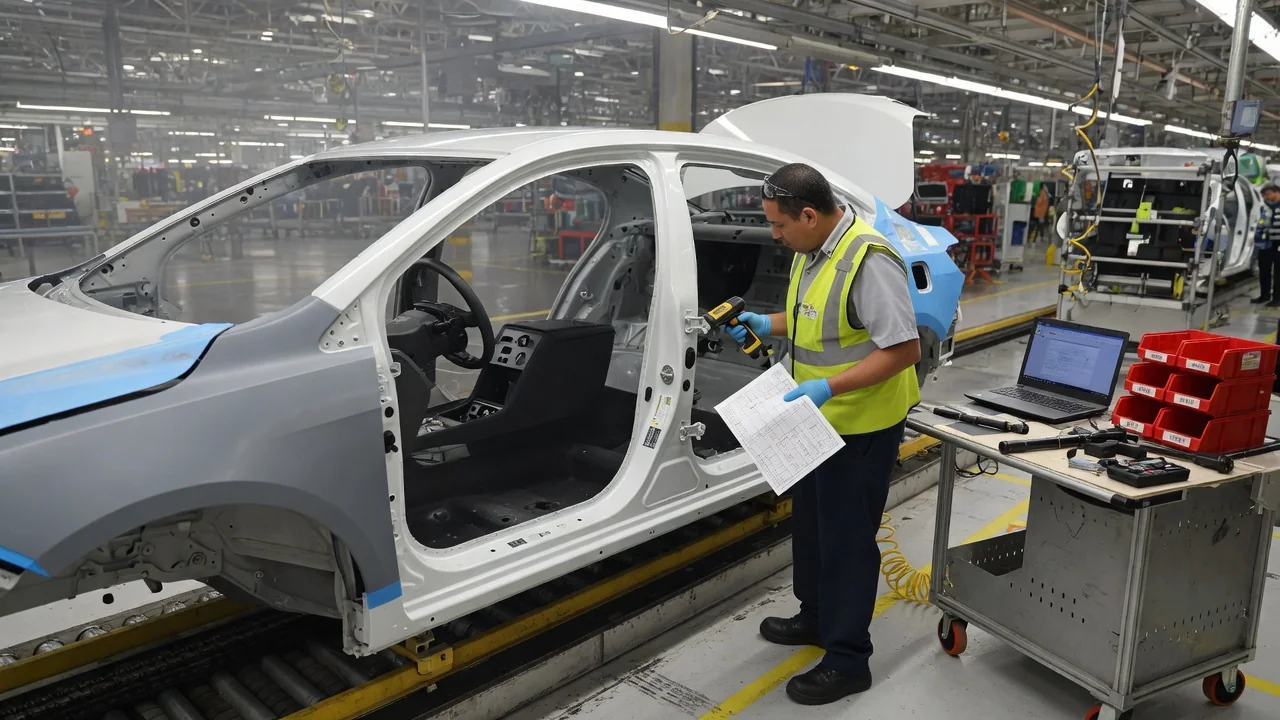
A car production traceability record is the manufacturer's internal history of how a specific vehicle was built. It shows which parts went into the car, where those parts came from, which assembly stations handled it, and what checks it passed before leaving the plant. Automotive build traceability ties this information to the vehicle identification number (VIN). If a quality problem is discovered later, the manufacturer can trace it to a narrow group of cars instead of an entire production run.
Part batches
Most components arrive at an assembly plant in lots. A supplier makes a batch of brake hoses, wiring harnesses or fasteners under the same conditions, such as the same raw material lot, the same tooling and the same shift. It labels that batch with a lot or batch number, often with a date code. When parts from that batch are used on the line, the plant's systems can link the batch number to the vehicles built during that time. For many low-cost parts, the record does not say 'this exact bolt.' It says 'a bolt from this lot, used between these times.'
Higher-risk or higher-value components are often tracked more precisely. Airbag modules, seat belt pretensioners, engines, transmissions, electronic control units and some steering or brake components commonly carry individual serial numbers or scannable labels. At installation, a scanner or the line control system reads the label and writes the serial number into the vehicle's record. Each manufacturer decides which parts get serial numbers and which are tracked by batch, based on safety relevance, regulatory expectations and cost. As a result, the level of detail varies between brands, plants and even model years.
The practical value of batch data is containment. Suppose a supplier later reports that one lot of material was out of specification. The manufacturer can search for that lot number and produce a list of affected VINs. Without batch linkage, the only safe response would be to treat every vehicle built over a broad period as suspect.
Work stations
The second half of a traceability record covers the process rather than the parts. A modern assembly line is divided into stations, and each station handles specific operations. Examples include installing a subassembly, tightening a joint, filling fluids, programming a module or running a test. As the vehicle moves along the line, it is usually identified by its VIN or by a temporary production number linked to it. Each station can then log what it did to that particular vehicle.
The data captured depends on the operation. Networked fastening tools can record the final torque on critical joints. Many systems also record the tightening angle and an OK or not-OK result. Fill stations may log fluid type and quantity. Software flashing stations can record which calibration or software version was loaded into each control unit. End-of-line checks generally produce pass or fail results with timestamps. These checks include wheel alignment, headlamp aim, brake and roll tests, water leak tests and electrical diagnostics.
Station records also capture deviations. If a vehicle fails a check and is repaired in an offline rework area, a well-kept record notes what was found, what was done and whether the vehicle was retested. Quality gates along the line use this information to stop a vehicle from shipping with an open defect. Depending on the plant, records can also show the shift, the equipment ID or the calibration status of the tool used for an operation. This helps engineers work out whether a problem came from a part, a process or a specific machine.
Service relevance
For owners and technicians, the most visible use of production traceability is targeting recalls and service campaigns. When a defect is linked to a part batch or a production time window, the manufacturer can define the affected vehicles by VIN rather than by model and year alone. This is why two seemingly identical cars from the same model year can have different recall status. One may have received a component from an affected lot or passed through a station during the problem period, while the other did not.
Build data also supports everyday service work. Dealer and manufacturer systems use the VIN to look up the vehicle's factory configuration. That configuration includes engine and transmission variants, option packages, paint code and installed electronics. Knowing it helps when ordering the correct replacement parts or choosing the right software update. Where the factory recorded serial numbers of major assemblies, those numbers can confirm whether an engine, transmission or control module is original to the vehicle.
Warranty analysis is another downstream use. When repair claims cluster around particular VINs, manufacturers can compare the traceability data for those vehicles and look for shared batches, stations or production dates. The result may be a design change, a corrective action at a supplier or a field campaign. Manufacturers rarely publish the detailed reasoning behind these decisions.
Practical implications and limits
Most owners will never hold a copy of their car's traceability record. It lives in manufacturer and plant systems. Access is normally limited to the automaker and, to varying degrees, its authorized service network. What owners can usually see are the outputs of the record. These include open recall results from a VIN lookup, a window sticker or build sheet listing the equipment, and service bulletins applied by a dealer. They are related to traceability, but they are not the full production record.
The record describes the car as it left the factory. When components are replaced in service, the link to the original part batches is broken unless the repair is logged somewhere the manufacturer can see. Parts installed by independent shops, salvage replacements and used assemblies usually fall outside the factory record entirely. This matters when deciding whether a recall still applies after major repairs. The factory data may say the vehicle is affected even though the suspect part has already been replaced. The reverse can also happen.
The record also has limits in depth and in how long it is kept. Not every fastener or bracket is tracked individually, and retention policies differ between manufacturers. Older vehicles may have been built when automated data capture was far less extensive. For a buyer evaluating a used car, the useful steps are simple. Check recall status by VIN, and keep service records that show which campaigns were completed. Treat factory traceability as a quality and recall tool, not as a complete life history of the vehicle.