What Is a Car Power Inverter?
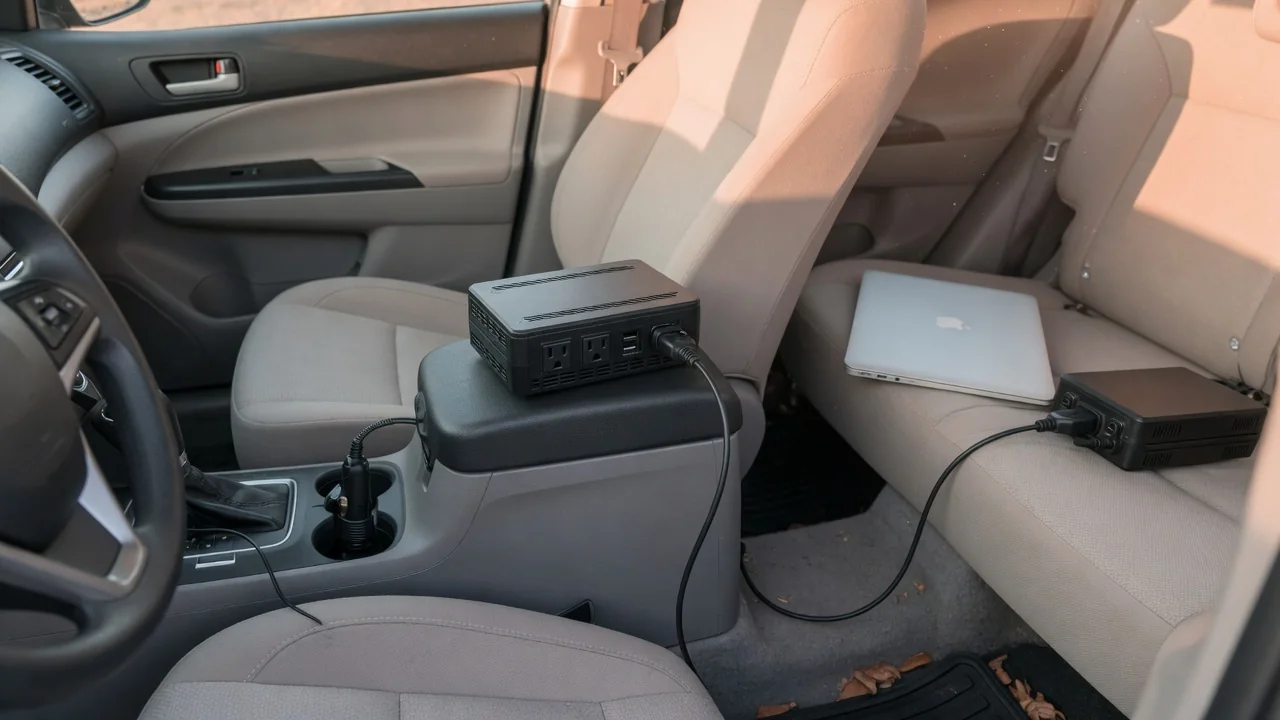
If you have ever wondered what is a car power inverter, the short answer is that it is a device that turns a vehicle's 12-volt direct current into household-style alternating current. That conversion lets a laptop charger, small tool or other plug-in device run from the car's electrical system, within limits set by the inverter, the wiring and the battery.
Power path
A vehicle's electrical system stores and delivers direct current, which flows in one direction from the battery and, with the engine running, from the alternator. Household devices expect alternating current, which reverses direction many times each second at a much higher voltage. An inverter sits between the two. Inside, electronic switches chop the low-voltage DC into pulses, and a transformer stage steps the voltage up to roughly the level a wall outlet provides. The result appears at a familiar socket on the inverter's case or in the cabin.
How the inverter connects to the car shapes what it can do. Small portable units plug into the accessory socket, which is protected by a fuse and fed by relatively thin wiring, so only modest loads are practical. Larger units clamp or bolt directly to the battery through heavy cables and their own fuse. Some vehicles carry a factory-installed inverter feeding an outlet in the console, rear seat area or cargo bed. Whether that outlet works with the ignition off, or only with the engine running, varies by vehicle and is described in the owner's manual.
Outlet rating
Every inverter and every factory outlet carries a wattage rating, usually printed on the case or on a label beside the socket. That number describes how much AC power the unit can supply continuously. Many inverters also list a higher surge or peak figure, which covers the brief extra demand some devices create when they start up. Motors, compressors and some power tools draw far more at switch-on than while running, so a device whose running wattage looks acceptable can still trip the inverter in the first second.
Matching a device to the outlet means reading the device's own label, which normally lists watts or amps, and comparing it with the continuous rating rather than the peak. A phone or laptop charger sits comfortably within most small inverters, while heating appliances such as kettles, hair dryers and space heaters commonly exceed what an accessory-socket unit or a modest factory outlet can deliver. Waveform matters too. Pure sine wave inverters mimic utility power closely, while modified sine wave units are simpler and may cause buzzing, extra heat or odd behavior in sensitive electronics.
Battery load
Power at the AC outlet has to come from the 12-volt side, and the arithmetic is unforgiving. Because the voltage is stepped up roughly tenfold, the current drawn from the battery is roughly ten times higher than the current the device uses, plus some extra lost as heat during conversion. A load that seems small at a wall outlet therefore becomes a substantial draw on the car's wiring and battery. That is why high-wattage inverters need thick, short cables and why the accessory socket fuse limits plug-in units.
With the engine running, the alternator carries most of the load and keeps the battery topped up, provided the demand stays within what the charging system can spare after running the vehicle's own equipment. With the engine off, the battery alone supplies the inverter, and a starting battery is not designed for deep, sustained discharge. Many inverters include a low-voltage cutoff that shuts the unit down before the battery is drained too far, but the threshold may still leave too little reserve to crank the engine, particularly with an older battery or in cold weather.
Everyday Use and Observations
In daily use, an inverter earns its place on road trips, at job sites and during camping or tailgating. Typical tasks include keeping a laptop charged while working from the passenger seat, topping up camera or cordless tool batteries, or running a small fan or light. Devices that already charge through USB usually do better on a direct USB port, since converting DC to AC and then back to DC inside a charger wastes energy at each step. The inverter is most useful for things that only accept a wall plug.
Several behaviors are normal and worth recognizing. A cooling fan may cycle on as load rises, and the case will feel warm, so the unit needs open air around it rather than being buried under a seat or luggage. An indicator light or audible alarm usually signals overload, overheating or low input voltage, and the outlet may switch off until the cause is cleared. Factory outlets often behave similarly, cutting power when a device exceeds the rating. Repeated shutdowns with a light load suggest a weak battery or a poor connection worth having checked.
Limits and Next Steps
An inverter does not create power; it only reshapes what the vehicle can supply, so the car's electrical system sets the ceiling. Demanding appliances, anything with a large motor, and medical equipment that someone depends on deserve particular caution, and the device maker's guidance on inverter use should be followed. The AC output is as hazardous as household current, so the same care applies: keep the unit dry, avoid damaged cords, and never leave an engine idling in a garage or other enclosed space to keep an inverter supplied.
Choosing or using one sensibly starts with adding up the wattage of the devices to be powered and allowing margin for startup surges. From there, the owner's manual shows the accessory socket's fuse rating and any factory outlet's limit, which indicates whether a plug-in unit is enough or a battery-connected installation is needed. Hardwired, high-capacity setups involve fusing, cable sizing and secure mounting, and are best handled by a qualified installer. Electric and hybrid vehicles with built-in power outlets follow their own rules, so vehicle-specific documentation should guide those cases.