What Is a Car Paint Test Panel? Spray-Out Cards Explained
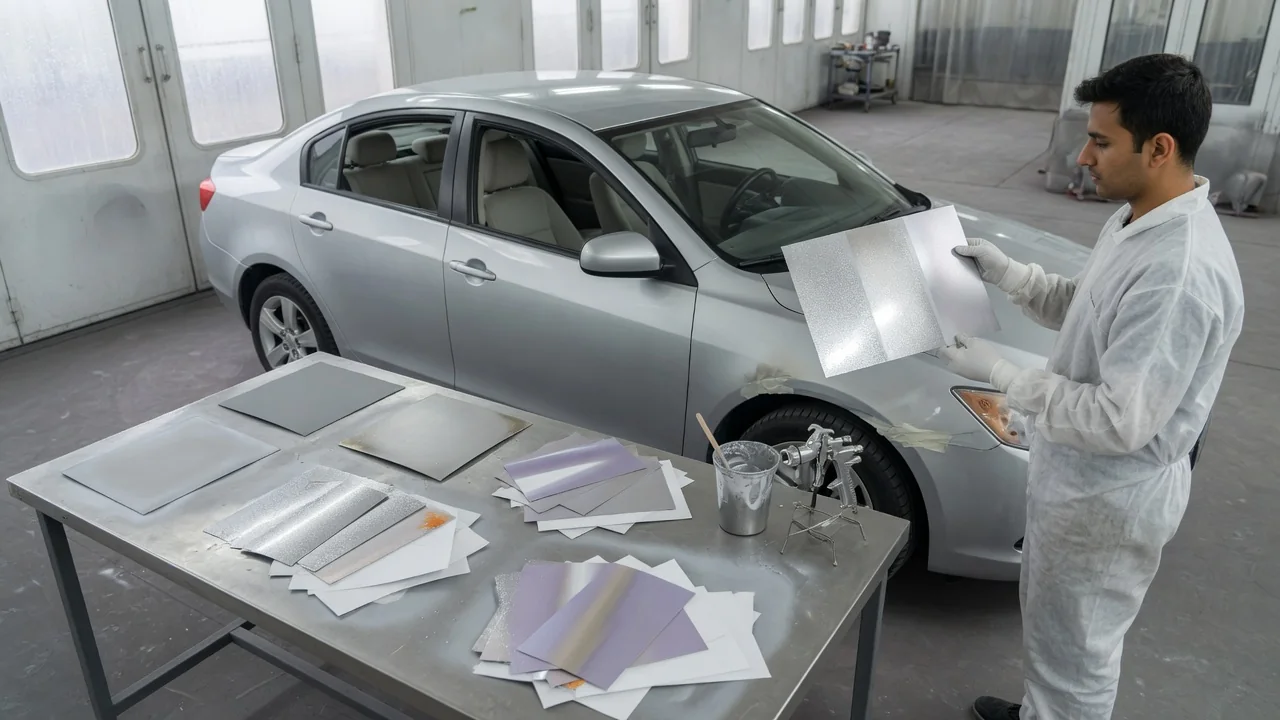
A car paint test panel, often called a spray-out card or paint spray out test panel, is a small sample surface sprayed with the exact paint mixed for a repair before any of that paint touches the vehicle. It lets a painter compare the freshly mixed color against the car itself and decide whether to spray as mixed, adjust the formula, or blend into neighboring panels. This guide explains how the sample is made, how it is checked, and how it shapes the repair.
Color sampling
A paint code identifies a color, but it does not guarantee that a freshly mixed batch will look identical to the paint already on a particular car. Factory paint can vary slightly between production runs, and many colors have several documented variants that are lighter, darker, or shifted in tone. On top of that, the finish on a car changes over time with sun exposure, weathering, and polishing. Mixing itself has small tolerances as well. The test panel exists because these factors are hard to predict from a formula alone, so the only reliable way to see the result is to spray it and look.
To be useful, the sample has to be sprayed the same way the car will be. That generally means using the same undercoat or sealer shade planned for the repair, because the color underneath can influence how the top color appears, especially with more transparent colors. Many spray-out cards include a black and white pattern so the painter can confirm the color has fully covered the surface. The painter uses the same spray gun, similar settings, the same spraying distance and overlap, the same flash time between coats, and the same number of coats intended for the vehicle. If the system uses a clearcoat, the panel is cleared too, since clear adds depth and can subtly change how the color reads.
Metallic and pearl finishes make technique especially important. How wet or dry the coats go on affects how the metallic flakes or pearl particles settle, which can make the same paint look lighter or darker. A panel sprayed with a different technique than the car can therefore give a misleading answer. Labeling each card with the formula or variant used and how it was sprayed helps keep comparisons organized when more than one sample is made.
Lighting check
The comparison should happen only after the sample has dried and been cleared as the repair would be, because wet paint usually looks different from cured paint. The card is held directly against the car, ideally next to the panel that will meet the repair. That area should be clean and, if it is dull or oxidized, polished first, since comparing against a hazy surface tells the painter little about how the finished repair will look beside it.
Light is the most important variable in the check. Two colors can appear to match under one light source and clearly differ under another, an effect known as metamerism. For that reason, painters typically check the sample in more than one kind of light, such as natural daylight outdoors and the color-corrected lamps found in many paint booths or mixing rooms. Harsh, direct sunlight and dim or strongly tinted indoor lighting can both hide or exaggerate differences, so relying on a single setting is risky.
Viewing angle matters as much as light. Looking straight at the surface shows what is often called the face of the color, while looking at a sharp angle shows the flop or side tone. Metallic and pearl colors are known for matching well head-on but appearing darker, lighter, or differently tinted from the side. Painters also look at the sparkle, flake size, and texture, and step back to view the card from a normal viewing distance, since that is how most people will see the car.
Repair decision
The test panel turns a guess into a decision. If the sample matches closely from every angle and under every light, the painter can proceed with confidence. If it is close but not perfect, a common choice is to blend the new color into adjacent panels so the eye sees a gradual transition rather than a sharp line where two shades meet. If the difference is obvious, the paint is not ready for the car: the painter may try a different variant formula, adjust the tint, or change spraying technique, and then spray a new card to confirm the change worked.
Adjustments are usually made in small steps, because a small amount of tint can shift a color noticeably. Each change calls for a fresh spray-out, since judging the adjustment in the mixing cup is unreliable. Keeping the earlier cards allows side-by-side comparison and shows whether each adjustment moved the color in the right direction.
The panel also helps decide how far the repair should extend. A solid color that matches closely may be painted edge to edge on a single panel, while metallic, pearl, and multi-stage colors are more often blended. Three-stage colors use a related sample called a let-down panel, which shows how the appearance changes with different numbers of mid-coats so the painter can choose the number that matches the car.
Practical implications and limits
For car owners, it is reasonable to ask a body shop whether it sprays test panels before painting, particularly on metallic, pearl, or tri-coat colors. The step costs some time and material, but it reduces the chance of discovering a visible mismatch only after the car has been reassembled and delivered. People doing small repairs at home with aerosol or touch-up paint can use the same idea on a simpler scale by spraying a piece of card with the same product and technique, letting it dry, and checking it against the car before working on the actual panel.
A test panel is still a sample, not a guarantee. It is small and flat, while car bodies are curved, so light falls across a door or fender differently than across a card. It cannot predict exactly how new paint will age compared with paint that has been on the car for years, and on a heavily faded finish an exact match may not be achievable without painting more of the vehicle. Different materials on the same car, such as plastic bumpers and metal panels, can also look slightly different even from the factory. Judging an acceptable match also involves human perception, and the correct process details depend on the specific paint system, so the paint manufacturer's instructions for that product take priority over general guidance.