What Is a Car Grommet? Wire Protection, Sealing, and Replacement
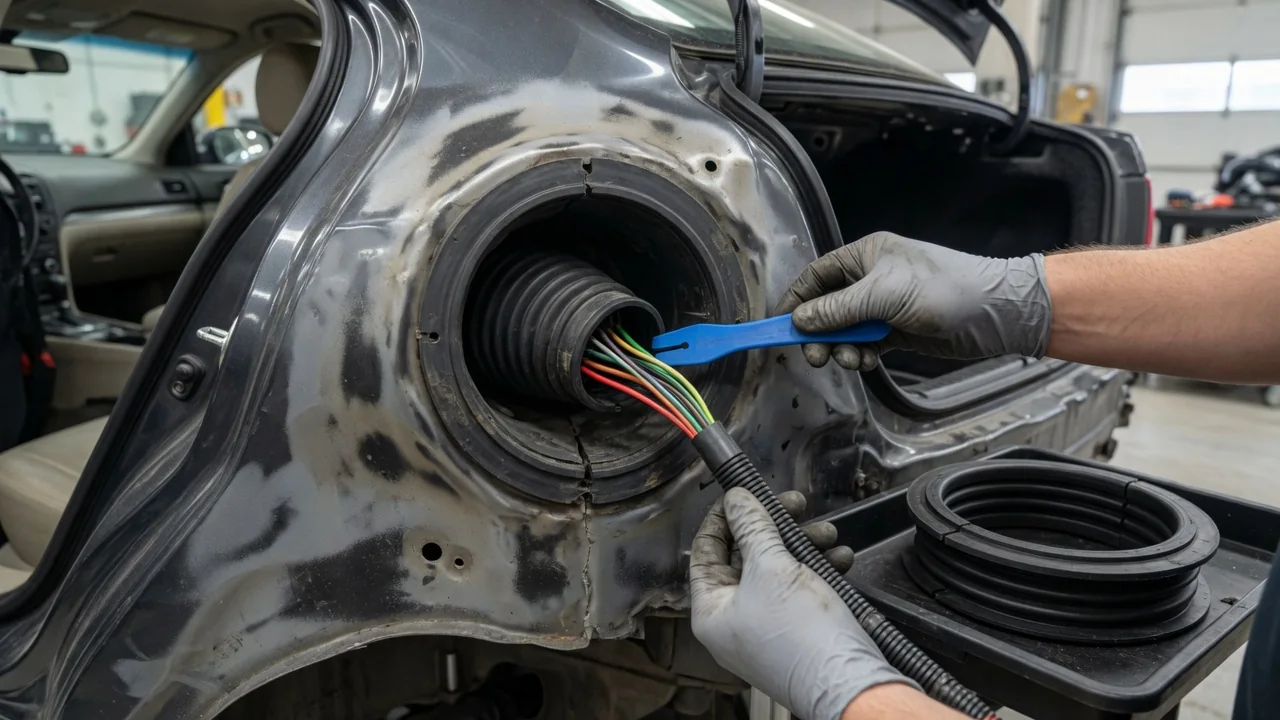
A car grommet is a ring- or sleeve-shaped part, usually made of rubber or a similar elastomer, that lines a hole in a panel or component so something can pass through it safely. An automotive rubber grommet cushions wires, hoses, or cables against sharp metal edges. It also helps keep water, dust, fumes, and noise out of the cabin and other protected areas. This guide explains how grommets protect wiring, how they seal, and when replacement makes sense.
Wire protection
Wherever a wiring harness has to cross from one area of a vehicle to another, it usually passes through a hole in sheet metal or a plastic panel. Common examples include the firewall between the engine compartment and the cabin, the hinge area where wiring runs from the body into a door, and openings in the trunk, tailgate, or floor. Stamped metal edges can be sharp, and even a smooth hole can wear through insulation over time. A grommet fills the gap between the harness and the opening so the wires never rest directly on the edge.
The main threat is abrasion caused by movement. Engines rock on their mounts, bodies flex over bumps, and doors and hatches open and close thousands of times over a vehicle's life. Each movement can rub a wire against whatever it touches. A rubber grommet absorbs much of that motion and spreads contact over a wider, softer surface, which slows wear on the insulation. If insulation is worn through, a conductor can touch grounded metal, causing a short circuit, a blown fuse, intermittent electrical faults, or in some cases heat damage.
Grommets used for wiring take several forms. Some are simple rings with a groove around the outside that snaps into the panel hole. Others are molded boots or bellows that cover a longer section of harness, such as the flexible sleeves between a door and the door pillar. Many are shaped to fit one particular harness and opening, with separate passages for individual wire bundles, cables, or small hoses. The same protective principle applies to throttle, shifter, and parking brake cables, and to fluid or vacuum lines routed through panels.
Sealing
Besides cushioning, a grommet closes the hole it occupies. An empty or poorly filled opening in the firewall or floor would let water, road spray, dust, exhaust fumes, and engine heat into the cabin. A grommet is typically sized so it presses against both the panel edge and the item passing through it, and the elasticity of the rubber maintains that contact pressure. Some designs use a flared lip or several ribs on the sealing surfaces, creating multiple contact lines rather than relying on a single one.
Sealing also matters for comfort. A tight firewall grommet helps limit engine and road noise entering the cabin, and rubber grommets can reduce vibration transmitted from one part to another. Not every grommet is a wire pass-through. Rubber plugs and grommets also close drain holes, access holes, and unused openings in body panels. On some engines, small grommets seal around fasteners or components such as valve cover bolts, fuel injectors, or a PCV valve, depending on the design. In those locations the part may be holding back oil, vapors, or vacuum rather than rainwater.
The material reflects the location. Grommets in the engine bay face heat, oil, coolant, and ozone, while those in the body face weather, sunlight, and temperature swings. Manufacturers use various synthetic rubbers and other elastomers suited to these conditions, and a compound that works well in one spot may not suit another. This is one reason a generic rubber grommet is not always an acceptable substitute for the part designed for a specific opening.
Replacement
Rubber does not last forever. Over years of heat cycling, exposure to oil or ozone, and constant flexing, a grommet can harden, shrink, crack, or split. A hardened grommet may still look intact but no longer press firmly against the panel or the wires, so it can let water in and rub more harshly against insulation. Signs worth checking include visible cracks or tears, a grommet that has popped partly out of its hole, damp carpet or water stains near the firewall or a door, wind or road noise from one specific spot, and electrical faults that come and go when a door or hatch is moved.
How replacement works depends heavily on the part. Simple body plugs and split grommets can often be removed and installed by hand or with a trim tool. Grommets molded onto a wiring harness, or harness boots that require the harness to be fed through, can be much more involved: connectors may need to be unplugged, interior trim or a door panel removed, and in some cases the grommet is sold only as part of the harness. Fastener and component seals, such as valve cover or injector grommets, are often replaced during a related repair. The vehicle's service manual is the reliable reference for the correct part, procedure, and any required sealant or lubricant.
When installing a grommet, the goal is a full, even seat. A small amount of a rubber-compatible lubricant can help a tight grommet slip into its hole, but petroleum-based products can attack some rubber compounds, so the manufacturer's recommendation should come first. The grommet should sit in its groove all the way around, without folded lips or pinched wires. If wiring was damaged under the old grommet, the insulation or wire must be repaired properly, because a new grommet will not fix a conductor that is already exposed.
Practical implications and limits
For most owners, a grommet only gets attention when something goes wrong, yet its condition can affect several systems at once. A failed firewall seal may show up as a damp footwell, a musty smell, or corrosion on connectors inside the cabin, symptoms that are easy to blame on a heater core or windshield leak first. Ruling out an open or displaced grommet early in a leak or noise diagnosis can save time. Likewise, after any repair that involved pulling a harness, cable, or hose through a panel, it is worth confirming the grommet went back in rather than being left loose or omitted.
There are limits to what a grommet can do and to what general advice can tell you. A grommet guards against routine movement and moisture; it is not designed to prevent damage from a harness that is routed incorrectly, stretched too tight, or resting against a hot exhaust component. Tape, sealant, or improvised plugs can serve as a temporary measure, but they rarely restore the original seal and can make later service harder. Grommet shapes, locations, materials, and replacement methods vary widely between manufacturers, models, and even production years, so the details for a particular car should come from its service information or parts catalog rather than from general descriptions.