What Is a Car Fender?
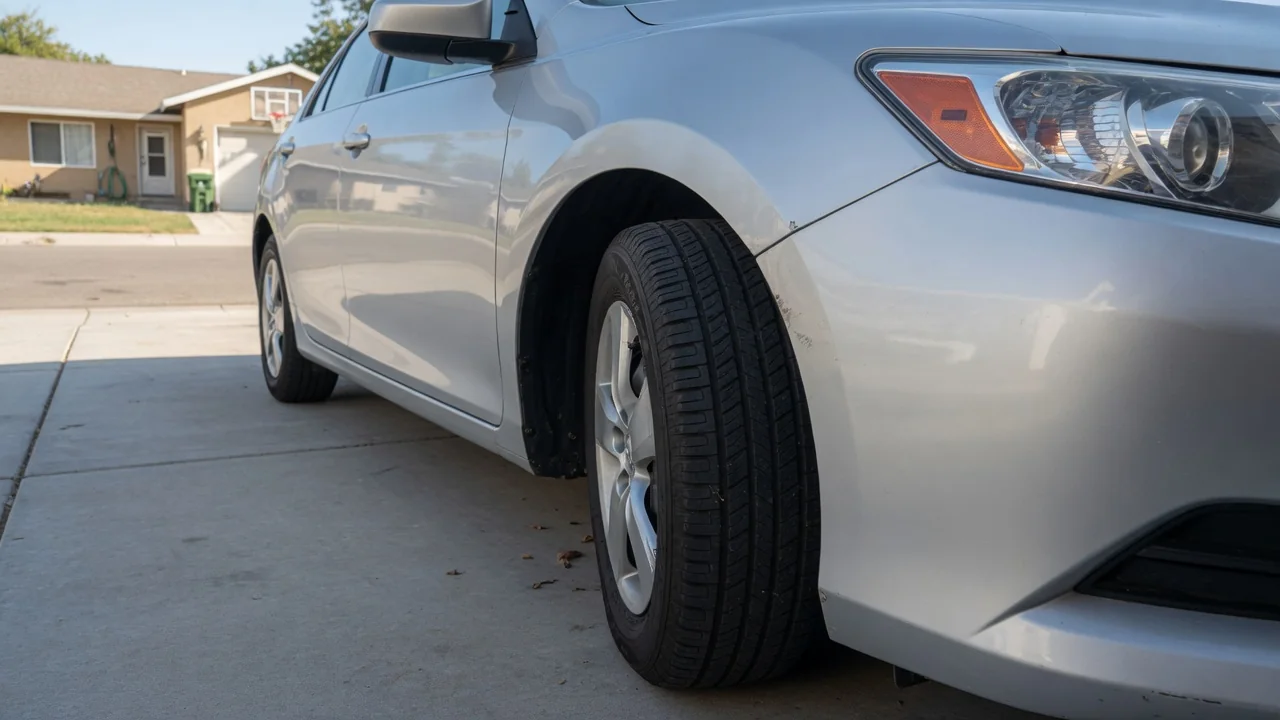
If you have ever wondered what is a car fender, the short answer is that it is the body panel that frames a wheel and covers the area around it. On most passenger vehicles the term refers to the front panels between the front door and the bumper. Knowing where it sits helps you describe damage accurately and understand repair estimates.
Wheel opening
The most recognizable feature of a fender is the curved cutout that arches over the tire, known as the wheel opening. This arch gives the tire room to move up and down with the suspension and, on the front, to turn left and right when you steer. The panel around it blocks water, mud, gravel, and road debris thrown by the rotating tire, keeping that spray off the body sides, the windows, and other road users.
Look closely at the opening and you will usually see a rolled or folded lip along the edge, and behind it a plastic or fabric liner that shields the engine bay and wiring from spray. Some vehicles add flares or textured plastic trim around the arch, especially trucks and crossovers. The gap between tire and arch varies widely by design, so a tight clearance on a sporty sedan and a tall one on a pickup can both be perfectly normal.
Attachment
Front fenders on most modern cars are separate panels fastened with bolts rather than welded in place. Fasteners are commonly found along the top edge under the hood, near the door hinge area, at the lower rocker section, and where the panel meets the bumper cover and headlight support. Because the panel bolts on, it can often be removed and replaced without cutting the body structure, which shapes how shops approach front corner repairs.
The rear is different. On many unibody cars, the panel surrounding the rear wheel is called a quarter panel and is welded into the body shell, so repair there typically involves more labor than a bolt-on front piece. Some trucks and older vehicles use separate rear fenders instead. Materials also vary, with steel, aluminum, and plastic composites all in use, and the fastening layout differs between manufacturers, so a service manual or body shop should confirm specifics for your vehicle.
Common damage
Fenders sit at the corners of the vehicle, which makes them frequent victims of parking lot scrapes, low-speed collisions, and contact with posts or garage walls. Typical results include dents, creases, scratched or chipped paint, and a panel pushed out of alignment with the hood or door. An impact can also bend the mounting points or crack the liner behind the arch, damage that may not be obvious until the wheel well is inspected.
Corrosion is the other common problem. The wheel arch lip and the lower rear corner of the panel trap moisture, dirt, and road salt, so bubbling paint or brown staining often appears there first. Rust that starts inside the folded edge can be more extensive than the visible blister suggests. Aluminum and plastic panels do not rust the same way, though aluminum can still corrode and plastic can crack or tear, so the signs depend on what your panel is made of.
Everyday Use and Observations
During a normal walk-around, the seams tell you a lot. The gaps between fender and hood, door, and bumper should look reasonably even from top to bottom and match side to side. A gap that pinches at one end, a door edge that rubs, or paint that differs slightly in shade or texture from the neighboring panel can indicate previous repair or a shifted panel. These clues are useful when evaluating a used vehicle.
Sounds and tire behavior are worth noting too. A scraping or rubbing noise when turning or going over bumps may mean a loose liner, a bent arch lip, or a tire contacting the panel after a wheel or suspension change. Washing out the wheel wells periodically removes packed mud and salt that hold moisture against the metal. People also use the word loosely, sometimes for mudguards or the bumper, so pointing to the exact panel avoids confusion with a shop or insurer.
Limits and Next Steps
Appearance alone cannot tell you how deep damage goes. A fender that looks merely dented may be hiding bent brackets, a damaged headlight mount, or structural parts pushed out of position behind it, and sensors or wiring in that area may need attention on newer vehicles. Shallow dents with intact paint are sometimes candidates for paintless repair, while creased metal, torn plastic, or perforating rust more often leads to conventional bodywork or panel replacement.
A qualified body shop can inspect behind the panel, measure alignment, and explain whether repair or replacement makes more sense for your vehicle, including how paint blending into adjacent panels affects the result. Costs and methods vary with material, paint type, and parts availability, so written estimates are worth comparing. If a tire is rubbing, a sharp edge is exposed, or a lamp is loose after an impact, have the car checked before driving it further than necessary.