What Is a Car Design Clay Model? Shape, Surfaces, and Review
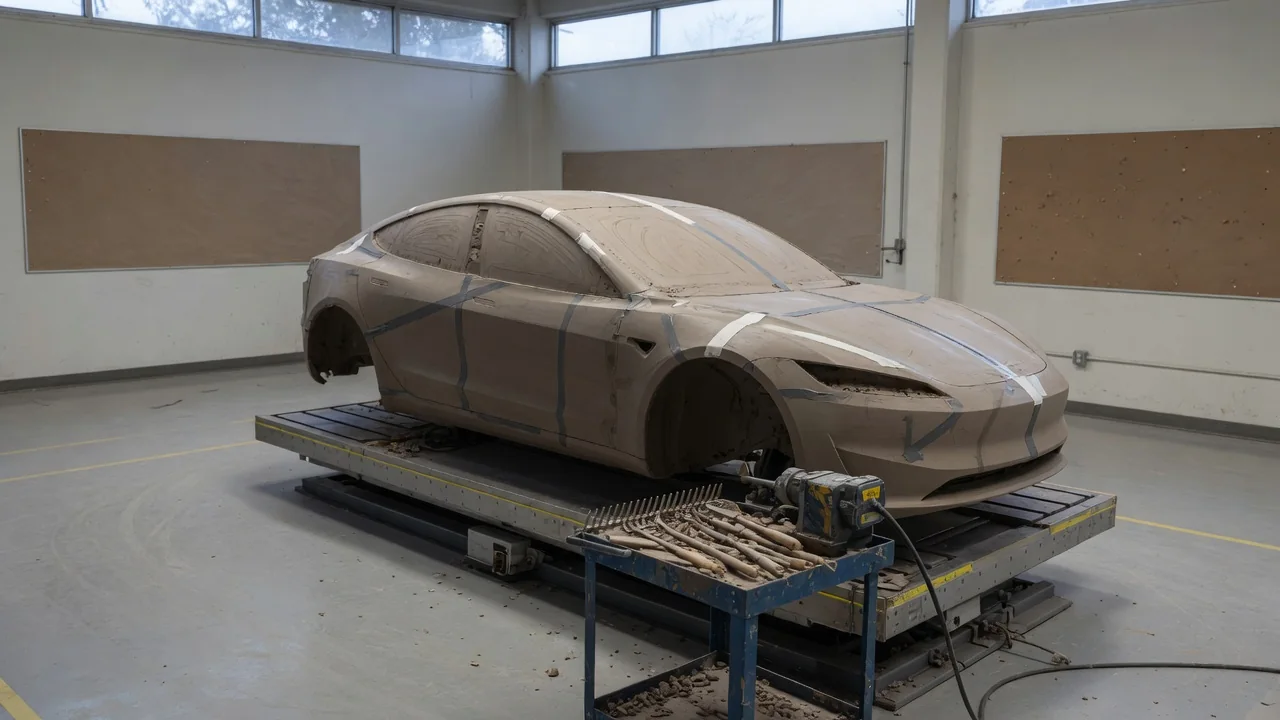
A car design clay model is a physical sculpture of a proposed vehicle, built from specially formulated modeling clay over a rigid internal structure. Design studios use it to judge proportions, surfaces, and stance in a way that screens and drawings cannot fully replicate. This article explains the automotive clay model purpose across three stages: establishing the full-scale shape, refining its surfaces, and reviewing the result before decisions move forward.
Full-scale shape
Clay modeling usually follows early sketches and digital studies, and many programs pass through smaller scale models before committing to full size. The full-scale model exists because a vehicle's proportions read differently at real size. The relationship between wheel diameter and body height, the length of the hood, the angle of the windshield, and the way the cabin sits over the wheels can look convincing on a monitor yet feel off when a person walks around an actual object. A full-size model lets designers stand at eye level, crouch at the corners, and view the car from the distances at which it will eventually be seen.
The model is not solid clay. It is built on an armature, typically a rigid base frame topped with a lightweight core such as foam or wood, shaped to sit slightly inside the intended outer surface. Industrial modeling clay, which is warmed to make it workable and firms up as it cools, is then applied over this core in a layer thick enough to carve. Real wheels and tires are often mounted so the stance can be judged accurately. Because the core defines the rough volume, its dimensions are normally derived from the vehicle's package: key hard points such as wheelbase, track, seating positions, and the powertrain envelope that the exterior must accommodate.
Many studios combine hand work with machining. A digital surface model can be used to mill the clay to a first approximation, giving sculptors a starting point that already respects the package. From there, the shape is adjusted by hand, and changes can be measured or scanned back into digital form so that the physical model and the computer data stay aligned. The exact balance between milling and hand sculpting varies by studio and project.
Surface refinement
Once the overall volume is established, the work shifts from broad shape to surface quality. Modelers use a range of specialized tools: rakes and loops to remove material, and thin flexible steel blades, often called slicks, to smooth the clay to a fine finish. Flexible splines and templates help check that curves flow consistently. The goal is not just a smooth surface but a controlled one, where highlights travel along the body sides predictably and character lines stay crisp or soft exactly where intended.
Light is the main judge of surface refinement. A slight dip or bulge that is invisible in a digital render can create a wavering reflection on a physical surface. Designers therefore study how overhead lights and window reflections move across panels as they walk past. To make this easier, clay surfaces are frequently covered with a thin decorative film that mimics painted metal, chrome, or tinted glass, so the model reflects light in a way closer to a finished vehicle. Some details, such as lamps, grilles, or mirrors, may be represented by separately made parts attached to the clay.
Clay suits this stage because it is both additive and subtractive. A modeler can shave a fraction off a fender, add material back to a shoulder line, or rework one side of the car to compare against the other. Designers sometimes develop different proposals on the left and right halves of the same model, allowing a direct side-by-side comparison on a single object.
Review
A clay model serves as the shared reference during design reviews. Designers, engineers, and decision-makers can gather around one physical object, point to a specific surface, and discuss it without the ambiguity that comes from different screens, color settings, or camera angles. Reviews often take place in dedicated viewing areas and, where facilities allow, outdoors in natural daylight, because sunlight and sky reflections reveal surface issues that studio lighting can hide.
Review is also where feasibility questions surface. Engineering teams check whether the proposed surfaces still clear the package, whether panel breaks and openings make sense for manufacturing, and whether the shape is likely to work aerodynamically. Depending on the program, a clay model may also be used in aerodynamic testing, since its surface can be modified between runs. Feedback from these sessions feeds back into further sculpting, and the cycle of refinement and review can repeat several times. When a design is approved, its surfaces are typically captured by scanning or measurement so that the agreed shape becomes the basis for engineering and tooling data.
Practical implications and limits
For readers interested in how cars come to look the way they do, the clay model explains why production bodywork often shows carefully managed reflections and deliberate proportions: those qualities were judged physically, at full size, under real light. It also explains why early concept images can differ from the final car, since the shape usually evolves through repeated review rather than being fixed at the first rendering.
The method has clear limits. Full-size clay models are labor-intensive, heavy, and occupy significant studio space, and the material can be affected by temperature and handling. A clay exterior shows form and surface but not function: it has no working mechanisms, and the interior experience is usually evaluated with separate models or mockups. Digital tools such as visualization software and virtual reality have taken over part of the early exploration, and how much each studio relies on clay versus digital review differs. No single description fits every manufacturer, but the core role of the clay model, giving a design a physical presence that people can judge together, remains its main reason to exist.