What Is a Car Cabin Air Filter?
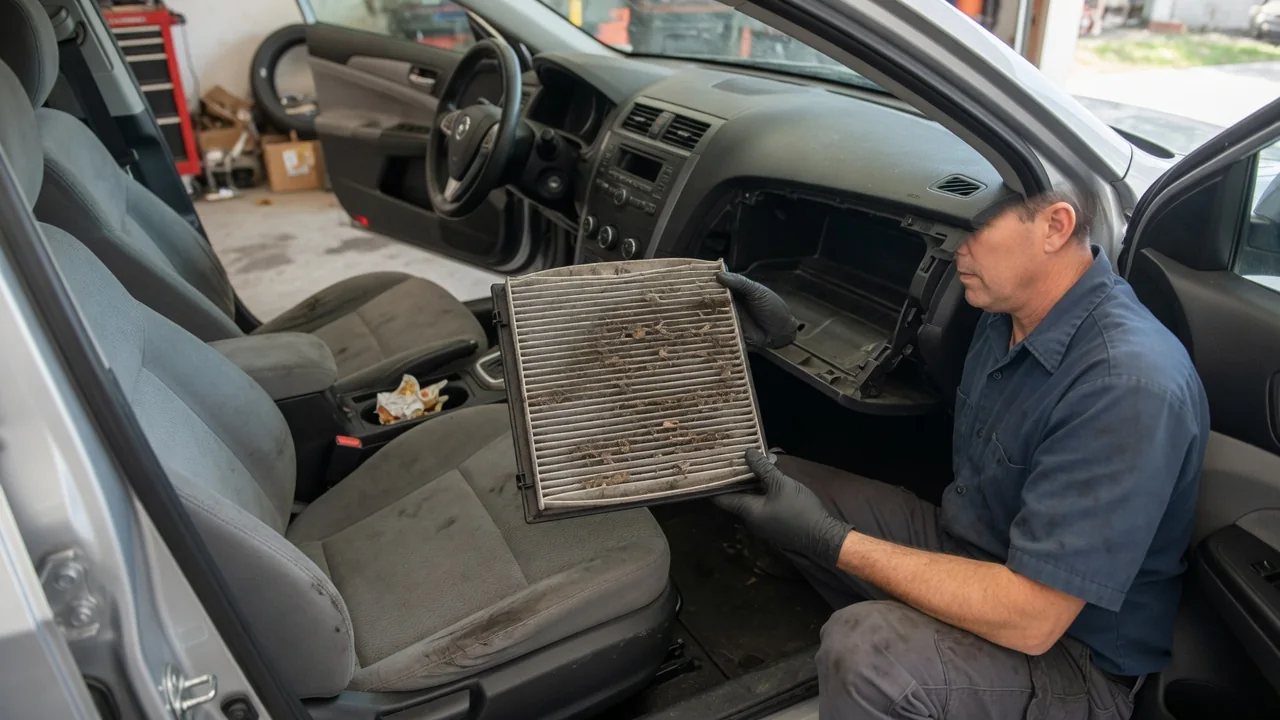
Anyone asking what is a car cabin air filter is really asking how outside air gets cleaned before it reaches the vents. This pleated element sits in the heating and air conditioning intake path, trapping dust, pollen, and debris. Knowing where it lives, how it clogs, and what restriction feels like helps drivers judge when attention is due.
Filter location concept
The cabin air filter sits in the path between the fresh air intake and the blower motor, so every bit of air pushed through the dashboard vents passes through it first. On many vehicles the housing is tucked behind the glove box, reached by lowering or releasing the compartment. Others place it under the dashboard near the passenger footwell, or beneath the cowl panel at the base of the windshield, where outside air enters the ventilation system.
Position matters because it determines what the filter catches and how easy it is to inspect. A filter under the cowl sees leaves, seeds, and moisture directly, while one behind the glove box is more sheltered but still collects fine dust and pollen. Some older or basic vehicles were built without one at all, and a few use two stacked elements. The owner's manual is the reliable source for the exact location and access method on a given model.
Airflow changes
A clean filter offers little resistance, so the blower moves a strong, even stream of air at every fan speed. As the pleats load with dirt, the open area shrinks and the blower has to work against a growing restriction. The usual result is weaker output at the vents even with the fan set high, often paired with a louder rushing or straining sound from behind the dashboard as the motor spins against the blocked media.
Reduced airflow shows up in practical ways. Windows may take longer to clear when defrosting because less dry air reaches the glass, and the cabin can be slower to cool or warm on extreme days. These symptoms are not unique to a clogged filter, though. A failing blower motor, a faulty resistor, a stuck blend or mode door, or a blocked intake can produce similar complaints, so weak airflow is a reason to inspect the filter rather than proof it is the cause.
Replacement schedule
There is no single replacement interval that fits every vehicle, because manufacturers set their own schedules by mileage, time, or both. The maintenance section of the owner's manual lists the recommendation for a specific model, and some vehicles display a service reminder. Following that published schedule is the sensible baseline, since the filter's size, media type, and position in the airflow path all influence how quickly it loads up in normal use.
Driving conditions can shorten that baseline considerably. Gravel roads, construction zones, heavy urban traffic, wildfire smoke, and high pollen seasons all push more particles into the intake, and parking under trees adds leaves and seeds. A vehicle used in those conditions may need a filter earlier than the schedule suggests, while one driven gently in clean air may reach the interval with life remaining. A visual check tells more than the calendar alone, since a gray, matted element is plainly spent.
Everyday Use and Observations
Day to day, the filter does its work unnoticed, which is why changes tend to creep up gradually. A musty or stale smell when the fan first starts can point to damp debris or growth on the filter, particularly after humid weather. More dust settling on the dashboard, or sneezing and irritation among passengers during allergy season, suggests the media is no longer capturing fine particles well, or that air is slipping around a poorly seated element.
Filter type shapes what drivers can expect. A standard particulate element targets dust and pollen, while versions with an activated carbon layer also reduce exhaust odors and some fumes from traffic. Using recirculation mode in heavy traffic or smoke limits how much dirty outside air the filter must handle, though on many vehicles recirculated air bypasses the filter partly or entirely. Comparing vent strength across fan speeds from time to time gives an easy reference point for spotting a decline.
Limits and Next Steps
A cabin air filter has clear limits. It cleans air for the occupants and has nothing to do with the engine air filter, which protects the engine's intake. It will not cure a persistent odor that originates on the evaporator core or in a blocked condensation drain, and it cannot restore cooling lost to a low refrigerant charge or a compressor problem. If a fresh filter does not bring back airflow or freshness, the cause lies elsewhere in the system.
Checking the filter is a reasonable first step for many owners, since access is often simple, but some designs require removing trim panels or working near wiring and airbag components, where a workshop is the safer choice. Any replacement should match the correct size and be installed in the airflow direction marked on its frame. Lingering weak output, unusual blower noise, water on the floor, or fogging that will not clear deserve a professional diagnosis of the ventilation system.