What Is a Car Audio DSP? Equalization, Timing, and Tuning Explained
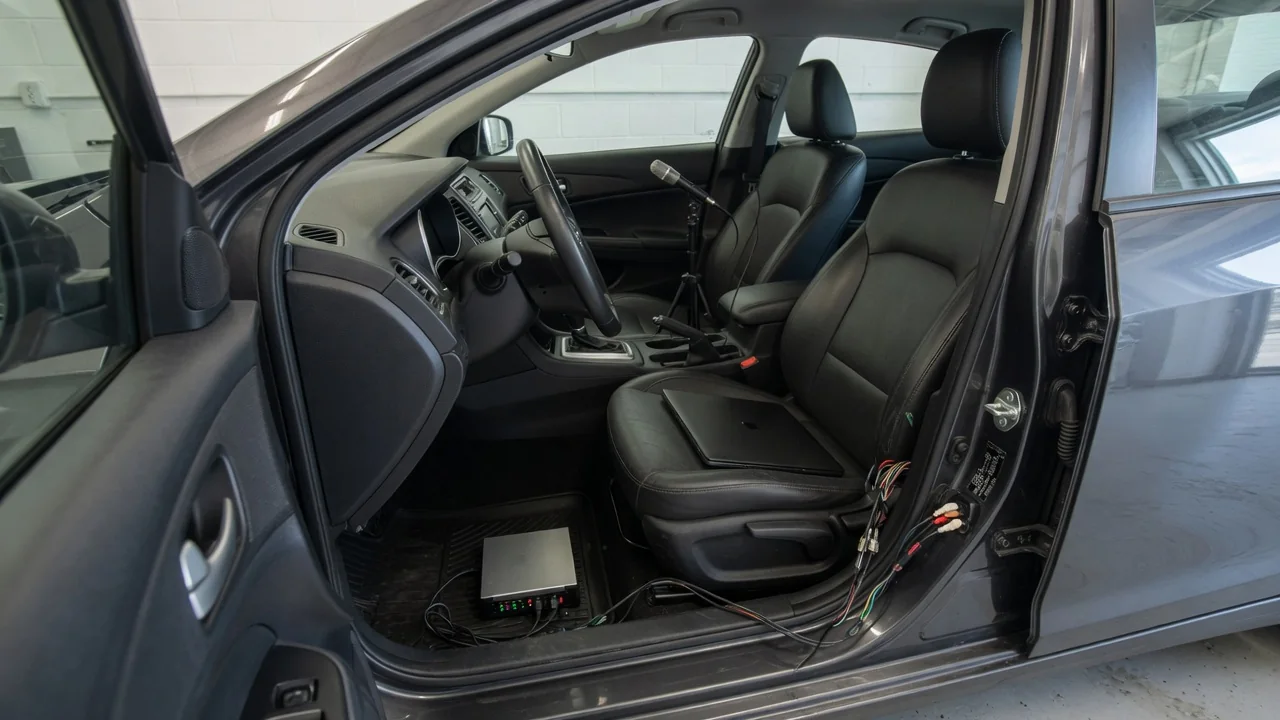
A car audio DSP, short for digital signal processor, is a device or built-in circuit that converts an audio signal into digital data, adjusts it mathematically, and sends the corrected signal on to amplifiers and speakers. A car cabin is a poor place to listen to music. Speakers sit in doors and dashboards, glass reflects sound, seats absorb it, and the listener sits well off-center. A DSP compensates for these problems through three main functions: equalization, timing, and tuning.
Equalization: Correcting Frequency Response in the Cabin
Every vehicle interior changes the sound it contains. Because the cabin is small and enclosed, some bass frequencies build up and others cancel out depending on where the sound waves meet. Hard surfaces such as windshields and side windows reflect high frequencies, which can make vocals and cymbals sound harsh. Soft surfaces such as upholstery and carpet absorb treble and dull it. Speaker placement adds to the problem. A tweeter or midrange mounted low in a door often aims at the listener's legs rather than their ears. The result is a frequency response full of peaks and dips that the original recording never contained.
A car audio digital signal processor addresses this with equalization, or EQ. Basic head unit tone controls usually adjust broad bass and treble ranges for all speakers at once. A DSP typically offers many more bands, often parametric. Each band lets the tuner choose a center frequency, an amount of boost or cut, and a bandwidth, commonly called Q. Just as important, EQ can be applied to each output channel separately. That matters in a car because the left and right speakers sit at different distances and angles from the listener and interact differently with nearby surfaces.
Most DSPs also include crossovers, which are filters that send each speaker only the frequency range it can reproduce well. High-pass filters keep deep bass away from small tweeters and midranges. Low-pass filters keep a subwoofer from playing frequencies that would reveal its location. Selectable slopes control how sharply each filter rolls off. EQ has a clear limit, though. A deep dip caused by two sound waves cancelling each other usually cannot be filled by boosting, because the extra energy cancels as well.
Timing: Time Alignment and Phase
In most vehicles the driver sits much closer to the left-side speakers than to the right-side ones. Sound travels at roughly 1,125 feet per second at room temperature, or a little over one foot per millisecond. The nearer speakers therefore reach the driver's ears first. Human hearing tends to place a sound at whichever source arrives earliest, so the stereo image collapses toward the closest door. Vocals that should seem centered on the dashboard appear to come from near the driver's left knee.
Time alignment, also called time correction or delay, solves this by holding back the signal to the nearer speakers. The DSP delays each channel by a precise amount so the sound from every speaker arrives at the chosen listening position at the same moment. Tuners usually measure the distance from each speaker to the listener's head and then enter either those distances or the matching delay values in milliseconds. When the timing is set correctly, the stereo image moves to the center, and instruments appear spread across the width of the dashboard instead of clustered at individual speakers.
Timing also affects how speakers blend where their frequency ranges overlap, such as between a door midbass and a subwoofer or between a midrange and a tweeter. If the two outputs are out of phase at the crossover point, they partly cancel and leave a hole in the response. A DSP lets the tuner invert polarity per channel or make small delay adjustments, and some processors also provide dedicated phase controls, so the drivers reinforce each other instead.
Tuning: Bringing the Adjustments Together
Tuning is the process of setting all of these parameters so they work as a coherent system. Depending on the processor, this is done in software on a laptop, through a smartphone app, or with physical controls. A common sequence begins by confirming correct wiring and speaker polarity, then setting crossovers to protect each driver, then balancing channel levels, then applying time alignment, and finally refining the equalization. Changing one setting often affects others, so tuners frequently revisit earlier steps as they go.
Careful tuning normally relies on measurement. A measurement microphone placed at the listening position, paired with real-time analyzer software, shows how the frequency response actually looks in that seat. Some processors include an automatic calibration routine with a supplied microphone that sets delays and EQ on its own, which can serve as a starting point. Many tuners aim for a target curve that rises in the bass and slopes gently downward through the treble rather than a perfectly flat line, then make final adjustments by ear with familiar recordings.
Tuning also requires choosing whom the system is optimized for. A setup focused on the driver's seat gives the most precise imaging in that seat. A setup that splits the difference between front seats gives both occupants a reasonable balance but less focus. Many processors store several presets, so an owner can switch between a driver-focused tune and a more general one.
Practical Implications and Limits
A DSP improves how existing speakers are used, but it cannot change what they are physically capable of. Speakers with limited output, an underpowered amplifier, rattling door panels, or loose mounting will still sound compromised after processing. Sound deadening, solid speaker mounting, and correct gain structure remain part of a good installation. Heavy EQ boosts also consume amplifier headroom and can push the signal toward clipping, which is why many tuners favor cutting peaks over boosting dips.
Many factory audio systems already contain some form of digital processing inside the head unit or a separate amplifier, and how that processing behaves differs from vehicle to vehicle. When an aftermarket processor is added to a factory system, the incoming signal may already be equalized, delayed, or split into frequency ranges. Some aftermarket processors offer input features intended to recombine or flatten such signals, but the right integration approach depends on the specific vehicle, so its own documentation or wiring information is the reliable reference.
Because time alignment targets one position, passengers in other seats hear a less coherent image, and rear-seat listeners may notice little improvement. Tuning also takes time and some knowledge. A poorly configured DSP can sound worse than none at all, with smeared imaging or harsh tonal balance. Owners who do not want to learn the process often hand the job to a professional installer. Whoever does the tuning, saving a backup of the final settings makes it easy to restore them after a software update or accidental change.