What Is a Camshaft Phaser and How It Works
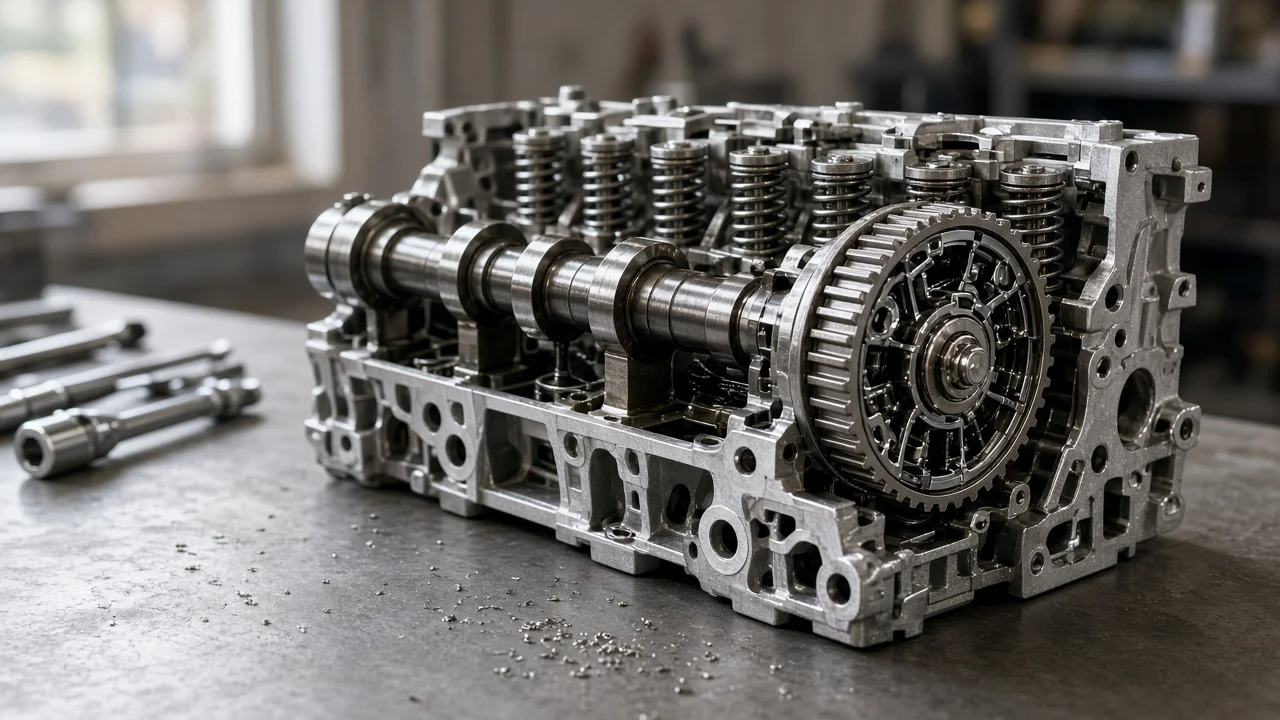
A camshaft phaser is the part of a variable valve timing system that lets the engine shift when its valves open and close while it runs. A scan tool may have shown a cam timing code, or you may hear a brief rattle at cold start. Understanding the phaser helps you separate real phaser problems from oil, sensor or wiring faults. This guide covers the basics, how designs differ between engines, and what an owner can reasonably check.
What a Camshaft Phaser Is
A camshaft phaser is also called a cam phaser, a camshaft timing phaser or a variable valve timing actuator. It sits on the front of a camshaft, in the place where an older engine would have a fixed sprocket or pulley. The timing chain or belt still drives it at half crankshaft speed. The difference is that the phaser can rotate the camshaft a limited number of degrees ahead of or behind its base position. Advancing the cam opens the valves earlier, and retarding it opens them later. The housing limits how far the phaser can move, and that range is set by the engine design.
What does a camshaft phaser do for the driver? It lets one engine run well under very different conditions. The timing that gives a smooth idle is not the timing that gives the most mid-range torque or the best efficiency at highway cruise. The engine computer adjusts valve timing and the overlap between intake and exhaust valves. That improves low-speed torque, top-end power, emissions and fuel economy without changing the camshaft profile itself. Keep in mind that the phaser changes when the valves move, not how far they lift. Changing lift takes a separate mechanism, which only some engines have.
How a Camshaft Timing Phaser Works
Most modern phasers are vane-type units. The chain or belt drives an outer housing. Inside it, a rotor bolted to the camshaft carries several vanes. Each vane sits in a cavity and splits it into an advance chamber and a retard chamber. When pressurized engine oil fills one side and drains from the other, the rotor turns relative to the housing and cam timing shifts. When oil is held on both sides, the camshaft stays at the chosen angle.
An oil control valve, often called the VVT solenoid, controls the oil flow. The engine control module commands that valve, usually with a pulsed signal. The module then compares the requested cam angle with the actual angle, which it calculates from the camshaft position sensor relative to the crankshaft position sensor. The actual angle may not follow the command closely enough or quickly enough. When that happens, the module sets a fault code and may hold the phaser at its default position.
Oil pressure is low during cranking, so most hydraulic phasers have a spring-loaded locking pin that holds the rotor at a home position until pressure builds. Intake phasers usually rest at full retard. Exhaust phasers commonly rest at full advance, often helped by an assist spring. A worn pin, a worn housing or low oil pressure at startup can let the rotor move freely for a moment. That free movement is one source of the short cold-start rattle some engines make.
What Changes the Answer for Your Engine
Engine configuration matters first. On a single overhead cam engine, one phaser may move the intake and exhaust lobes together. A dual overhead cam engine may phase only the intake camshaft, or both camshafts. V engines have separate phasers for each bank, which is why fault codes name bank 1 or bank 2 and intake or exhaust. Some engines use cam-torque actuated phasers, which move the rotor mainly with torque pulses from the camshaft rather than with oil pressure. Others use electrically driven phasers, which can adjust timing before oil pressure has built up.
Operating conditions also change how a hydraulic phaser behaves. It depends on oil system pressure and fine oil passages, so oil viscosity, temperature, level and cleanliness all matter. The wrong grade, overdue oil changes or sludge can slow the phaser's response or set codes that look like a failed part. Fuel does not drive the phaser, but on gasoline engines a timing error changes airflow and internal exhaust gas recirculation. As a result, it can skew fuel trim or cause rough running. Those signs often lead owners to suspect an injector, the fuel pump or the fuel filter first.
Common Signs of a Phaser Problem
These symptoms overlap with other faults, so treat them as clues rather than proof. Common ones include: • A rattle or ticking for a second or two after a cold start. • A check engine light with camshaft position or timing performance codes. • Rough or unstable idle, or hesitation. • Reduced power or lower fuel economy. The generic codes P0010 to P0025 cover camshaft position actuator circuits and over-advanced or over-retarded timing, listed by bank and camshaft. Codes for crankshaft-to-camshaft correlation point toward a timing problem in general.
Many other faults can produce the same signs. These include a worn timing chain, tensioner or guides, a faulty oil control valve, damaged wiring, a failed position sensor, or simply low oil. A stretched chain is often blamed on the phaser because it can set the same correlation codes.
What the Owner Can Do
Start with the oil. Check the level with the car on level ground and the engine off. Confirm that the oil matches the viscosity and specification in the owner's manual, and note when it was last changed. Low, wrong-grade or sludgy oil is a common cause of cam timing complaints and the cheapest problem to fix. Do not count on an oil additive or engine flush as a repair. Neither is a proven fix, and loosened deposits can clog the screens and passages the phaser depends on.
Next, read the codes and freeze-frame data with a scan tool, and write them down before clearing anything. If your tool shows live data, warm up the engine, then compare desired and actual cam angle at idle and at a steady higher engine speed. A large or lasting gap points to a control or mechanical problem. A close match suggests looking elsewhere. Note whether any rattle happens only on cold starts and how long it lasts. Also inspect the oil control valve connector and wiring for oil inside the connector, corrosion or damage.
Abnormal fuel trim readings may appear alongside a cam code. If so, fix the timing fault first rather than replacing fuel parts or doing a fuel system leak check on a guess. Recheck fuel trim after the timing issue is fixed. Avoid long hard driving while a cam timing fault is active. The engine may run in a reduced-power mode, and a mechanical problem can get worse.
Limitations and Next Step
Phaser design differs between manufacturers and even between versions of the same engine. So do default positions, specified oil, live-data names and acceptable cam angle values. For that reason, general guidance cannot confirm a failed phaser. You need vehicle-specific service information for test values, oil control valve checks and the correct repair procedure. Some manufacturers have issued service bulletins or software updates for cam timing complaints, and a dealer or qualified shop can look these up by VIN.
Replacing a phaser usually means removing timing covers and holding the camshafts with special tools. The bolts are often single-use and must be replaced. Timing then has to be reset exactly, and on many engines a mistake can damage the valves. If the oil and basic checks do not explain the fault, have a technician confirm the diagnosis with a scan tool before ordering parts. Where needed, they can inspect the chain, guides and tensioner along with the phaser.