What Is a Cable-Operated Parking Brake?
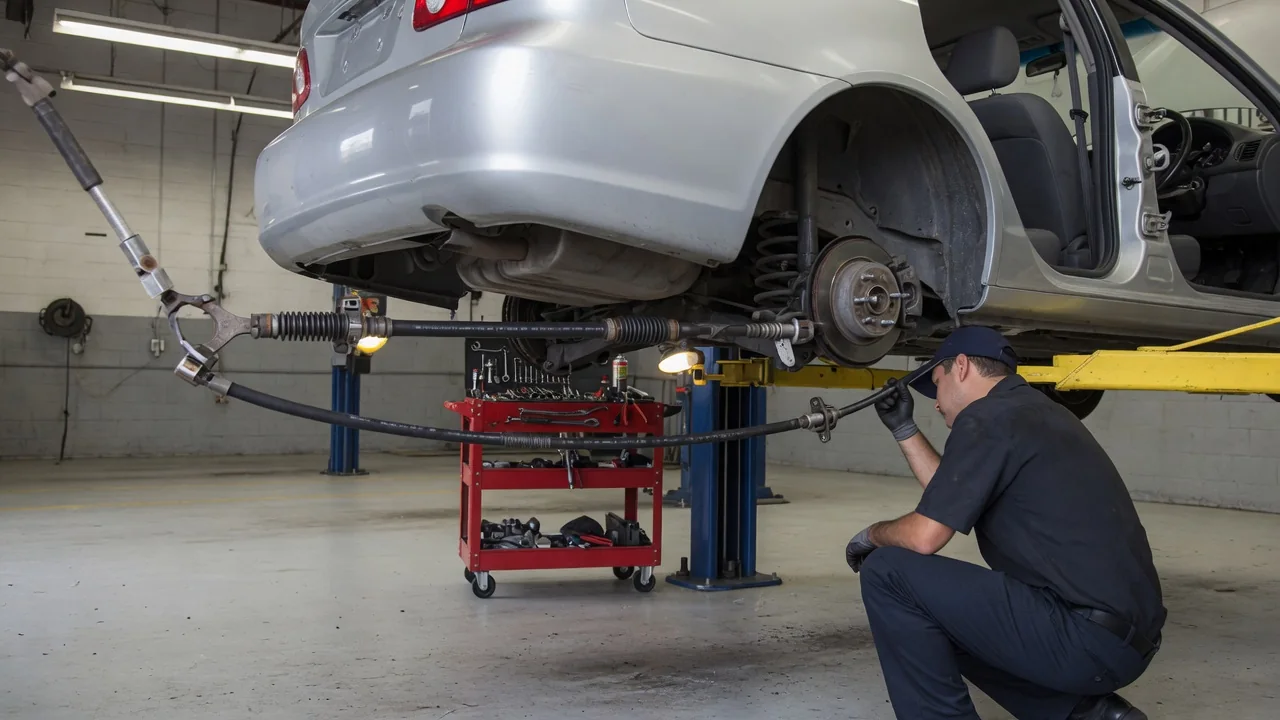
A cable-operated parking brake is a mechanical system that holds a parked vehicle in place by pulling steel cables connected to the rear brakes. It works separately from the hydraulic service brakes, which is why it is often called the emergency brake or handbrake. Classic cars rely on this design almost universally, and many later vehicles use it too. Knowing how the lever and cable, the rear brake hardware and adjustment work together explains how the system holds a car and why it sometimes stops doing so.
Lever and Cable: How the Driver's Effort Reaches the Wheels
The driver's control can take several forms: a hand lever between the front seats, a T-handle under the dashboard, or a small foot pedal to the left of the service brake pedal. Whatever its shape, the control multiplies the driver's effort through leverage and holds its position with a ratchet and pawl. Each click heard while pulling a lever is the pawl dropping into the next tooth. A release button or handle lifts the pawl so the mechanism can return. Foot-pedal versions usually release with a separate pull handle or a second press of the pedal, depending on the design.
From the control, force travels through a steel cable running inside a flexible outer housing. The inner cable slides while the housing is anchored at each end, so the cable can follow a curved path under the body without losing tension along the way. A common layout uses a single front cable from the lever to an equalizer, a bracket or yoke that splits the pull evenly between two rear cables, one for each wheel. Some vehicles add rigid rods, intermediate levers or guides along the route. Return springs pull the cables back when the brake is released.
Because the system is purely mechanical, it continues to work if the hydraulic brakes lose pressure. That independence is the reason for the emergency brake name, although its stopping ability is far more limited than that of the service brakes.
Rear Brakes: Where the Cable Does Its Work
On vehicles with rear drum brakes, the cable usually passes through the backing plate and hooks onto a parking brake lever mounted inside the drum. When the cable pulls, this lever pivots against one brake shoe and pushes a strut bar toward the other shoe. Both shoes spread outward and press against the drum, the same contact surfaces the hydraulic wheel cylinder uses during normal braking. This shared hardware is simple and effective, which helps explain why the arrangement was so common on classic cars.
Rear disc brakes require a different approach, and two general designs dominate. In the first, the caliper contains a mechanical mechanism: a lever on the caliper body turns a shaft, and a screw thread or ball-and-ramp arrangement pushes the piston and pads against the rotor. In the second, often called drum-in-hat, a small drum is formed in the center section of the rotor, and a dedicated pair of shoes inside it serves only as the parking brake. Which design a particular vehicle uses is a manufacturer decision, so the service manual is the reliable reference.
Not every cable system acts on the rear wheels. Some older vehicles and trucks used a separate drum mounted on the driveshaft behind the transmission, operated by the same kind of lever and cable. The principle is identical, but the holding force passes through the drivetrain rather than directly through the wheel brakes.
Adjustment: Keeping Travel and Release Correct
Over time, brake linings wear and cables can stretch slightly, so the lever or pedal travels further before the brake holds. Correct adjustment happens in two layers, and the order matters. The rear brakes come first: drum shoes must sit at the proper clearance from the drum, set either by an automatic self-adjuster or by a manual star-wheel adjuster, and disc calipers with integrated mechanisms have their own internal adjustment. Only then is the cable adjusted, usually with a threaded rod and nut at the equalizer or at the lever. Tightening the cable to compensate for poorly adjusted shoes hides the real problem and uses up adjustment range.
The aim is twofold. The brake should hold firmly within the lever travel the manufacturer specifies, often described as a number of clicks, and it should release completely when the control is lowered. A common check is to raise the rear wheels safely and confirm they turn freely with the brake off and resist turning once it is applied. Exact travel figures and procedures differ between vehicles, so they should come from the relevant manual rather than general rules.
Overtightening causes its own trouble. A cable with no slack can keep the shoes or pads lightly in contact, producing drag, heat and accelerated wear, and on some designs it can interfere with the self-adjusting mechanism. A classic parking brake cable that is corroded or frayed inside its housing may stick, and no amount of adjustment will restore smooth operation; replacement is the usual remedy.
Practical Implications and Limits
On a slope, holding power depends on the condition of every link in the chain, from ratchet teeth to linings. Prudent parking practice combines the parking brake with leaving a manual transmission in gear or an automatic in Park, and turning the front wheels so the curb would stop the car if it started to roll. Relying on any single device is a weaker strategy than using several together.
As an emergency stopping aid, a cable-operated parking brake has clear limits. It acts on only one axle, so deceleration is modest and stopping distances are long. Applied hard at speed, it can lock the rear wheels and make the car unstable, and in a purely mechanical system the anti-lock braking system does not modulate it. If it must be used while moving, gradual application with the release button held in, on lever-type controls, allows the driver to ease off if the rear begins to slide.
Use patterns also matter. A system that is rarely applied can seize because corrosion builds up in the cable and the rear mechanism, while a brake left applied during long storage in damp conditions may let the shoes or pads stick to their friction surfaces. Regular use keeps the parts moving, and on some designs the parking brake also plays a role in rear brake self-adjustment. Inspection intervals, adjustment specifications and repair methods are vehicle-specific, so the owner's manual and service documentation remain the authority for any particular car.