What Is a Bump Stop? How It Limits Suspension Travel
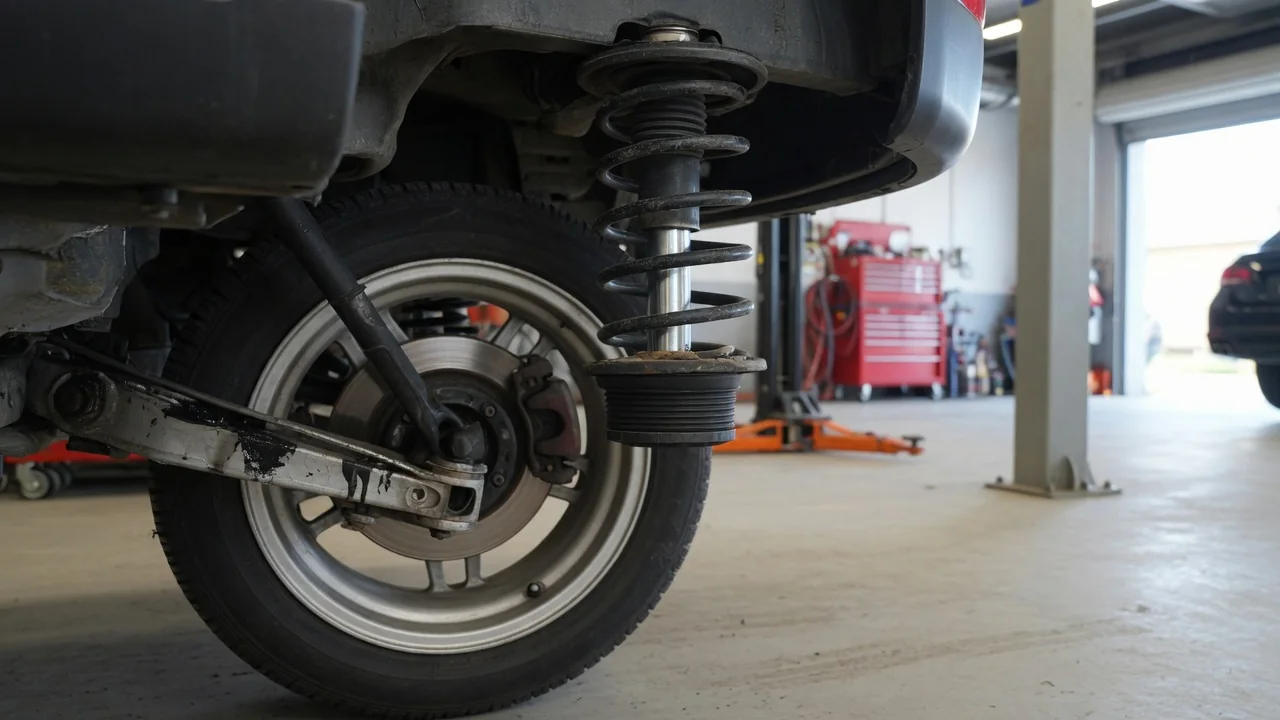
A bump stop is a compact cushion in a car's suspension that keeps the wheel from traveling too far upward toward the body. It is usually made of rubber or microcellular polyurethane foam, and it sits where moving and fixed suspension parts would otherwise collide. To answer what is a bump stop, it helps to look at three roles: how it limits travel, how it softens impacts, and how it wears over time.
Travel limit
Every suspension has a limited range of motion. When the wheel moves up toward the body, which is called compression or jounce, the spring and shock absorber compress with it. Without a firm limit, a large bump, a deep pothole, or a heavy load could drive the suspension until metal parts meet. That could mean the shock absorber body hitting its upper mount, a control arm striking the subframe, or a solid axle contacting the frame. A car suspension bump stop marks the end of that upward path, so the final contact happens through a resilient part instead of bare metal.
Placement depends on suspension design. On many MacPherson strut and coilover layouts, the bump stop slides over the shock absorber piston rod, often hidden under a protective dust boot, and contacts the top of the shock body near full compression. On some double wishbone, multilink, and solid-axle designs, a separate stop is bolted to the frame, subframe, or axle and meets a pad or bracket on the opposite part. Wherever it sits, its height helps define how much compression travel is usable, which also affects clearance between the tire and the wheel well. The bump stop governs only upward travel. Downward extension, called rebound or droop, is usually limited by a separate internal stop inside the shock, by limiting straps, or by the geometry of the suspension links.
Impact cushioning
A bump stop does more than act as a wall. Because it is made of an elastic material, it compresses under load, stores part of the impact energy, and releases it as the suspension extends. Its resistance is typically progressive: first contact is relatively soft, and stiffness climbs steeply as the material is squeezed further. That rising rate lets the suspension slow down over a short distance instead of stopping abruptly, which reduces the jolt transmitted into the body, the mounts, and the occupants.
Material and shape determine how that cushioning behaves. Solid rubber stops are simple and durable but tend to stiffen quickly. Microcellular polyurethane, common on modern passenger cars, contains tiny cells that collapse gradually, which allows a more controlled build-up of force and some internal damping. Engineers often shape these parts with tapers, ribs, or convolutions to tune how force grows across their length. In some vehicles the bump stop is designed to be reached during ordinary cornering or over moderate bumps, working as a secondary spring that adds roll and pitch resistance near the end of travel. Off-road and motorsport applications sometimes use hydraulic bump stops, which resist compression with fluid rather than relying only on elastic material.
This cushioning also protects other components. Repeated hard bottoming can stress shock absorber seals and internals, strut mounts, control arm bushings, and body mounting points. By spreading the last portion of an impact over a short, progressive stroke, the bump stop lowers those peak loads, although it cannot make an overloaded or poorly maintained suspension behave as designed.
Wear
Bump stops are wear items even though they rarely appear on routine maintenance schedules. Rubber can harden, crack, and lose elasticity from age, heat, ozone, and road contaminants. Polyurethane foam can take a permanent compression set, meaning it no longer returns to its original height, or it can split and crumble into pieces. A torn or missing dust boot exposes the stop and the shock rod to grit and water, which can speed deterioration. How quickly this happens varies with material, climate, driving conditions, and how often the stop is engaged.
Several conditions increase how often and how hard a bump stop is loaded, which shortens its life. Sagging or broken springs lower ride height and bring the stop into play sooner. Worn shock absorbers allow the body to move farther and faster, so the suspension reaches the end of its travel more often. Frequent heavy loads, towing, and rough roads add to the number of contacts. Signs that a bump stop may be degraded include a harsh thud or clunk over large bumps, a sense that the suspension bottoms out more easily than before, or visible fragments of rubber or foam around the strut or axle area. These symptoms overlap with other suspension faults, such as worn mounts, bushings, or shocks, so a visual inspection is the reliable way to confirm the condition of the stop.
Practical implications and limits
For owners, the most practical point is that the bump stop is part of the suspension tuning, not just a last-resort backup. Changing ride height changes how it works. Lowering springs reduce available compression travel, so the stop is reached earlier and more often, which can make the ride feel abrupt and accelerate wear unless the stop is matched to the new setup. Some lowering kits include shorter stops for this reason. Cutting or removing a stop to regain travel may soften the feel briefly but raises the risk of metal-to-metal contact, tire rub, and shock damage. Lifted vehicles face a different problem, since altered geometry and clearances may call for a different stop height or spacers.
Replacement is often done together with struts or shocks, since the stop and boot are accessible then and many complete strut assemblies include them. Inspect the old part rather than assuming it is fine, and use a stop designed for the specific suspension, because height, density, and shape vary between applications. Occasional contact with the bump stop over a large dip or a sharp pothole is normal and does not indicate a fault by itself. Constant contact in everyday driving, however, usually points to a ride-height, spring, load, or damper issue that a new bump stop alone will not cure. Exact placement, inspection steps, and specifications differ by vehicle, so the factory service manual is the authority for any particular model.