What Is a Brake Pedal Simulator? Pedal Feel, Regen Blending and Faults
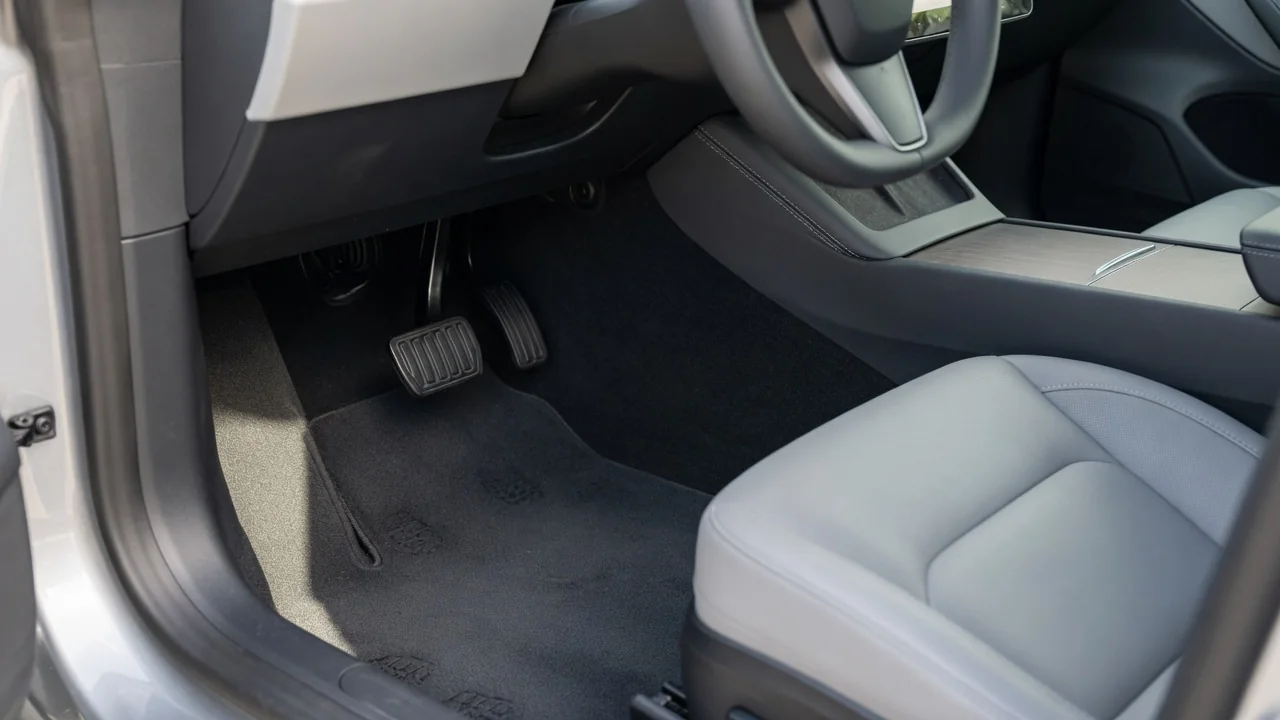
A brake pedal simulator is the part of a decoupled, or brake-by-wire, braking system that gives the driver's foot something realistic to push against. In these systems the pedal does not directly push fluid to the wheel brakes during normal driving. Instead, sensors read the driver's request and an electronically controlled actuator builds pressure. The simulator recreates the resistance and travel a driver expects. That is why it comes up so often in discussions of hybrid and electric vehicle brakes.
Pedal feel
In a conventional system, pedal resistance comes from the hydraulic circuit itself. As the driver pushes, the master cylinder moves fluid, the pads contact the rotors, pressure rises, and the pedal firms up. A booster multiplies the driver's force, but the connection between foot and wheel brakes remains direct. When the pedal is decoupled, that natural feedback disappears. Without something to replace it, the pedal could feel nearly weightless or travel inconsistently, making it hard to modulate a stop.
The simulator fills that gap. Designs vary, but a common arrangement uses one or more springs, sometimes combined with elastomer elements and a hydraulic chamber, connected to the master cylinder through a valve. During normal operation, fluid displaced by the pedal flows into the simulator rather than to the calipers. The spring characteristic is chosen to produce a progressive feel: light resistance early in the stroke, building firmness as the pedal travels further. Damping helps the pedal respond naturally to quick applications without feeling springy or vague.
Meanwhile, pedal travel sensors and, in many systems, pressure sensors translate the pedal movement into a braking request. The control unit then decides how much deceleration to deliver and how to produce it. Because feel is set by the simulator's mechanical design and the control calibration rather than by caliper pressure, engineers can tune it fairly independently of what the hardware at the wheels is doing at any moment.
Regen blending
This independence matters most in hybrid and electric vehicles. Regenerative braking uses the electric motor as a generator to slow the vehicle and recover energy, but the braking torque it can supply changes constantly. It depends on vehicle speed, battery state of charge and temperature, which axle the motor drives, and whether stability systems need to intervene. Regeneration also tends to fade at very low speeds, so friction brakes typically take over as the vehicle comes to a stop.
Blending is the process of combining regenerative and friction braking so that total deceleration matches what the driver asked for. If the driver requests a given rate of slowing and regeneration can supply only part of it, the controller makes up the difference with hydraulic pressure. As regenerative capacity rises or falls, the friction share is adjusted in the opposite direction to keep the overall result steady.
With a directly connected pedal, those pressure changes could be felt through the foot as the pedal sinking or pushing back, and the driver might unconsciously compensate. A brake pedal simulator in a hybrid or EV isolates the pedal from those shifts. The driver feels a consistent pedal while the system redistributes braking behind the scenes, which can allow more energy recovery without making stops feel uneven. Not every electrified vehicle uses this exact approach, though; some rely on other booster designs or blending strategies, so the presence of a simulator should not be assumed.
Fault context
Because a decoupled system depends on electronics, it needs a defined fallback. In general terms, when the control unit detects a fault, it can close off the simulator path and open a direct hydraulic connection between the master cylinder and the wheel brakes. The driver can then still stop the vehicle using muscular force alone. In this mechanical backup mode, the pedal typically travels further and requires noticeably more effort, since there is no electronic pressure build-up assisting the driver. Regenerative braking and some driver-assistance functions may also be reduced or unavailable.
Conditions that can lead to degraded operation include disagreement between sensors, valve or actuator problems, low supply voltage, low fluid level, and communication errors between control units. Systems generally respond by illuminating a brake or system warning lamp and storing diagnostic trouble codes. A fault in the simulator itself may show up mainly as unusual pedal feel, such as a pedal that feels too soft, too hard, or inconsistent, even while the brakes still work. The exact symptoms, driver messages, and fallback strategies are vehicle-specific and are described in the manufacturer's service information.
Practical implications and limits
For owners, the key point is that pedal feel in a decoupled system is partly an engineered signal rather than a direct readout of the hardware. A firm, consistent pedal does not by itself confirm that pads, rotors, or fluid are in good condition, so routine inspection still matters. Conversely, a sudden change in feel, especially alongside a warning lamp, is a reason to have the system checked promptly rather than to keep driving and see what happens.
Service work carries its own caveats. Some brake-by-wire systems can run their pump or build pressure when a door is opened, the pedal is pressed, or the vehicle is powered up, which can be a hazard during pad replacement or caliper work. Bleeding procedures may require a diagnostic tool to cycle valves and purge air from the simulator and actuator circuits. The manufacturer's procedures for deactivating and bleeding the system should be followed.
Finally, a simulator cannot mask every behavior. Drivers may still hear normal operating sounds from the pump or valves, and pedal feel can differ from one vehicle to another because calibrations differ. Knowing what a brake pedal simulator is helps explain these traits, but diagnosing a particular vehicle still depends on its own documentation and appropriate diagnostic equipment.