What Is a Brake Pedal Position Sensor?
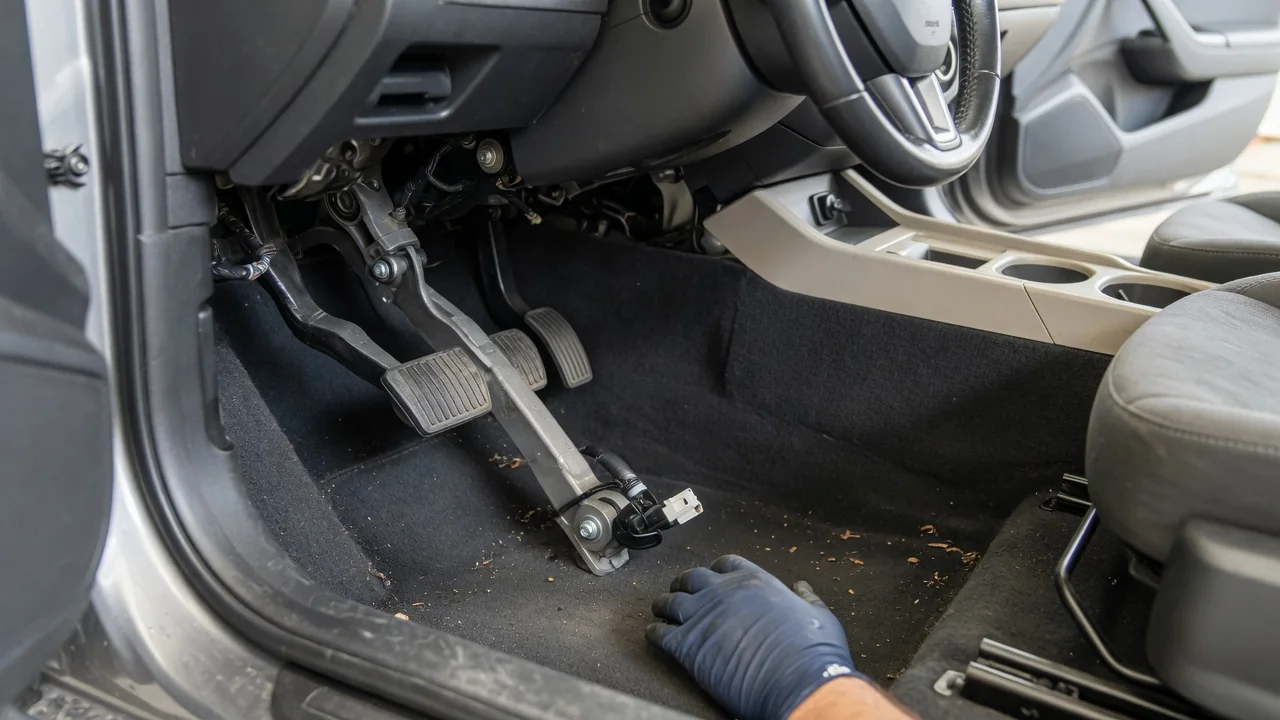
Anyone asking what is a brake pedal position sensor is really asking how a car knows the driver's foot is on the brake. This small device, mounted near the pedal arm, converts pedal movement into an electrical signal. That signal feeds the brake lamps and a surprising number of electronic systems, which is why a small part can influence so much of the vehicle's behavior.
Pedal detection
The sensor sits at or near the top of the brake pedal arm, usually tucked under the dashboard above the driver's feet. When the pedal moves, the sensor registers the change. Older and simpler designs work as a basic switch that reports only two states, pressed or released. Newer designs can measure how far the pedal has traveled, giving the vehicle's computers a graded reading rather than a simple yes or no. Which type is fitted depends on the manufacturer, the model, and the braking system used.
Detection methods differ as well. Some units use a spring-loaded plunger that the pedal arm pushes against, while others rely on contactless technology that reads the position of a magnet or a rotating element without physical wear between parts. Many vehicles send more than one signal from the same assembly, so control modules can compare them and spot disagreement. A driver cannot see any of this from the seat, but the design explains why a slight touch on the pedal is recognized well before the vehicle actually slows.
Brake lamps
The most visible job of the sensor is telling the brake lamps when to come on. In a traditional arrangement, the switch completes a circuit directly and the lamps light as soon as the pedal leaves its resting position. In many modern vehicles, the signal goes first to a body control module, which then commands the lamps. Either way, the lamps should illuminate early in the pedal stroke, before significant braking force is applied, so that following drivers get the earliest possible warning.
Because the lamps depend on this input, a fault in the sensor or its adjustment can show up at the rear of the car. Lamps that stay on with the pedal released, fail to light at all, or work intermittently are all possible symptoms. They are not proof of a sensor problem, though, since burned-out bulbs, blown fuses, damaged wiring, and corroded sockets produce similar results. Checking the lamps with a helper, or against a reflective surface such as a garage door, is a simple way to see what they are actually doing.
Control interactions
Beyond lighting, the brake signal is shared with several control units. Cruise control uses it as a cancel command, dropping the set speed the moment the pedal is touched. On vehicles with an automatic transmission, a shift interlock typically requires a brake signal before the selector can leave park. Push-button start systems commonly need the same confirmation before cranking the engine. The engine and transmission computers may also use the input to manage torque converter lockup, idle behavior, and deceleration strategies.
Stability control, anti-lock braking, and driver assistance functions take the signal into account too, treating it as evidence of what the driver intends. In hybrid and electric vehicles, pedal position information is especially important because the system has to decide how to blend regenerative braking with the friction brakes. Some engine computers also compare the brake and accelerator inputs and reduce power if both appear to be applied together. How these interactions are arranged varies widely, so the exact logic on any vehicle has to be confirmed from its own service information.
Everyday Use and Observations
In normal driving, a healthy sensor goes unnoticed. The brake lamps come on with light pedal pressure, cruise control releases promptly, the shifter moves out of park without resistance, and the engine starts when the button is pressed with a foot on the brake. These routine events are all quiet confirmations that the signal is arriving where it should. A change in any one of them is worth noting, particularly if it comes and goes with temperature, vibration, or the way the pedal is pressed.
When the signal becomes unreliable, the effects can look unrelated. A shifter stuck in park, cruise control that will not set or drops out unexpectedly, a no-start on a push-button car, and a warning lamp for stability control or the engine can all trace back to the same input. A drained battery is another possibility if the brake lamps remain lit after the vehicle is parked. Some vehicles display a message asking the driver to press the brake even though the pedal is already down.
Limits and Next Steps
The sensor reports pedal movement, not braking performance. It says nothing about pad thickness, fluid condition, or hydraulic pressure, so a soft pedal, pulling, or grinding noise points elsewhere. Likewise, a stored fault code that names the brake switch or pedal position circuit is evidence to interpret rather than a verdict on the part. Codes of this kind can be set by wiring faults, poor connections, misadjustment, or a disagreement between two signals, and manufacturer-specific codes need to be checked against information for that exact vehicle.
A sensible next step is to gather observations before replacing anything: note which symptoms appear, confirm what the brake lamps do, and check the relevant fuses listed in the owner's manual. A technician with a scan tool can watch the live signal while the pedal is pressed and compare it with what the modules expect. Some replacement sensors need precise adjustment or an electronic calibration after fitting, and requirements differ between vehicles. Because working brake lamps are a safety and legal necessity, lighting faults deserve prompt attention.